
Chicken Leg Calories: The Juicy Truth Behind Your Favorite Cut

That crispy skin. That juicy, tender meat. Chicken legs are a staple in many kitchens, from grandmother's Sunday roast to gourmet grilling. They're delicious, affordable, and incredibly versatile. But as you savor that flavorful bite, do you ever stop to wonder, "How much nutrition is really in this chicken leg?"
You're not alone. Many people enjoy chicken legs but are often curious about their calorie count and overall impact on their diet. Let's peel back the layers (and maybe even the skin!) to understand what's truly on your plate.

Drumstick vs. Thigh: Is There a Calorie Difference You Should Know About?
Yes, there are indeed differences between drumsticks and thighs, though both are considered dark meat and generally have more fat than chicken breast. Understanding these distinctions can help you make more informed choices.
A common medium-sized chicken drumstick (about 70g) without skin typically contains around 100-110 calories, with about 17g of protein and 3-4g of fat. If you keep the skin on, those numbers can jump to 130-140 calories, with roughly 15g of protein and 8-9g of fat.
For a medium-sized chicken thigh (about 80g) without skin, you're looking at around 130-140 calories, providing about 20g of protein and 5-6g of fat. With the skin on, a thigh can be closer to 170-180 calories, with 18g of protein and 12-13g of fat.
These figures highlight that while thighs are slightly larger and contain more protein and fat overall, drumsticks are a bit leaner per gram when skin is removed.
To Skin or Not To Skin? Unpacking the Calorie Impact of Chicken Skin
This is often the big debate! The crispy, flavorful skin is arguably one of the best parts of a chicken leg, but it's also where a significant portion of the fat and calories hide.
Chicken skin is primarily fat, and removing it can drastically reduce the calorie and fat content of your meal. For instance, removing the skin from a chicken drumstick can cut about 30-40 calories and around 5g of fat. For a thigh, the difference is even more substantial, potentially saving you 40-50 calories and 6-7g of fat.
Bone-in versus boneless options also play a role, primarily in portion sizing. Bone-in cuts often weigh more due to the bone, so if you're tracking calories by weight, make sure you're accounting for the edible portion. Boneless cuts offer more precise portion control.
This is where things can get tricky. A drumstick with skin and a thigh without are two different meals! How can you easily track these variations without becoming a nutrition expert overnight? That's where technology like Eatibo comes in – simply point your camera at your plate, and it helps identify the specifics, giving you instant macro breakdowns for your exact meal, accounting for details like skin-on or skin-off.
Beyond the Basics: How Cooking Methods & Sauces Add Up (or Down)
The way you prepare your chicken leg can dramatically alter its final calorie count.
- Frying: This method adds the most calories. Deep-frying chicken legs in oil can add hundreds of calories and grams of fat due to oil absorption, especially if the chicken is breaded.
- Roasting/Baking: These are healthier options. Roasting or baking with minimal added oil allows the chicken to cook in its own juices, keeping calories relatively low. If you're roasting skin-on, some of the fat will render off, but a significant amount remains.
- Grilling: Similar to roasting, grilling is a lean cooking method. It often requires little to no added oil and can help render fat from the skin.
Beyond the cooking method, watch out for marinades and sauces. Many popular marinades contain sugars, and creamy sauces or glazes can pack a surprising calorie punch. For example, a sugary BBQ sauce can add 50-100 calories per serving, while a rich cream sauce can add even more.
Your Goals, Your Chicken Leg: Making Smart Choices for Muscle, Weight Loss, or Low-Sugar Diets
Chicken legs can fit into almost any dietary goal with a bit of mindfulness.
- For muscle gain: Focus on the protein. Skin-on thighs offer a good balance of protein and healthy fats for sustained energy.
- For weight loss: Opt for skinless drumsticks or thighs. Prioritize grilling or baking over frying, and be mindful of high-calorie sauces.
- For low-sugar diets: Avoid pre-made marinades and sugary glazes. Make your own marinades with herbs, spices, vinegar, and olive oil.
But what if you're trying to cut seed oils, or manage your sugar intake specifically? This is where generic calorie counters fall short. Eatibo doesn't just tell you the calories; it learns your personal goals – whether it's muscle gain, seed-oil-free, or low-sugar – and gives you tailored "Eat / Limit / Skip" ratings for your chicken leg recipe. It even suggests simple swaps to keep you on track, turning complex nutrition into actionable advice.
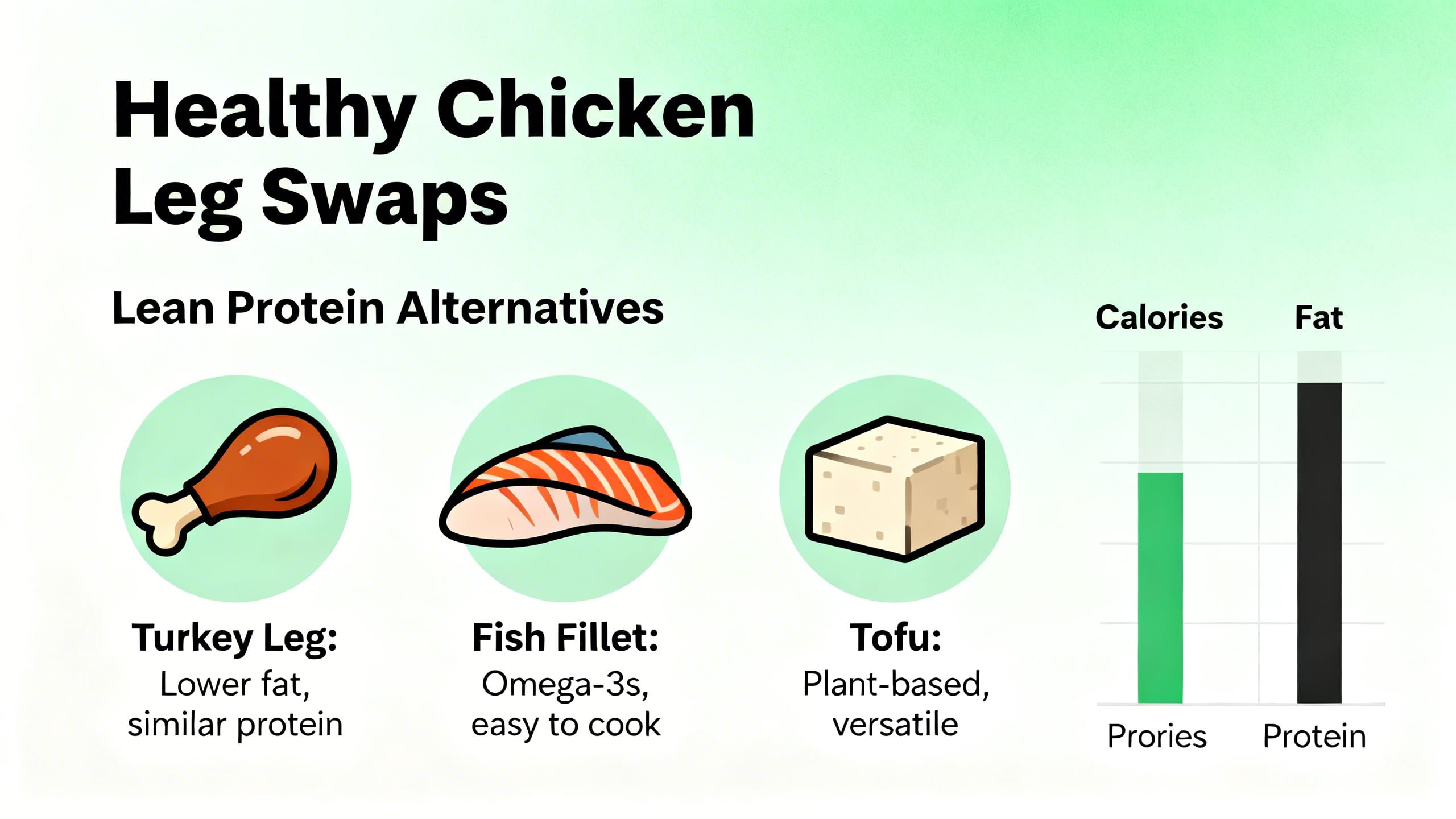
The Takeaway: Eating Smarter, One Chicken Leg at a Time
Chicken legs are a nutritious and delicious part of a balanced diet. The key to enjoying them mindfully is understanding the impact of skin, cooking methods, and additions like marinades and sauces. By making small, informed adjustments—like removing the skin, choosing leaner cooking methods, or opting for low-sugar marinades—you can tailor your chicken leg experience to perfectly align with your health and dietary goals. Portion control always matters, of course! Empower yourself with knowledge, and don't hesitate to use tools that offer personalized insights for sustained success.
Leave A Reply
Login to post your comment or signup if you dont have any account