
Acai Bowl Calories: Your Guide to a Smarter Treat
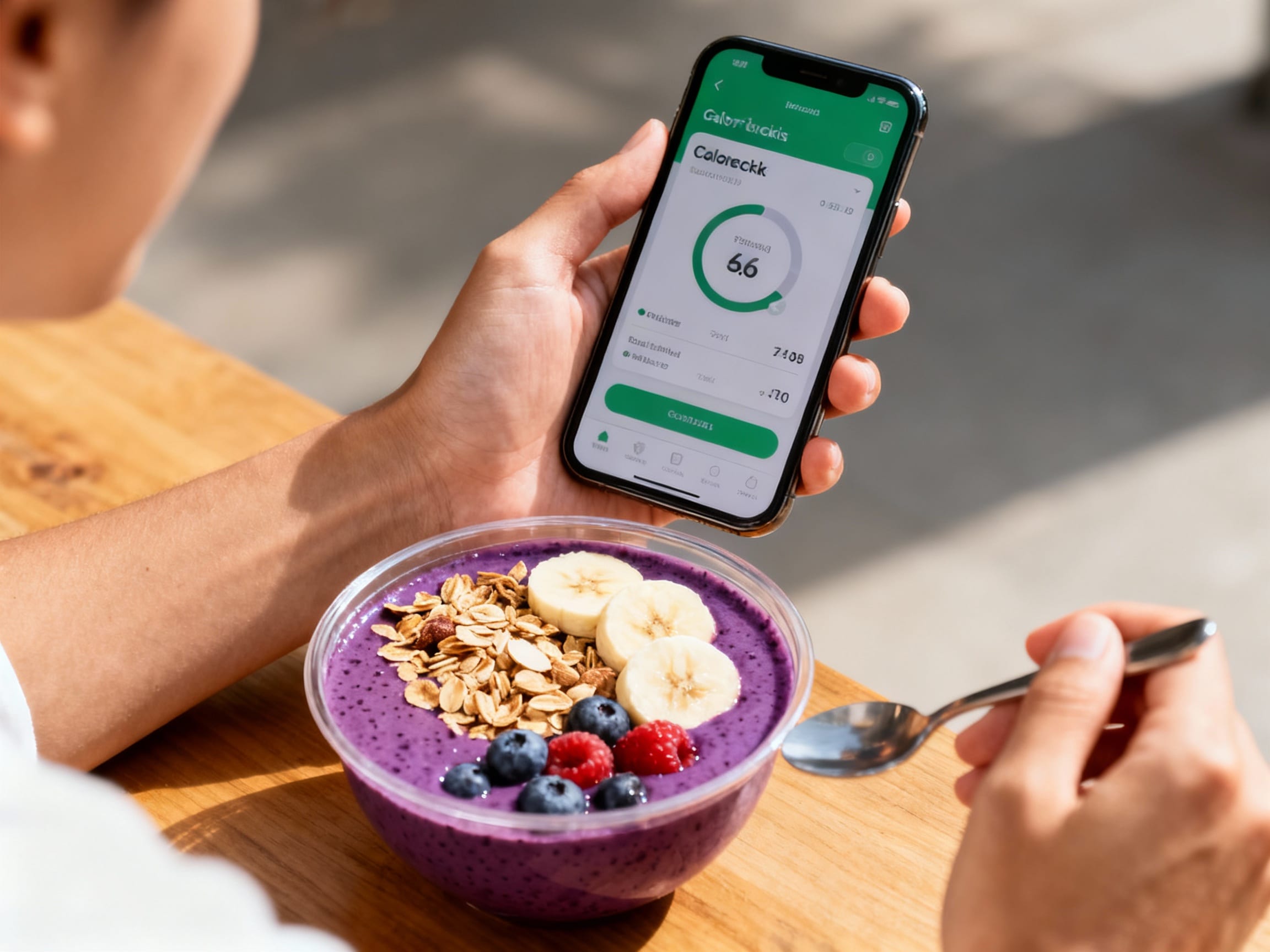
Quick answer: Do not stop at the headline calorie or macro number. Start with the serving you will actually eat, then check calories, protein, fiber, sodium, added sugar, saturated fat, ingredients, and allergens against your real goal.
Key takeaways
- Serving size usually changes the answer more than the label headline.
- Compare the tradeoff that matters most for your goal: calories, protein, fiber, sodium, added sugar, saturated fat, ingredients, or allergens.
- One item rarely decides the whole diet; repeated weekly patterns matter more.
- Use official labels and menus when available, then log the real portion you ate.
Definition: In this guide, a smarter food decision means checking the real portion, the practical tradeoffs, personal limits, and the repeat pattern before turning one answer into a rule.
An acai bowl is a thick smoothie-style base made from acai berry puree, typically topped with fruit, granola, seeds, and sweeteners. Because it’s built from add-ons, the total calories and sugar can vary widely from bowl to bowl.
So, how many calories are actually in my acai bowl?
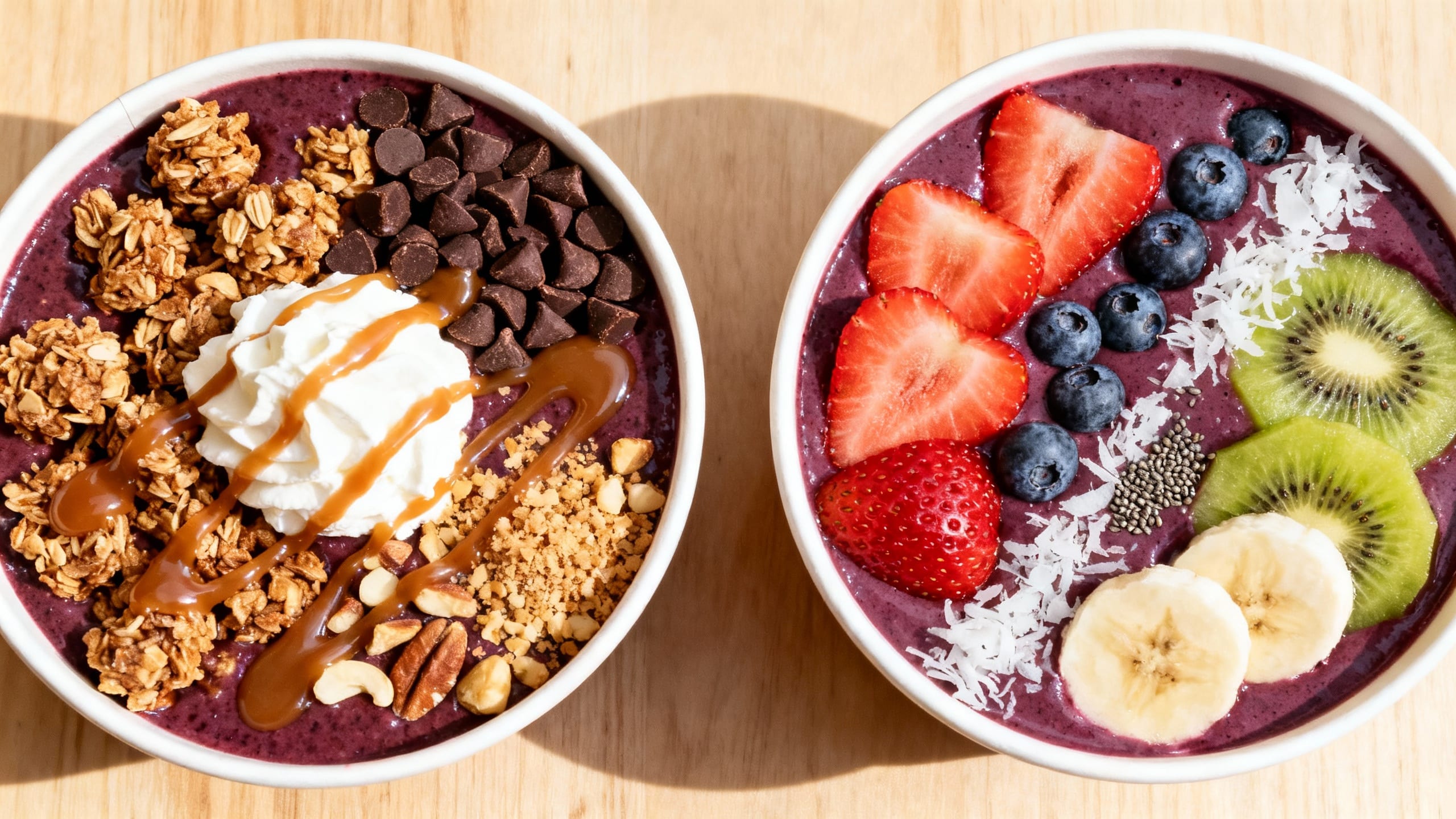
The calorie count can swing from a light snack to a full meal. If you order at a cafe or build at home, the three biggest drivers are the base, toppings, and portion size. That’s why two bowls that look similar can have very different nutrition totals.
Acai bowl calories by the numbers
- Typical range: about 200 to 900+ calories per bowl, depending on size and ingredients.
- Sweetened acai bases add more sugar and calories than pure, unsweetened acai puree.
- Granola is often the single biggest topping contributor.
- Nut butters and sweeteners add calories quickly even in small scoops.
Ingredients that drive calories (and why)
| Ingredient | Typical impact | Why it matters |
|---|---|---|
| Granola (about 1/2 cup) | ~200-300 calories | Often concentrated with oils and added sugars. |
| Nut butter (about 2 tbsp) | ~180-200 calories | Healthy fats, but very calorie-dense. |
| Honey or agave (1 tbsp) | ~60-70 calories and ~15-20g sugar | Adds sugar without fiber or protein. |
| Sweetened acai packs | Higher sugar and calories | Many blends include fruit juice or added sugar. |
| Dried fruit | Higher sugar density | Water removed means sugar is concentrated. |
Can I still enjoy an acai bowl and stick to my goals?
Absolutely. The bowl is highly customizable. A few smart swaps can turn a calorie-heavy bowl into a balanced, satisfying meal.
Build a lower-calorie, lower-sugar bowl (step-by-step)
- Choose an unsweetened base (pure acai + water or unsweetened plant milk).
- Use granola as a light sprinkle, or swap to seeds for crunch.
- Prioritize fresh fruit, chia, or flax for fiber.
- Add a small protein boost (a modest scoop of protein powder or a small spoon of nut butter).
- Skip added sweeteners and rely on fruit for sweetness.
- Keep the portion size reasonable.
Why tracking more than just calories matters
Calories are important, but they don’t tell the full story. Sugar, fiber, protein, and additives can change how your bowl affects energy, satiety, and long-term health.
- Sugar: High added sugar can cause energy spikes and crashes.
- Fiber: Helps you feel full longer and supports gut health.
- Protein: Balances the bowl and supports muscle maintenance.
- Additives and allergens: Store-bought packs may include ingredients you want to avoid.
Decision framework
| What to check | Why it changes the answer | Practical next step |
|---|---|---|
| Serving size or portion | Calories, sodium, sugar, carbs, and fat scale with the amount actually eaten | Log the realistic portion, not the ideal one |
| Protein, fiber, sodium, added sugar, and saturated fat | These decide whether the choice supports fullness and long-term habits | Compare the tradeoff that matters most for your goal |
| Ingredients, sauces, breading, or add-ons | Small extras can change the result quickly | Compare the base item and extras separately |
| Personal restriction applies | General nutrition advice cannot know every boundary | Follow allergy, medication, religious, or clinician-directed rules first |
Concrete examples
- If the food looks healthy but the serving is tiny, check what a realistic portion does to calories, sodium, or sugar.
- If two options have similar calories, choose the one with more protein, fiber, or ingredients you tolerate.
- If the food is occasional and you enjoy it, log it honestly instead of building a strict rule you will not keep.
Limits and safety notes
This guide is for everyday food awareness. It is not a diagnosis tool, allergy authority, medication checker, eating-disorder recovery plan, or substitute for a clinician or registered dietitian. For diagnosed conditions, pregnancy, kidney disease, diabetes medication, severe allergies, or clinician-directed diets, get professional guidance before changing your routine.
Where Eatibo fits
Eatibo is useful when a question turns into something you need to compare or log. You can scan a meal photo, barcode, nutrition label, or ingredient list, review calories and macros, check sodium, added sugar, allergens, additives, and ingredients, then save the result to your Nutrition Log. The point is not one perfect judgment; it is making the next similar choice easier because your own pattern is visible.
Sources and references
- FDA: Calories on the Nutrition Facts Label
- FDA: How to understand and use the Nutrition Facts label
- HHS/ODPHP: Current Dietary Guidelines for Americans
Frequently asked questions
Is this something I need to avoid completely?
Usually no. The better question is portion, frequency, and fit. A food can be fine occasionally but less useful as an everyday default if it repeatedly pushes sodium, added sugar, saturated fat, calories, or allergens past your limits.
What should I check first?
Start with the serving size you will actually eat. Then check the tradeoff most relevant to your goal: calories, protein, fiber, sodium, added sugar, saturated fat, ingredients, or allergens. The order matters because a tiny serving can hide a bigger real-world intake.
How can Eatibo help me decide faster?
Eatibo helps you scan or log the choice, compare the practical nutrition details, and review the pattern later. It is most useful for repeat decisions because the app can show whether similar foods are helping your weekly routine or quietly pushing it off track.
Related reading
- Decoding Corn Tortilla Calories: Your Smart Guide to Smarter Taco Nights
- Fried Egg Calories – Your Guide to a Healthier Fry
- Cracking the Code: How Many Calories Are Really in Your Scrambled Eggs?
Last updated: June 1, 2026