
Decoding Corn Tortilla Calories: Your Smart Guide to Smarter Taco Nights
Quick answer: Do not stop at the headline calorie or macro number. Start with the serving you will actually eat, then check calories, protein, fiber, sodium, added sugar, saturated fat, ingredients, and allergens against your real goal.
Key takeaways
- Serving size usually changes the answer more than the label headline.
- Compare the tradeoff that matters most for your goal: calories, protein, fiber, sodium, added sugar, saturated fat, ingredients, or allergens.
- One item rarely decides the whole diet; repeated weekly patterns matter more.
- Use official labels and menus when available, then log the real portion you ate.
Definition: In this guide, a smarter food decision means checking the real portion, the practical tradeoffs, personal limits, and the repeat pattern before turning one answer into a rule.
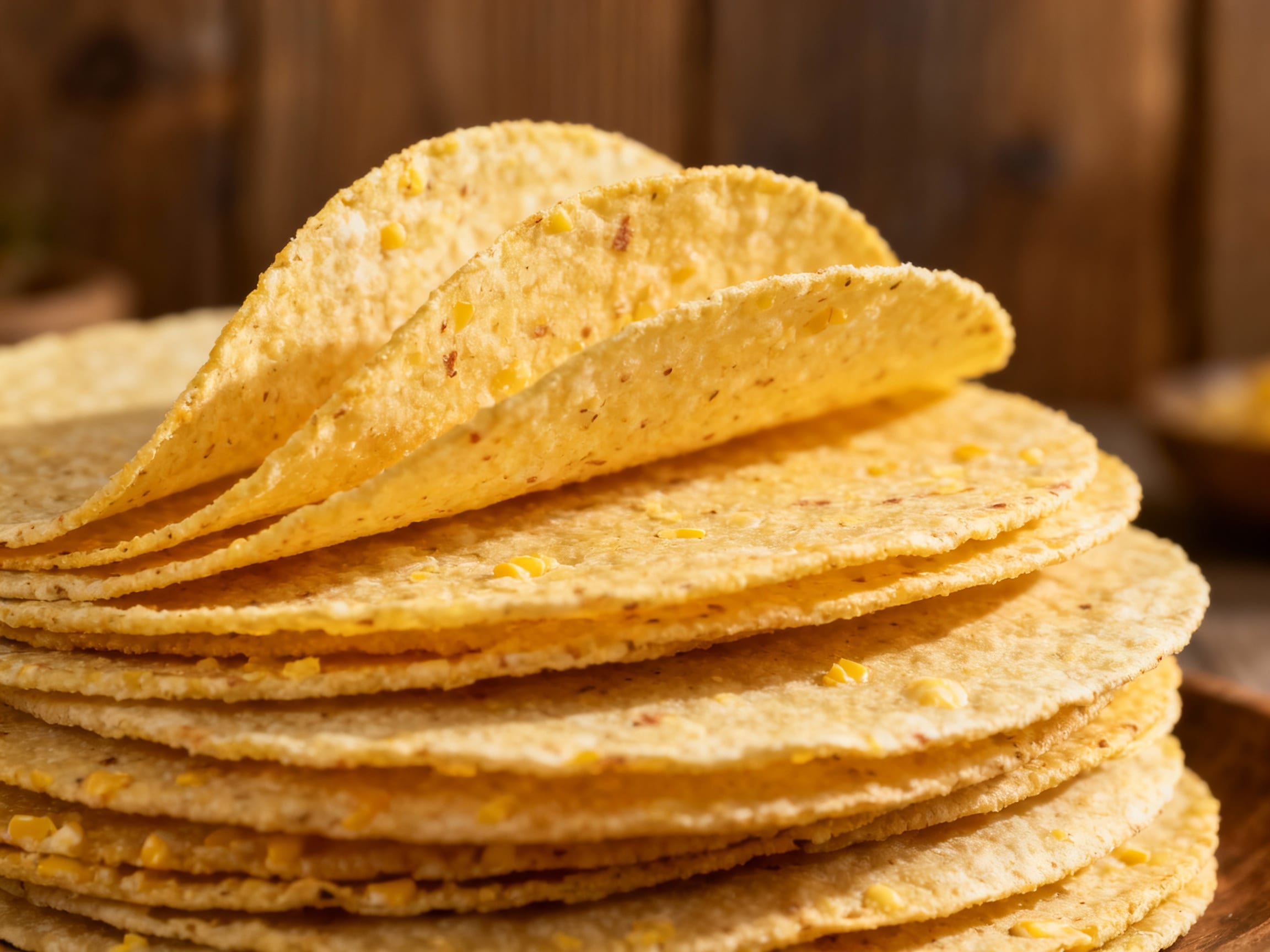
Corn tortillas are made from masa harina and water, and they’re often a lighter base for tacos than flour tortillas. Calories are driven mostly by size and preparation.
Corn tortilla calories at a glance
| Size or type | Typical range | What drives it |
|---|---|---|
| 6-inch corn tortilla | About 50–60 calories | Size and thickness |
| 6-inch flour tortilla | Often 90–100 calories | Added fats and larger size |
| Street taco corn tortilla | Lower than 6-inch | Smaller diameter |
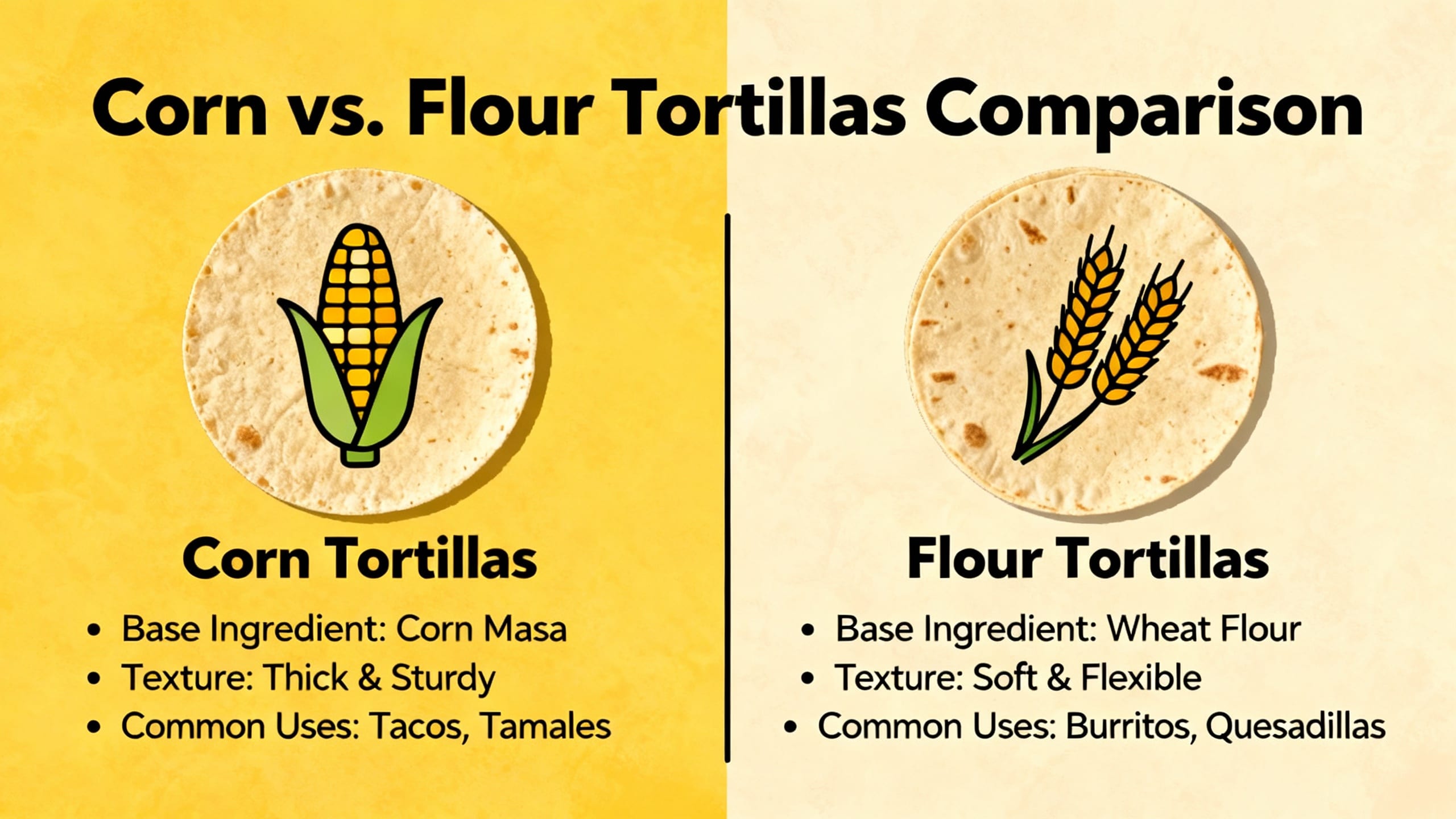
Corn vs. flour: the practical differences
| Factor | Corn tortilla | Flour tortilla |
|---|---|---|
| Calories (same size) | Lower | Higher |
| Fat | Lower | Often higher due to added oils |
| Gluten | Naturally gluten-free | Contains gluten |
| Ingredients | Shorter list in traditional versions | Can include oils and conditioners |
Ingredient checklist for cleaner tortillas
- Look for short ingredient lists.
- Avoid added sugars when possible.
- Watch for added oils if you’re seed-oil-free.
- Compare serving sizes across brands.
Portion tips that actually work
- Use 2–3 small tortillas instead of large ones.
- Add more protein and vegetables to feel full.
- Try a taco bowl or lettuce wrap if you want fewer carbs.
Decision framework
| What to check | Why it changes the answer | Practical next step |
|---|---|---|
| Serving size or portion | Calories, sodium, sugar, carbs, and fat scale with the amount actually eaten | Log the realistic portion, not the ideal one |
| Protein, fiber, sodium, added sugar, and saturated fat | These decide whether the choice supports fullness and long-term habits | Compare the tradeoff that matters most for your goal |
| Ingredients, sauces, breading, or add-ons | Small extras can change the result quickly | Compare the base item and extras separately |
| Personal restriction applies | General nutrition advice cannot know every boundary | Follow allergy, medication, religious, or clinician-directed rules first |
Concrete examples
- If the food looks healthy but the serving is tiny, check what a realistic portion does to calories, sodium, or sugar.
- If two options have similar calories, choose the one with more protein, fiber, or ingredients you tolerate.
- If the food is occasional and you enjoy it, log it honestly instead of building a strict rule you will not keep.
Limits and safety notes
This guide is for everyday food awareness. It is not a diagnosis tool, allergy authority, medication checker, eating-disorder recovery plan, or substitute for a clinician or registered dietitian. For diagnosed conditions, pregnancy, kidney disease, diabetes medication, severe allergies, or clinician-directed diets, get professional guidance before changing your routine.
Where Eatibo fits
Eatibo is useful when a question turns into something you need to compare or log. You can scan a meal photo, barcode, nutrition label, or ingredient list, review calories and macros, check sodium, added sugar, allergens, additives, and ingredients, then save the result to your Nutrition Log. The point is not one perfect judgment; it is making the next similar choice easier because your own pattern is visible.
Make the number useful in real life
A nutrition number becomes useful only after it is tied to the way you actually eat. Check the portion you served, the rest of the meal, and whether the food is occasional or part of a weekly routine. A snack with modest calories may still be weak if it leaves you hungry; a higher-calorie food may fit well if it brings protein, fiber, and satisfaction. The practical move is to log the real serving once, then compare the next similar choice against that record. If the same food keeps pushing sodium, added sugar, saturated fat, or calories past your goal, adjust the portion or swap one component. If it fits and you enjoy it, keep it without turning the meal into a math problem.
Sources and references
- FDA: Calories on the Nutrition Facts Label
- FDA: How to understand and use the Nutrition Facts label
- HHS/ODPHP: Current Dietary Guidelines for Americans
Frequently asked questions
Is this something I need to avoid completely?
Usually no. The better question is portion, frequency, and fit. A food can be fine occasionally but less useful as an everyday default if it repeatedly pushes sodium, added sugar, saturated fat, calories, or allergens past your limits.
What should I check first?
Start with the serving size you will actually eat. Then check the tradeoff most relevant to your goal: calories, protein, fiber, sodium, added sugar, saturated fat, ingredients, or allergens. The order matters because a tiny serving can hide a bigger real-world intake.
How can Eatibo help me decide faster?
Eatibo helps you scan or log the choice, compare the practical nutrition details, and review the pattern later. It is most useful for repeat decisions because the app can show whether similar foods are helping your weekly routine or quietly pushing it off track.
Related reading
- Fried Egg Calories – Your Guide to a Healthier Fry
- Acai Bowl Calories: Your Guide to a Smarter Treat
- Cracking the Code: How Many Calories Are Really in Your Scrambled Eggs?
Last updated: June 1, 2026