
Crisped Mediterranean Dorade – Your Smart Seafood Choice
Quick answer: A recipe is only useful if the serving size is honest. Check how much oil, salt, sauce, cheese, grain, starch, or protein is in your portion, then decide whether the meal fits your calorie, macro, sodium, fiber, or ingredient goal.
Key takeaways
- Recipe names can sound healthy while oil, salt, cheese, sauces, or portions drive the numbers.
- Serving size, protein, fiber, and sodium are usually more useful than a broad diet label.
- Ingredient swaps work best when they protect flavor and the reason you wanted the dish.
- Log the cooked portion once so future versions are easier to estimate.
Definition: In this guide, a smarter recipe decision means checking the real portion, the main nutrition drivers, personal limits, and the repeat pattern before turning a dish into a default.
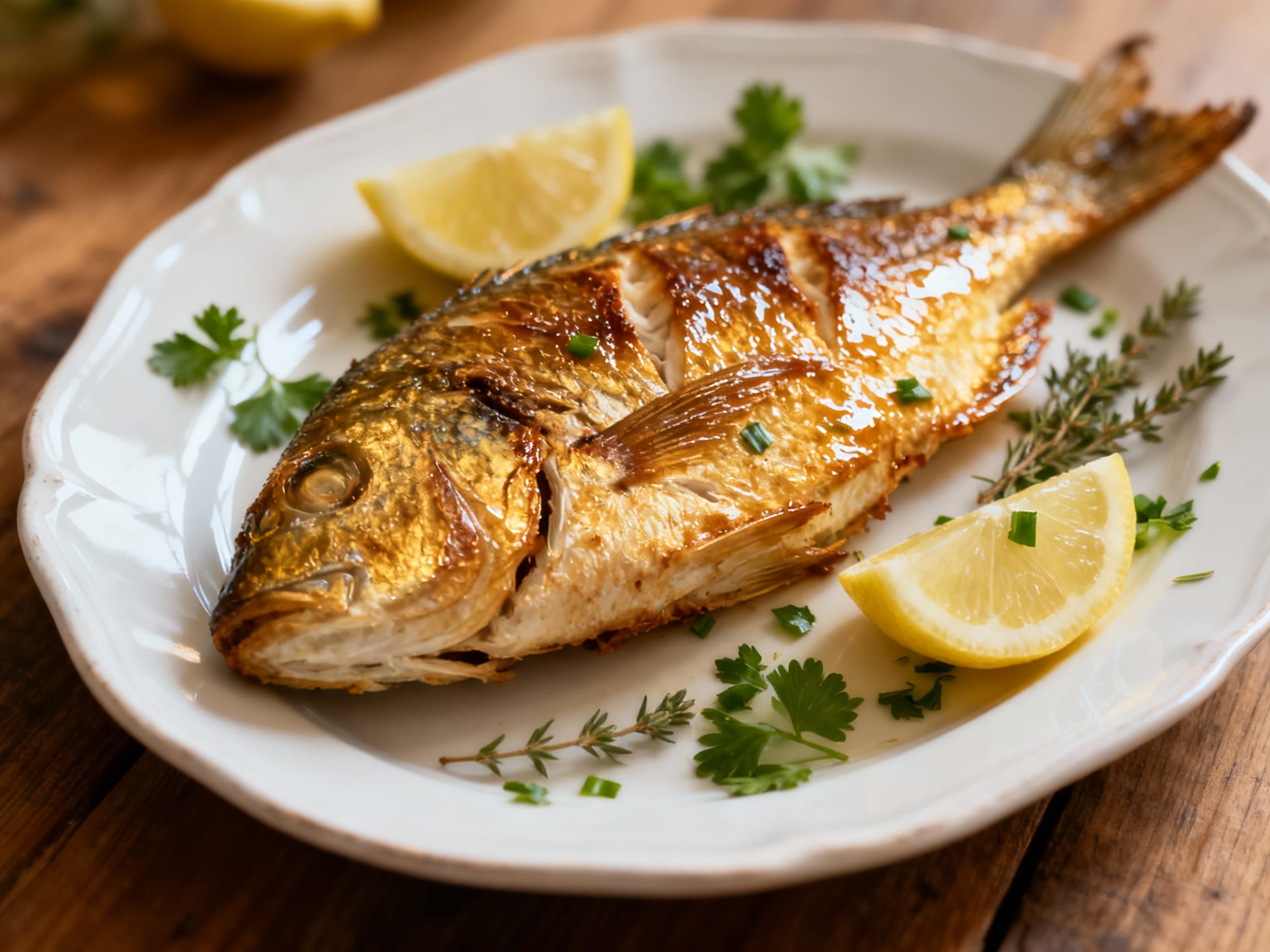
Dorade, also called sea bream, is a Mediterranean fish known for its tender texture and clean flavor. It’s a lean protein that works well for quick, healthy home cooking.
Dorade nutrition and cooking snapshot
| Topic | What to know | Why it matters |
|---|---|---|
| Protein | Lean and filling | Supports balanced meals. |
| Flavor | Mild and slightly sweet | Easy to season without heavy sauces. |
| Texture | Flaky with crisp skin | Satisfying without deep frying. |
| Mercury | Generally lower than large predatory fish | A practical weekly option. |
How to get crispy skin (simple method)
- Pat the fish dry so the skin crisps.
- Score the skin lightly to prevent curling.
- Heat a pan with olive oil until shimmering.
- Sear skin-side down for 3–5 minutes.
- Flip and cook 2–4 minutes, or finish in a 375°F oven.
- Aim for an internal temperature of 145°F if you use a thermometer.

Mediterranean flavor pairings
- Lemon, garlic, and oregano
- Cherry tomatoes, olives, and capers
- A side of Greek salad or roasted vegetables
Decision framework
| What to check | Why it changes the dish | Practical next step |
|---|---|---|
| Serving size | Recipe nutrition changes fast when the portion doubles | Log the cooked portion you actually eat |
| Oil, cheese, sauce, nuts, or starch | These ingredients can drive calories, sodium, or saturated fat | Measure once, then adjust future versions by feel |
| Protein and fiber | They affect fullness more than the recipe name does | Add beans, yogurt, fish, eggs, lean meat, or vegetables when useful |
| Personal restriction applies | General recipes do not know allergies, medications, or clinician rules | Use verified substitutions and professional guidance where needed |
Concrete examples
- If a dish feels healthy but uses several tablespoons of oil, measure once so the estimate is not fantasy.
- If you want more fullness, increase protein or fiber before cutting flavor.
- If a recipe becomes a weekly default, save the logged version so the next meal takes less work.
Limits and safety notes
Recipe guidance is approximate because ingredient brands, cooking methods, and portions vary. This guide is not allergy clearance, medication advice, eating-disorder recovery guidance, or a substitute for a clinician or registered dietitian.
Where Eatibo fits
Eatibo helps when a recipe becomes something you actually eat. Scan ingredients or a plate photo, check calories, macros, sodium, added sugar, allergens, and additives, then save the meal to your Nutrition Log so repeat versions are easier to compare.
Make the recipe easier to repeat
The most useful version of this dish is the version you can repeat without recalculating everything. Cook it once, then write down the portion you actually served, how much oil or sauce went in, and whether you added cheese, bread, rice, pasta, nuts, or another calorie-dense ingredient. If the meal felt too light, add protein or fiber before cutting flavor. If it felt heavy, adjust the biggest driver first, usually oil, starch, sauce, or portion size. A recipe can still be flexible: one day it may be a side dish, another day a full meal with fish, chicken, yogurt, beans, or eggs. Logging the first honest version gives you a baseline, so the next version becomes a small adjustment instead of another guess.
If you change the recipe later, change one variable at a time. Swap the starch, reduce the oil, add extra vegetables, or increase protein, but do not adjust everything in the same cook. That way you know whether the meal still tastes good and whether the nutrition tradeoff improved. The best recipe notes are boring but useful: portion, oil, salt, protein, and whether you wanted seconds.
Sources and references
- HHS/ODPHP: Current Dietary Guidelines for Americans
- USDA/FNS: Dietary Guidelines for Americans
- FDA: How to understand and use the Nutrition Facts label
Frequently asked questions
Is this recipe automatically healthy?
No. The answer depends on serving size, ingredients, oil, salt, sauce, protein, fiber, and how often you eat it.
What should I adjust first?
Adjust the biggest driver first: portion size, oil, sauce, cheese, starch, sodium, protein, or fiber. Small swaps work better when they keep the dish enjoyable.
How can Eatibo help with recipes?
Eatibo can scan ingredients or the finished plate, then save the estimate so repeat versions are easier to compare.
Related reading
- Savoring the Sun: Your Guide to a Healthier Mediterranean Pasta Salad
- Two Mediterranean Staples an Italian Michelin Chef Wants You to Cook Tonight
- Savoring Habibi Mediterranean Grill: Your Smart Eater's Guide
Last updated: June 1, 2026