
Dunkalatte Calories: What's Really in Your Daily Pick-Me-Up?

That morning ritual, that afternoon pick-me-up... we all have our favorite treats. For many, a creamy, sweet coffee concoction from Dunkin' is a small moment of joy. But have you ever truly stopped to consider what's in your Dunkalatte, or similar popular Dunkin' frozen coffee and latte drinks? It's easy to overlook the nutritional impact of beverages, yet they can sometimes pack a surprising punch of calories, sugar, and fat.
That Sweet Sip: Ever Wonder What You're Really Drinking?
We often focus on the food we eat, meticulously checking labels or counting macros. But beverages, especially those blended with syrups, creams, and flavorings, can easily become "empty calories" — providing energy without significant nutritional value. Understanding what's in your cup is the first step toward making informed choices, even when indulging.

How Many Calories Are in a Dunkin' Frozen Coffee or Latte, Really?
While "Dunkalatte" isn't an official Dunkin' menu item, it often refers to their beloved frozen coffee drinks or indulgent lattes. These can vary significantly in nutritional content based on size, milk choice, and added syrups. Let's look at some general ranges for popular Dunkin' frozen coffee and latte options, assuming standard preparations:
- Small Frozen Coffee: Generally ranges from 300-500 calories with 40-70g of sugar.
- Medium Frozen Coffee: Can contain 500-800+ calories and 70-120g+ of sugar.
- Large Frozen Coffee: Often pushes 800-1000+ calories and 120-150g+ of sugar.
- Medium Iced Latte (with whole milk and flavor swirls): Typically 200-350 calories with 30-50g of sugar.
These figures can fluctuate depending on the specific flavor (e.g., Caramel Swirl vs. Mocha Swirl) and any customizations. For context, the American Heart Association recommends no more than 36 grams of added sugar per day for men and 25 grams for women [1]. A single medium frozen coffee could easily exceed this daily recommendation.
Is It Just Calories, or Is There More to Know?
Beyond just calories, these drinks also contribute significantly to your daily intake of total carbohydrates, sugars (often high in added sugars), and fats. Many popular frozen coffee drinks contain substantial amounts of saturated fat, especially if made with whole milk and whipped cream. The protein content, unless an explicit protein boost is added, tends to be relatively low.
Trying to decipher all those numbers on a nutrition label or scour a website for every ingredient can be a major headache. Imagine if you could just point your phone at your drink, or even just a picture of the label, and instantly know its full nutritional breakdown – calories, macros, and even potential additives. That's exactly where tools like Eatibo come in, making nutritional transparency effortless.
How Does a Dunkin' Drink Fit Into My Health Goals?
Everyone's health journey is unique. A nutritionist might tell one person to "skip" a Dunkalatte, while for another, it might be an occasional "limit." For someone focused on weight loss, a large frozen coffee could easily consume a significant portion of their daily calorie budget, making it harder to stay in a deficit. Similarly, for someone managing blood sugar or following a low-sugar diet, the sugar content can be problematic.
But getting personalized feedback is key. This is where Eatibo shines, not just by giving you the raw data, but by rating foods as "Eat / Limit / Skip" and tailoring guidance specifically to your goals – whether you're aiming for muscle gain, weight loss, or avoiding seed oils. It transforms complex nutritional data into simple, actionable advice.
What Are Some Smarter Swaps or Modifications?
Craving that Dunkin' fix doesn't always have to derail your diet. Here are some practical ways to reduce the calorie and sugar impact:
- Go Smaller: Opt for a small size instead of a medium or large.
- Sugar-Free Syrups: Choose sugar-free flavor shots or swirls instead of regular ones. Be mindful that artificial sweeteners are still being studied for long-term health effects.
- Milk Alternatives: Switch to skim milk, almond milk, or oat milk (check specific nutritional info as some oat milks can be high in sugar and calories).
- Fewer Pumps: Ask for half the amount of flavor syrup or swirl.
- Skip the Whip: Whipped cream adds significant calories and fat.
- Plain Coffee/Espresso: Consider a black coffee, Americano, or a plain latte which allows you to control sweeteners.
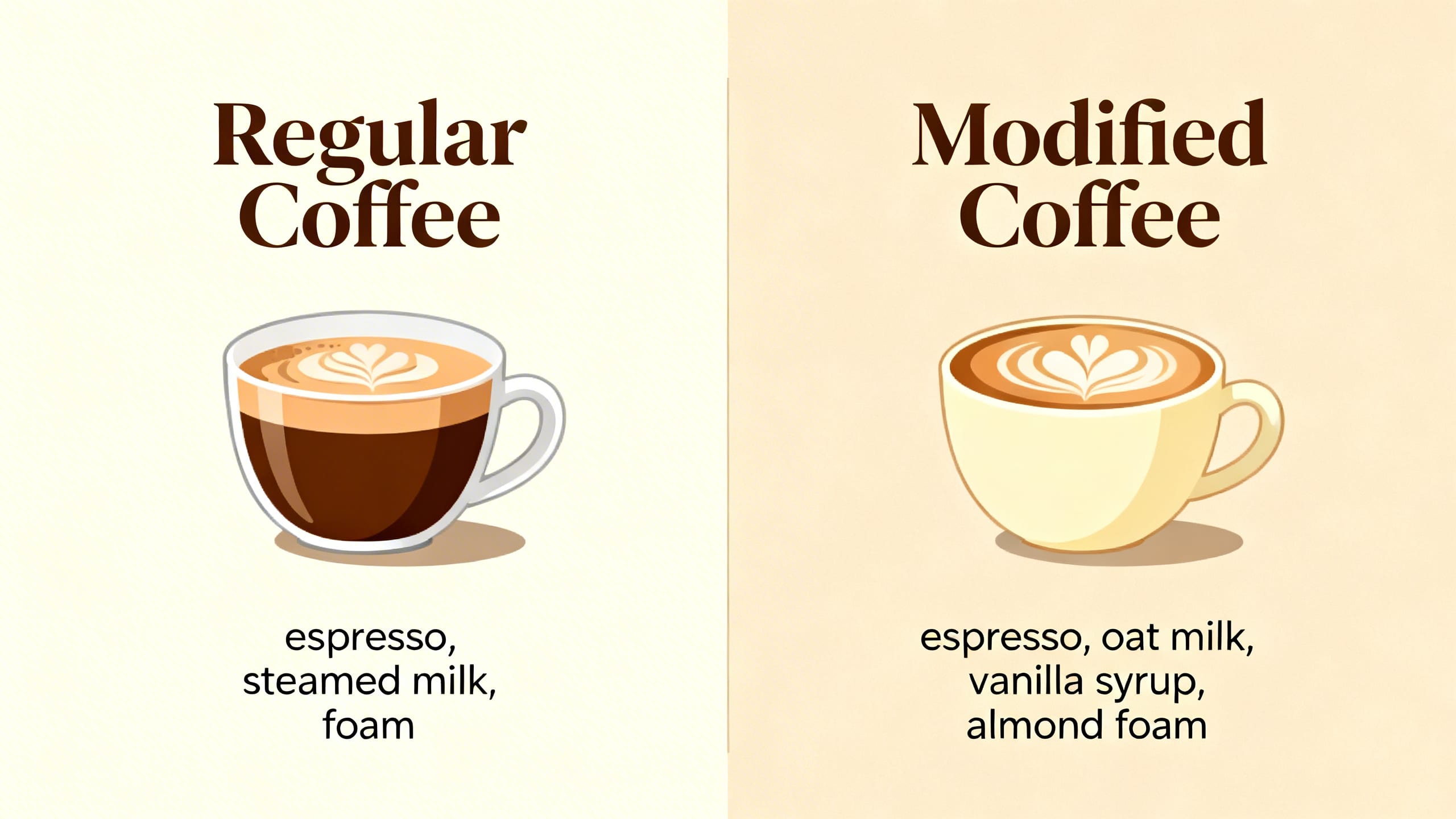
Making Smarter Choices, One Sip at a Time
Understanding the nutritional breakdown of your favorite Dunkin' drinks, whether you call it a Dunkalatte or something else, is about empowerment. No food is inherently "bad," but knowing its impact helps with moderation and achieving your personal health goals. Even small adjustments to your order can add up to significant differences over time. Next time you're craving that sweet treat, take a moment to consider what's inside. Empower yourself with knowledge, make conscious choices, and remember that even small adjustments can lead to big wins for your health.
References: [1] American Heart Association. How Much Sugar Is Too Much? Available at: https://www.heart.org/en/healthy-living/healthy-eating/eat-smart/sugar/how-much-sugar-is-too-much (Accessed: November 2025).
Leave A Reply
Login to post your comment or signup if you dont have any account