
Savoring the Sun: Your Guide to a Healthier Mediterranean Pasta Salad
Quick answer: A recipe is only useful if the serving size is honest. Check how much oil, salt, sauce, cheese, grain, starch, or protein is in your portion, then decide whether the meal fits your calorie, macro, sodium, fiber, or ingredient goal.
Key takeaways
- Recipe names can sound healthy while oil, salt, cheese, sauces, or portions drive the numbers.
- Serving size, protein, fiber, and sodium are usually more useful than a broad diet label.
- Ingredient swaps work best when they protect flavor and the reason you wanted the dish.
- Log the cooked portion once so future versions are easier to estimate.
Definition: In this guide, a smarter recipe decision means checking the real portion, the main nutrition drivers, personal limits, and the repeat pattern before turning a dish into a default.
Remember those summer potlucks where pasta salad was a staple, but maybe a little... heavy? It’s a classic dish, but traditional versions often come loaded with creamy, high-fat dressings that can overshadow the fresh ingredients. What if we told you it could be vibrant, healthy, and incredibly delicious, fitting perfectly into your wellness goals?
Why Reinvent a Classic Like Mediterranean Pasta Salad?
Many of us grew up loving pasta salad, and its popularity for picnics and gatherings remains high. However, modern health goals often demand more from our meals. We’re looking for dishes that are not just tasty, but also nutritious and supportive of a balanced lifestyle. That's exactly where a Mediterranean pasta salad shines. It takes the beloved concept of a versatile pasta dish and infuses it with the vibrant, health-promoting principles of the Mediterranean diet, offering a lighter, more nutrient-dense version without sacrificing any flavor.
What Makes a Pasta Salad "Mediterranean" and Why Does It Matter for Your Health?
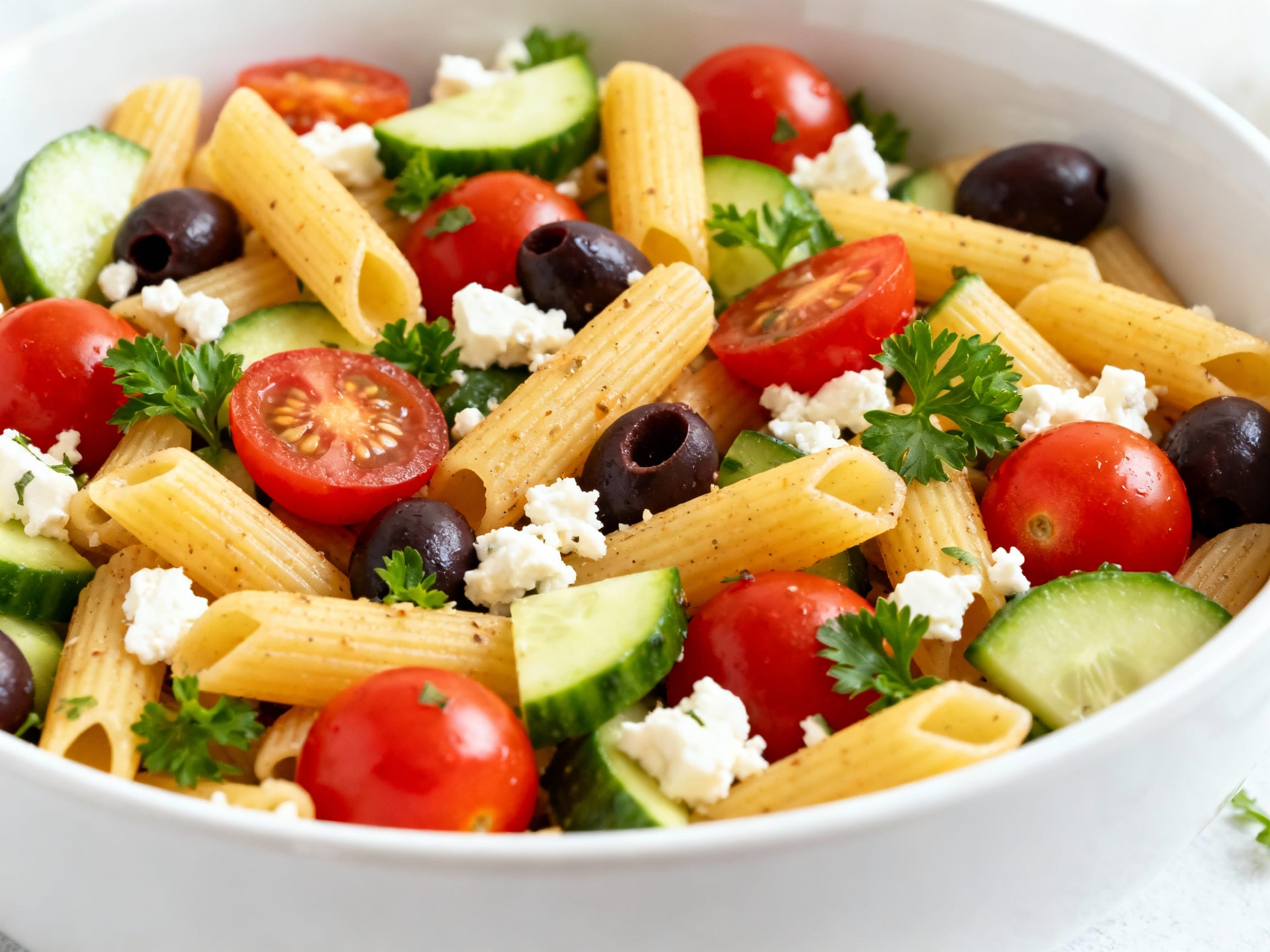
A Mediterranean pasta salad distinguishes itself by focusing on fresh, whole ingredients typical of the Mediterranean region. Key components include whole wheat pasta, extra virgin olive oil, an abundance of fresh vegetables, lean protein sources or legumes, and aromatic herbs. Each of these elements contributes significantly to your health.
For instance, using whole wheat pasta instead of refined pasta dramatically increases the fiber content, which is essential for digestive health, blood sugar regulation, and keeping you feeling full longer. Extra virgin olive oil is rich in monounsaturated fatty acids and antioxidants, known for their heart-healthy benefits. The generous inclusion of fresh vegetables like tomatoes, cucumbers, bell peppers, and spinach provides a wealth of vitamins, minerals, and antioxidants. Ingredients like olives contain polyphenols, and tomatoes are packed with lycopene, both powerful antioxidants that help protect your body's cells from damage. The Mediterranean diet itself is celebrated for its ability to promote heart health, reduce inflammation, and support brain function, benefits highlighted by reputable health organizations.
When you’re assembling your salad, understanding the exact impact of each ingredient is key. With Eatibo, you can quickly scan ingredients like your chosen whole wheat pasta or a specific type of feta cheese. This gives you instant access to detailed macros, potential allergens, and even seed oil content, ensuring every choice aligns with your specific goals, whether it’s low-sugar or seed-oil-free. This personalized insight helps you build a truly beneficial meal.
How Can You Craft Your Perfect Mediterranean Pasta Salad at Home?
Creating your own healthier Mediterranean pasta salad is surprisingly simple and incredibly rewarding. Start by choosing a good quality whole wheat pasta – penne, rotini, or farfalle work wonderfully. For the freshest flavor, opt for a homemade dressing using extra virgin olive oil, lemon juice or red wine vinegar, garlic, and fresh herbs like oregano, basil, and parsley. This vinaigrette base is naturally lower in saturated fat and calories compared to traditional creamy dressings.
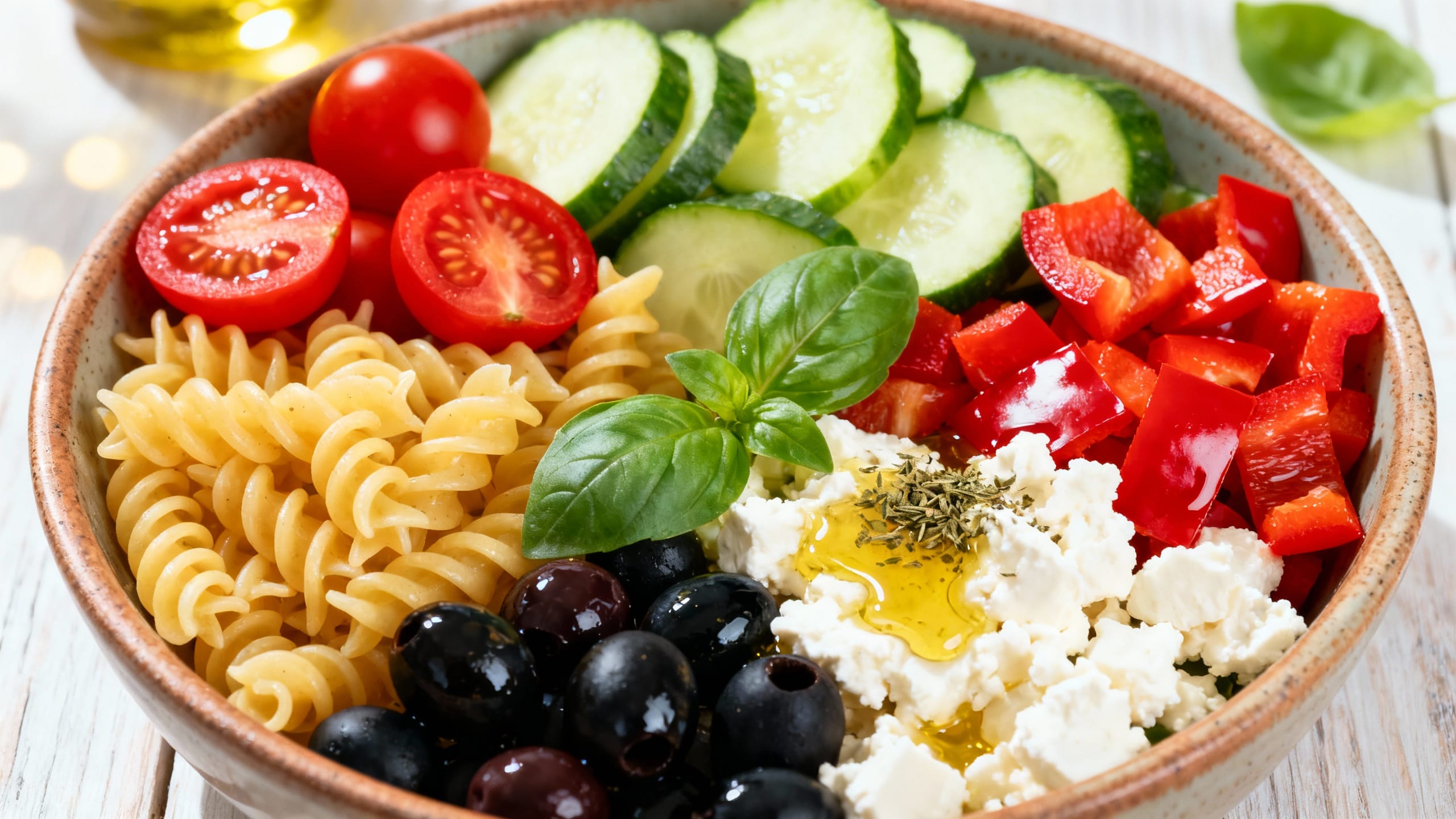
Next, load up on vegetables! Think colorful cherry tomatoes, crisp cucumbers, bell peppers (red, yellow, orange), Kalamata olives, and red onion. For protein, chickpeas are a fantastic plant-based option, adding fiber and substance. You could also include grilled chicken, flaked tuna, or crumbled feta cheese for added flavor and nutrients. The beauty of this dish lies in its versatility—feel free to experiment with what’s fresh and in season.
How Can You Ensure Your Mediterranean Pasta Salad Truly Fits Your Diet?
Even a "healthy" recipe can have variations that significantly impact your personal dietary goals. For instance, the type of feta cheese you choose or the amount of olive oil used can alter the calorie and fat content dramatically. This is where Eatibo becomes your personal nutrition coach. Simply point your camera at your finished Mediterranean pasta salad, or even scan the ingredient labels as you assemble it. Eatibo gives you instant, precise nutritional breakdowns—calories, macros, additives—and rates your personalized dish as 'Eat,' 'Limit,' or 'Skip' based on your specific goals, whether you're aiming for muscle gain, weight loss, or managing allergies. It even suggests simple swaps, like using a lighter vinaigrette or adding more non-starchy vegetables, to make your next batch even better.
Your Mediterranean Pasta Salad: More Than Just a Meal
This vibrant dish is truly versatile. It’s perfect for meal prepping, offering a delicious, ready-to-eat lunch for several days. Pack it in containers for work, enjoy it as a light and satisfying dinner, or bring it to your next potluck where it’s sure to be a crowd-pleaser. Store it in an airtight container in the refrigerator for 3-4 days.
By embracing this healthier take on a classic, you’re not just making a tasty meal; you’re making an informed choice for your well-being. It’s about savoring delicious food that nourishes your body and supports your lifestyle. So, go ahead, whip up a batch, and enjoy the sunny flavors and abundant health benefits of your very own Mediterranean pasta salad.
Decision framework
| What to check | Why it changes the dish | Practical next step |
|---|---|---|
| Serving size | Recipe nutrition changes fast when the portion doubles | Log the cooked portion you actually eat |
| Oil, cheese, sauce, nuts, or starch | These ingredients can drive calories, sodium, or saturated fat | Measure once, then adjust future versions by feel |
| Protein and fiber | They affect fullness more than the recipe name does | Add beans, yogurt, fish, eggs, lean meat, or vegetables when useful |
| Personal restriction applies | General recipes do not know allergies, medications, or clinician rules | Use verified substitutions and professional guidance where needed |
Concrete examples
- If a dish feels healthy but uses several tablespoons of oil, measure once so the estimate is not fantasy.
- If you want more fullness, increase protein or fiber before cutting flavor.
- If a recipe becomes a weekly default, save the logged version so the next meal takes less work.
Limits and safety notes
Recipe guidance is approximate because ingredient brands, cooking methods, and portions vary. This guide is not allergy clearance, medication advice, eating-disorder recovery guidance, or a substitute for a clinician or registered dietitian.
Where Eatibo fits
Eatibo helps when a recipe becomes something you actually eat. Scan ingredients or a plate photo, check calories, macros, sodium, added sugar, allergens, and additives, then save the meal to your Nutrition Log so repeat versions are easier to compare.
Sources and references
- HHS/ODPHP: Current Dietary Guidelines for Americans
- USDA/FNS: Dietary Guidelines for Americans
- FDA: How to understand and use the Nutrition Facts label
Frequently asked questions
Is this recipe automatically healthy?
No. The answer depends on serving size, ingredients, oil, salt, sauce, protein, fiber, and how often you eat it.
What should I adjust first?
Adjust the biggest driver first: portion size, oil, sauce, cheese, starch, sodium, protein, or fiber. Small swaps work better when they keep the dish enjoyable.
How can Eatibo help with recipes?
Eatibo can scan ingredients or the finished plate, then save the estimate so repeat versions are easier to compare.
Related reading
- Crisped Mediterranean Dorade – Your Smart Seafood Choice
- Two Mediterranean Staples an Italian Michelin Chef Wants You to Cook Tonight
- Beyond the Bland: Delicious Low-Carb Chicken Recipes You'll Actually Crave
Last updated: June 1, 2026