
How Many Calories in a Big Mac (And What Does That Really Mean for You?)
Quick answer: Do not stop at the headline calorie or macro number. Start with the serving you will actually eat, then check calories, protein, fiber, sodium, added sugar, saturated fat, ingredients, and allergens against your real goal.
Key takeaways
- Serving size usually changes the answer more than the label headline.
- Compare the tradeoff that matters most for your goal: calories, protein, fiber, sodium, added sugar, saturated fat, ingredients, or allergens.
- One item rarely decides the whole diet; repeated weekly patterns matter more.
- Use official labels and menus when available, then log the real portion you ate.
Definition: In this guide, a smarter food decision means checking the real portion, the practical tradeoffs, personal limits, and the repeat pattern before turning one answer into a rule.
That moment you finish a Big Mac, a classic indulgence for many, often comes with a question: "How many calories did I just eat?" It's a universal feeling, a flicker of curiosity – or perhaps slight dread – about the nutritional impact of our quick-fix meals. With fast food being a significant part of the American diet, understanding what's actually in our favorite items is more important than ever.
So, Exactly How Many Calories Are Hiding in a Big Mac?
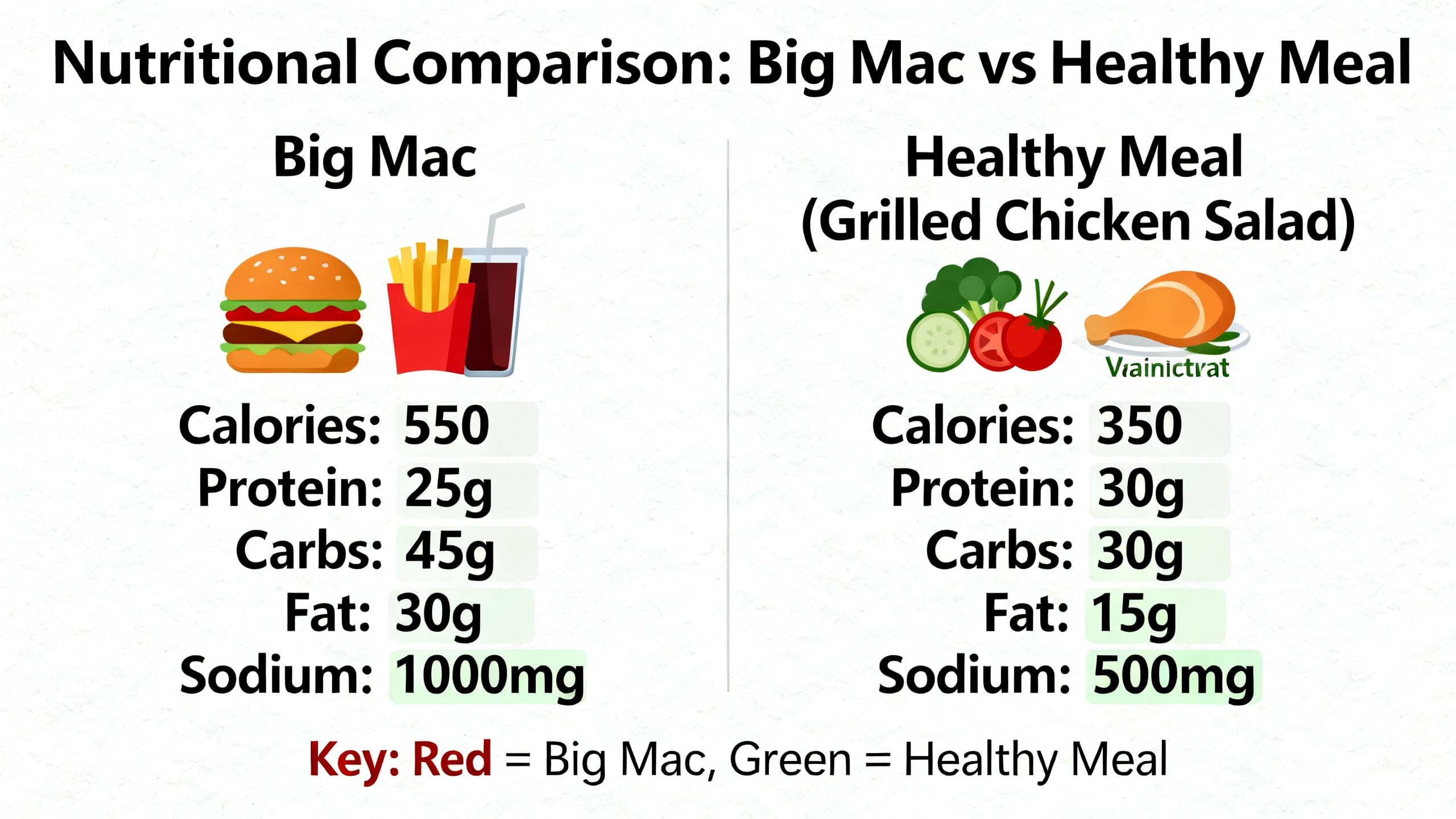
A standard McDonald's Big Mac typically contains around 550 calories. To put that into perspective, for an average adult consuming 2,000 calories a day, a single Big Mac accounts for over a quarter of their daily intake.
But calories are just one piece of the puzzle. What about the hidden macros, additives, and allergen flags that truly influence whether a meal supports your health goals? This is where a tool like Eatibo comes in – it doesn't just tell you the calories, it dissects the entire nutritional profile, giving you the full picture with a simple scan.
Beyond the Numbers: What Else Does a Big Mac Bring to Your Plate?
While 550 calories is a good starting point, a Big Mac's nutritional story goes much deeper. It typically contains about 30 grams of fat, with a significant portion being saturated fat, around 10 grams. You're also looking at roughly 45 grams of carbohydrates, including about 9 grams of sugar. And let's not forget the sodium: a single Big Mac packs close to 1,000 milligrams of sodium, which is nearly half of the recommended daily limit for many adults. On the upside, it does offer a decent amount of protein, usually around 25 grams.
Understanding these numbers is crucial. High saturated fat can impact heart health, excess sugar can contribute to energy crashes and weight gain, and high sodium is a concern for blood pressure.
Is a Big Mac an "Eat," "Limit," or "Skip" for My Goals?
How a Big Mac fits into your diet largely depends on your personal health objectives. If you're trying to lose weight, 550 calories might be a significant chunk of your daily allowance, requiring careful planning for other meals. For someone looking to gain muscle, the protein is a plus, but the saturated fat and sugar might not be the cleanest fuel. If you're on a low-sugar diet or trying to avoid certain seed oils often found in fast food, a Big Mac might lean more towards a "limit" or "skip."
Imagine having a personal coach that could instantly tell you if that Big Mac, or any meal, was an "Eat," "Limit," or "Skip" for your specific muscle gain, weight loss, or seed-oil-free goals. Eatibo does exactly that, even suggesting simple swaps right in the moment. It transforms casual curiosity into actionable nutritional intelligence.
Smart Swaps and Smarter Choices: Navigating the Fast Food Landscape
Fast food is often about convenience, and it's not going away. But your approach to it can definitely change. If a Big Mac is calling your name, consider these strategies to make a smarter choice:
- Portion Control: Opt for a singular item rather than a full meal with fries and a sugary drink.
- Go for Grilled: Many fast-food chains offer grilled chicken sandwiches or salads (ask for dressing on the side and use sparingly).
- Skip the Sugar: Choose water, unsweetened tea, or diet soda instead of sugary beverages.
- Customize: Ask for no cheese or special sauce to reduce fat and sodium, if possible.
- Check the Menu: Most chains provide nutritional information online or in-store. Take a moment to review it before ordering.

Your Plate, Your Power: Taking Control of Your Nutrition
Knowing the calorie count of a Big Mac is a good first step, but understanding its full impact on your body and how it aligns with your health goals is where real change happens. It's about moving beyond just numbers to truly grasping the nutritional implications. This includes looking at the full macro breakdown, identifying additives, and understanding potential allergens.
Empower yourself by exploring tools that provide personalized, actionable nutritional insights. With platforms like Eatibo, you can scan your meals, understand their complete nutritional profile, and get tailored recommendations that respect your privacy and data ownership. Eat smarter, one scan at a time, and make every bite count towards your well-being.
Decision framework
| What to check | Why it changes the answer | Practical next step |
|---|---|---|
| Serving size or portion | Calories, sodium, sugar, carbs, and fat scale with the amount actually eaten | Log the realistic portion, not the ideal one |
| Protein, fiber, sodium, added sugar, and saturated fat | These decide whether the choice supports fullness and long-term habits | Compare the tradeoff that matters most for your goal |
| Ingredients, sauces, breading, or add-ons | Small extras can change the result quickly | Compare the base item and extras separately |
| Personal restriction applies | General nutrition advice cannot know every boundary | Follow allergy, medication, religious, or clinician-directed rules first |
Concrete examples
- If the food looks healthy but the serving is tiny, check what a realistic portion does to calories, sodium, or sugar.
- If two options have similar calories, choose the one with more protein, fiber, or ingredients you tolerate.
- If the food is occasional and you enjoy it, log it honestly instead of building a strict rule you will not keep.
Limits and safety notes
This guide is for everyday food awareness. It is not a diagnosis tool, allergy authority, medication checker, eating-disorder recovery plan, or substitute for a clinician or registered dietitian. For diagnosed conditions, pregnancy, kidney disease, diabetes medication, severe allergies, or clinician-directed diets, get professional guidance before changing your routine.
Where Eatibo fits
Eatibo is useful when a question turns into something you need to compare or log. You can scan a meal photo, barcode, nutrition label, or ingredient list, review calories and macros, check sodium, added sugar, allergens, additives, and ingredients, then save the result to your Nutrition Log. The point is not one perfect judgment; it is making the next similar choice easier because your own pattern is visible.
Sources and references
- FDA: Calories on the Nutrition Facts Label
- FDA: How to understand and use the Nutrition Facts label
- HHS/ODPHP: Current Dietary Guidelines for Americans
Frequently asked questions
Is this something I need to avoid completely?
Usually no. The better question is portion, frequency, and fit. A food can be fine occasionally but less useful as an everyday default if it repeatedly pushes sodium, added sugar, saturated fat, calories, or allergens past your limits.
What should I check first?
Start with the serving size you will actually eat. Then check the tradeoff most relevant to your goal: calories, protein, fiber, sodium, added sugar, saturated fat, ingredients, or allergens. The order matters because a tiny serving can hide a bigger real-world intake.
How can Eatibo help me decide faster?
Eatibo helps you scan or log the choice, compare the practical nutrition details, and review the pattern later. It is most useful for repeat decisions because the app can show whether similar foods are helping your weekly routine or quietly pushing it off track.
Related reading
- Navigating Dave's Hot Chicken: What's Really on Your Plate?
- Cracking the Code: How Many Calories Are Really in Your Scrambled Eggs?
- Fried Egg Calories – Your Guide to a Healthier Fry
Last updated: June 1, 2026