
Two Mediterranean Staples an Italian Michelin Chef Wants You to Cook Tonight
Quick answer: Mediterranean-style eating works best as a pattern, not as a magic label. Look for vegetables, beans, whole grains, olive oil, seafood, yogurt, herbs, and minimally processed foods, then still check portions, sodium, protein, fiber, and added sugar.
Key takeaways
- The Mediterranean pattern is flexible; it is not one fixed meal plan.
- Olive oil, nuts, bread, rice, pasta, cheese, and wine can fit, but portions still matter.
- Protein, fiber, sodium, and added sugar make the difference between a helpful meal and a vague wellness claim.
- Use the label, menu, or meal photo when you need a decision you can repeat.
Definition: In this guide, a smarter Mediterranean food decision means checking the actual dish, the practical nutrition tradeoffs, personal limits, and the repeat pattern before treating a cuisine label as a health guarantee.
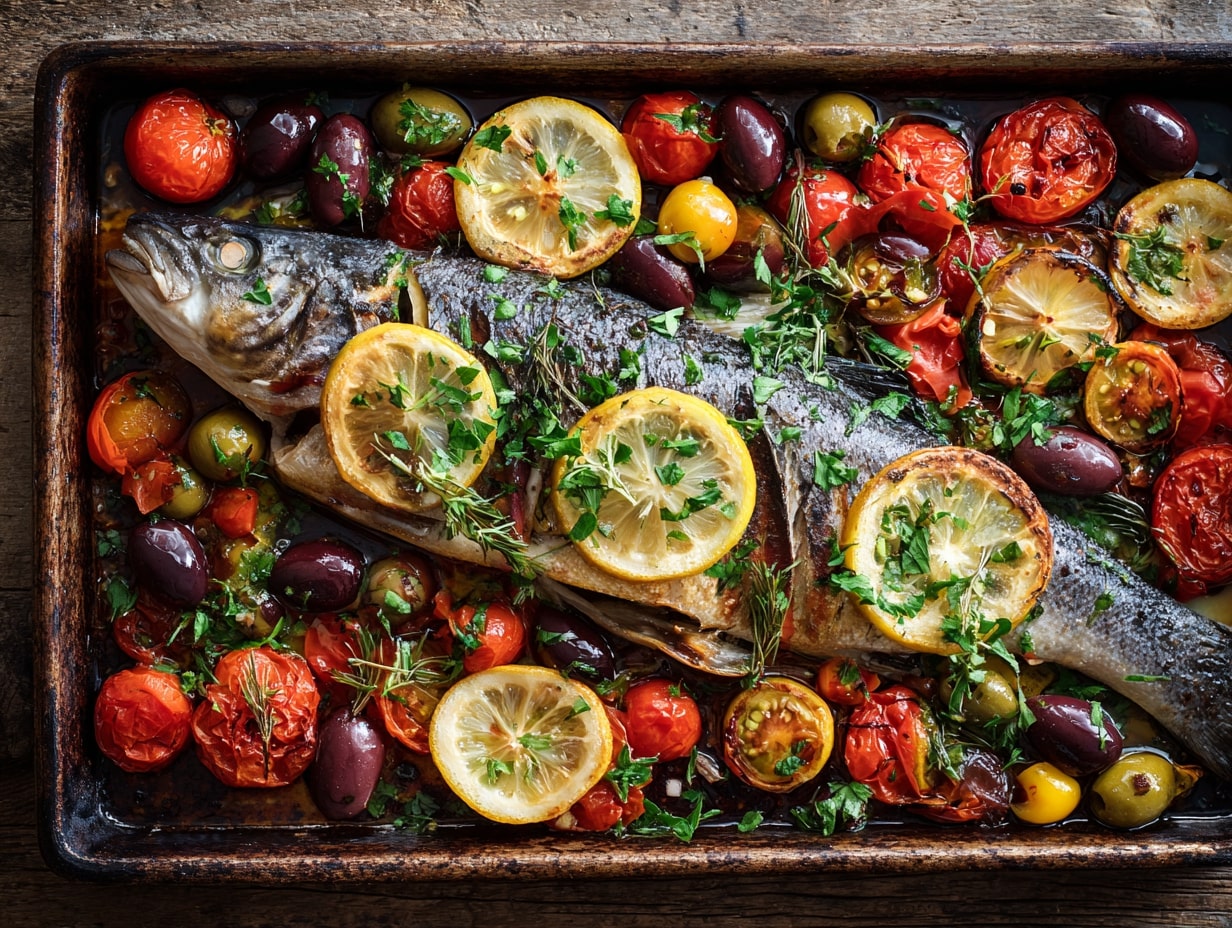
You don’t need a restaurant kitchen to cook like a pro. We asked an Italian Michelin-experienced chef to walk us through two dishes that feel special yet work on a Tuesday: Roasted Branzino with Tomatoes & Olives and a Sicilian Caponata you can serve spooned over warm whole-grain farro. Both hit the Mediterranean notes—olive oil, seafood or vegetables, herbs, acid—without making you babysit a pan for an hour.
While you cook, open Eatibo and set your goal to Mediterranean. Scan ingredients as you go—olive oil, canned tomatoes, olives, even that loaf of bread—and you’ll see fiber, sodium, and “Good / Limit / Skip” flags in real time. It’s a quiet sous-chef that keeps your plate aligned with your goals.
Dish #1: Roasted Branzino with Tomatoes & Olives (Serves 2)
Why it works for the Mediterranean diet Lean fish, generous but measured extra-virgin olive oil, lots of tomatoes and herbs, and a salty hit from olives. Bright, light, deeply satisfying.
Ingredients
- 2 whole branzino (about 1 lb / 450 g each), cleaned and scaled
- 2 cups cherry tomatoes, halved
- 1/2 cup pitted Castelvetrano or Kalamata olives
- 2 Tbsp capers, rinsed
- 2 lemons (zest one, slice the other)
- 3 Tbsp extra-virgin olive oil
- 2 garlic cloves, thinly sliced
- Fresh thyme or oregano, a few sprigs
- Kosher salt and black pepper
Technique notes from the chef
- Pat the fish dry so the skin roasts, not steams.
- Score the thickest part of each side; seasoning can reach the flesh and it cooks more evenly.
- Toss tomatoes, olives, capers, garlic, lemon zest, and 2 Tbsp olive oil on a sheet pan; season. Lay fish on top, tuck lemon slices and herbs inside the cavity, drizzle the last Tbsp oil, and season the skin.
- Roast at 450°F / 230°C for 12–15 minutes until the flesh flakes and the tomatoes blister. Finish with a squeeze of lemon.
Eatibo in action Scan the olive oil and olives to keep an eye on added sodium and total fats. Eatibo will nudge portion size and show you that most fats here are monounsaturated—a Mediterranean green light.
Swaps & shortcuts
- No branzino? Trout or snapper works; fillets cut the roast to about 8–10 minutes.
- Prefer dairy? A spoon of plain yogurt mixed with lemon and grated cucumber makes a quick tzatziki on the side.
- Crusty whole-grain bread is classic; Eatibo will flag portions if your carbs are running high that day.
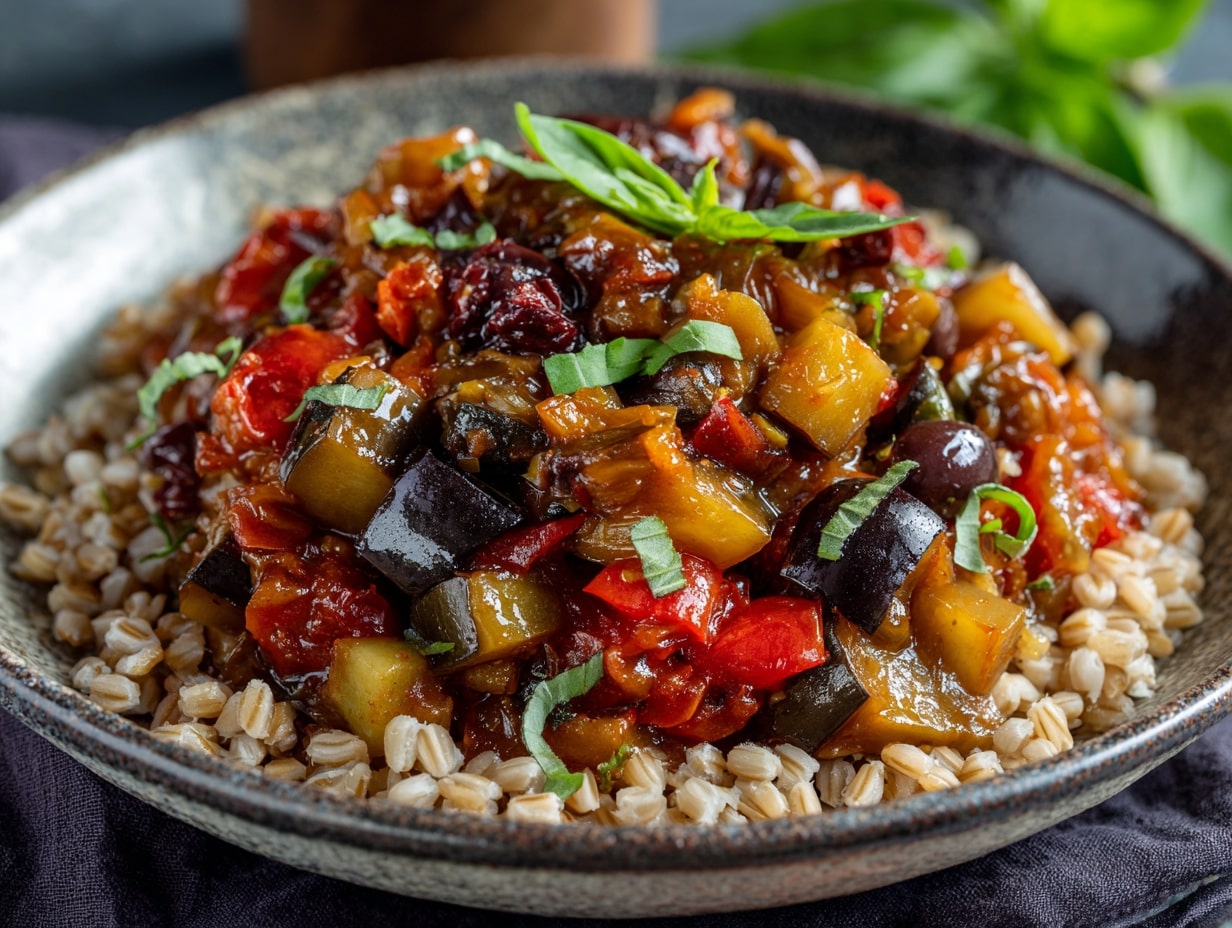
Dish #2: Sicilian Caponata over Warm Farro (Serves 4 as a side, 2 as a main)
Silky eggplant, sweet-sour tomatoes, celery crunch, a little briny pop. The chef’s trick is gentle heat and a splash of vinegar at the end.
Ingredients
- 1 large eggplant (about 1 lb / 450 g), 1-inch cubes
- 1 medium onion, diced
- 2 celery stalks, diced
- 1 red bell pepper, diced (optional but lovely)
- 1 cup canned crushed tomatoes
- 2 Tbsp tomato paste
- 1/3 cup green olives, chopped
- 2 Tbsp capers, rinsed
- 1/4 cup golden raisins
- 3–4 Tbsp extra-virgin olive oil
- 2–3 Tbsp red wine vinegar
- Pinch of sugar or a few drops of honey (balance)
- Fresh basil, torn; parsley, chopped
- Kosher salt and black pepper
- 1 cup farro (dry), cooked per package for serving (optional but recommended)
Method that keeps it jammy, not greasy
- Salt the eggplant cubes for 15 minutes, rinse, pat dry.
- Warm 2 Tbsp oil in a wide pan; cook onion and celery with a pinch of salt until glossy. Add bell pepper.
- Add eggplant and another Tbsp oil; let it take on light color. Stir in tomato paste; cook until brick red.
- Add crushed tomatoes, olives, capers, raisins. Simmer gently until the eggplant is silky.
- Balance with vinegar and a touch of sweetness; season. Fold in herbs.
- Serve warm or room temp over hot farro.
Eatibo in action Scan your canned tomatoes and olives to check added salt. Eatibo’s Nutrition Gaps will highlight if your day is light on fiber—farro fixes that in one scoop. Want lower carbs at dinner? Skip the farro and add a protein, like grilled shrimp.
Chef’s tiny upgrades that change everything
- Use great olive oil. It should smell like grass or green tomato. Eatibo will log your pour so you don’t overshoot calories.
- Don’t fear acid. A squeeze of lemon on the fish and a splash of vinegar in caponata wakes up every flavor.
- Keep heat moderate. Browning is flavor; burning is regret.
- Finish with fresh herbs. The perfume sells the dish before it hits the table.
Smart questions people ask (quick answers)
Can I make branzino in an air fryer? Yes—425°F / 220°C for about 10–12 minutes; check for flaking. Is caponata good for meal prep? Even better the next day. Store 3–4 days; Eatibo can track leftovers so your week stays balanced. Gluten-free idea? Serve caponata over quinoa or a chickpea mash. What wine pairs well? A Sicilian Grillo or a crisp Vermentino won’t overpower the herbs and lemon.
Make it yours with Eatibo
Set your goal to Mediterranean and log tonight’s plate with a quick scan. Eatibo will celebrate the olive oil and veggies, keep an eye on sodium from olives and capers, and show whether you hit your fiber and omega-3 targets. Cooking like a chef is fun; cooking like a chef who knows their numbers is how habits stick.
Decision framework
| What to check | Why it changes the answer | Practical next step |
|---|---|---|
| Plant foods, legumes, whole grains, seafood, olive oil | These are the pattern's useful anchors | Build the plate around these before adding extras |
| Bread, pasta, rice, cheese, nuts, oil, or wine | Mediterranean foods can still be calorie-dense | Keep the portion visible instead of assuming the label makes it healthy |
| Sodium, added sugar, and saturated fat | Packaged and restaurant versions vary widely | Check labels, sauces, and sides separately |
| Medical or allergy boundary | A cuisine pattern is not personalized care | Follow clinician-directed limits first |
Concrete examples
- If a meal has vegetables, beans, olive oil, and fish, it may fit the pattern even without a perfect label.
- If a restaurant dish is mostly bread, cheese, creamy sauce, or fried sides, check the portion before assuming it is light.
- If you repeat the same Mediterranean meal weekly, log it once and adjust from your own trend.
Limits and safety notes
Mediterranean-style eating is a general pattern, not a medical prescription. For diagnosed conditions, pregnancy, kidney disease, diabetes medication, severe allergies, eating-disorder recovery, or clinician-directed diets, get qualified guidance before changing your routine.
Where Eatibo fits
Eatibo can turn a broad Mediterranean idea into a specific food decision. Scan the meal, menu, barcode, nutrition label, or ingredient list, then compare calories, macros, sodium, added sugar, allergens, additives, and weekly Nutrition Log patterns.
Sources and references
- American Heart Association: What is the Mediterranean Diet?
- HHS/ODPHP: Current Dietary Guidelines for Americans
- USDA/FNS: Dietary Guidelines for Americans
Frequently asked questions
Is Mediterranean food always healthy?
No. The pattern can be very useful, but portions, sodium, refined grains, cheese, alcohol, sauces, and sweets still matter.
What should I look for first?
Look for vegetables, beans, whole grains, olive oil, fish or lean protein, and minimally processed foods. Then check sodium, added sugar, protein, fiber, and serving size.
Where does Eatibo help?
Eatibo helps when you need to scan a real meal, menu, barcode, label, or ingredient list and compare it against your weekly pattern.
Related reading
- Savoring the Sun: Your Guide to a Healthier Mediterranean Pasta Salad
- Crisped Mediterranean Dorade – Your Smart Seafood Choice
- From Quick Wins to Lasting Health: Mediterranean Diet vs. Keto
Last updated: June 1, 2026