
Navigating the Dairy Aisle: A Smart Shopper's Guide to Healthier Spreads

Quick answer: Do not stop at the headline calorie or macro number. Start with the serving you will actually eat, then check calories, protein, fiber, sodium, added sugar, saturated fat, ingredients, and allergens against your real goal.
Key takeaways
- Serving size usually changes the answer more than the label headline.
- Compare the tradeoff that matters most for your goal: calories, protein, fiber, sodium, added sugar, saturated fat, ingredients, or allergens.
- One item rarely decides the whole diet; repeated weekly patterns matter more.
- Use official labels and menus when available, then log the real portion you ate.
Definition: In this guide, a smarter food decision means checking the real portion, the practical tradeoffs, personal limits, and the repeat pattern before turning one answer into a rule.
Remember that time you grabbed what you thought was a healthy butter alternative, only to discover it was packed with ingredients you couldn't pronounce? You're not alone. The dairy aisle, especially in health food stores, can feel like a labyrinth of choices, each promising "health" but often delivering confusion. Many consumers (a whopping 70%, according to some surveys) admit to struggling with understanding food labels, making that simple choice for a dairy spread much harder than it should be.
What's Really Hiding in Your Dairy Spread Beyond Just Milk and Cream?
When you pick up a dairy spread, you might expect milk, cream, or a plant-based equivalent. But look closer. Many products, even those in the "health food" section, contain a surprising array of ingredients. Think emulsifiers, stabilizers, flavorings, and preservatives designed to extend shelf life or create a specific texture. For example, carrageenan is a common thickener, and modified starches often appear in whipped or low-fat options.
A big red flag to watch for is the prevalence of seed oils (like sunflower, safflower, or canola oil) in seemingly healthy dairy-free or butter alternatives. While not inherently "bad," they can contribute to an imbalanced omega-3 to omega-6 ratio if consumed in excess, which many people are actively trying to avoid. This is where understanding the true composition becomes critical. Imagine being able to instantly scan a product's label and see beyond the marketing claims, getting a clear breakdown of every ingredient. Eatibo's AI-powered scanner can cut through the noise, flagging additives and giving you a quick 'Eat/Limit/Skip' rating for that dairy spread.
How Can I Find a Dairy Spread That Aligns with My Specific Dietary Needs?
Your dietary journey is unique, and so should be your food choices. Whether you're aiming for weight loss, muscle gain, avoiding seed oils, or managing allergies, the right dairy spread can make a difference.
- Weight Loss: Focus on options with lower calorie density and healthy fats. Greek yogurt-based spreads, for instance, offer protein and fewer calories than some butter-based options.
- Muscle Gain: Look for protein-rich choices like Icelandic skyr or high-protein cottage cheese spreads.
- Low-Sugar: Always check the "added sugars" line on the nutrition panel. Even savory spreads can hide surprising amounts of sugar.
- Seed-Oil-Free: This one requires vigilance. Many vegan "butters" or cream cheeses use a blend of seed oils. Opt for spreads made with coconut oil or olive oil as their primary fat source, or even whole nut butters.
- Allergen Concerns: For those avoiding dairy, soy, or nuts, explicitly look for "dairy-free," "soy-free," or "nut-free" certifications. Don't assume; always read the ingredient list carefully.
Can I Really Trust the "Health Food" Label?
The "health food" label can be wonderfully helpful, but it's not a blanket guarantee. Just because something is in a health food store doesn't automatically mean it's optimal for your health goals. It's about discernment.
When evaluating a dairy spread, consider these aspects:
- Organic vs. Conventional: Organic certification generally means no synthetic pesticides, GMOs, or hormones, which many prefer. However, an organic product can still be high in sugar or unhealthy fats.
- Ingredient Order: Ingredients are listed by weight. If sugar or seed oils are among the first three ingredients, that's a red flag.
- Nutritional Panel Deep Dive: Pay attention to saturated fat, sodium, and sugar content per serving. A serving size might be smaller than you think you typically consume.
- "Free-From" Claims: "Gluten-free" doesn't mean "healthy," and "dairy-free" can sometimes mean "packed with processed oils." Always verify what the product does contain.
Smart Swaps & Simple Solutions for Happier Spreading
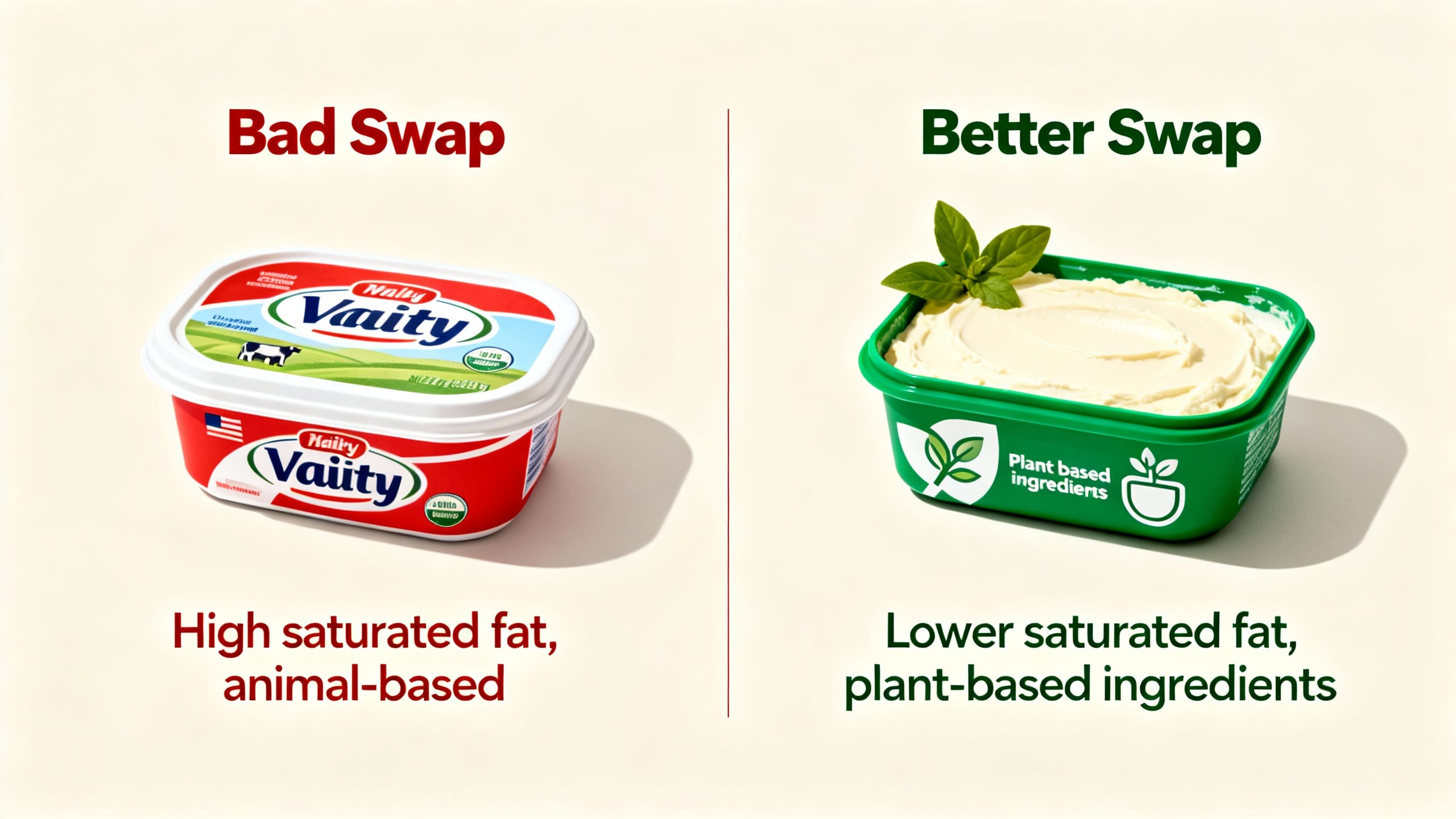
Making healthier choices in the dairy aisle doesn't have to be overwhelming. Simple swaps can significantly improve your diet. For instance, instead of conventional cream cheese, try a grass-fed labneh or a cashew-based cream cheese alternative with minimal ingredients. Swap out margarine, often high in trans fats and seed oils, for ghee or a high-quality butter from grass-fed cows.
Once you've identified a less-than-ideal 'Limit' or 'Skip' dairy spread, the next step is finding a better option. Eatibo helps here too, offering simple, personalized swaps based on your dietary goals, guiding you towards alternatives that actually support your health journey. Remember, portion control is also key; even healthy fats are calorie-dense.
Your Confident Choice Starts Here
Navigating the dairy aisle no longer has to be a guessing game. By learning to read labels critically, understanding your unique dietary needs, and not being swayed solely by marketing claims, you can make confident, informed choices. Empower yourself with knowledge and tools like Eatibo to ensure that every dairy spread you bring home truly supports your health and well-being. Eat smarter, one scan at a time.
Decision framework
| What to check | Why it changes the answer | Practical next step |
|---|---|---|
| Serving size or portion | Calories, sodium, sugar, carbs, and fat scale with the amount actually eaten | Log the realistic portion, not the ideal one |
| Protein, fiber, sodium, added sugar, and saturated fat | These decide whether the choice supports fullness and long-term habits | Compare the tradeoff that matters most for your goal |
| Ingredients, sauces, breading, or add-ons | Small extras can change the result quickly | Compare the base item and extras separately |
| Personal restriction applies | General nutrition advice cannot know every boundary | Follow allergy, medication, religious, or clinician-directed rules first |
Concrete examples
- If the food looks healthy but the serving is tiny, check what a realistic portion does to calories, sodium, or sugar.
- If two options have similar calories, choose the one with more protein, fiber, or ingredients you tolerate.
- If the food is occasional and you enjoy it, log it honestly instead of building a strict rule you will not keep.
Limits and safety notes
This guide is for everyday food awareness. It is not a diagnosis tool, allergy authority, medication checker, eating-disorder recovery plan, or substitute for a clinician or registered dietitian. For diagnosed conditions, pregnancy, kidney disease, diabetes medication, severe allergies, or clinician-directed diets, get professional guidance before changing your routine.
Where Eatibo fits
Eatibo is useful when a question turns into something you need to compare or log. You can scan a meal photo, barcode, nutrition label, or ingredient list, review calories and macros, check sodium, added sugar, allergens, additives, and ingredients, then save the result to your Nutrition Log. The point is not one perfect judgment; it is making the next similar choice easier because your own pattern is visible.
Sources and references
- FDA: Calories on the Nutrition Facts Label
- FDA: How to understand and use the Nutrition Facts label
- HHS/ODPHP: Current Dietary Guidelines for Americans
Frequently asked questions
Is this something I need to avoid completely?
Usually no. The better question is portion, frequency, and fit. A food can be fine occasionally but less useful as an everyday default if it repeatedly pushes sodium, added sugar, saturated fat, calories, or allergens past your limits.
What should I check first?
Start with the serving size you will actually eat. Then check the tradeoff most relevant to your goal: calories, protein, fiber, sodium, added sugar, saturated fat, ingredients, or allergens. The order matters because a tiny serving can hide a bigger real-world intake.
How can Eatibo help me decide faster?
Eatibo helps you scan or log the choice, compare the practical nutrition details, and review the pattern later. It is most useful for repeat decisions because the app can show whether similar foods are helping your weekly routine or quietly pushing it off track.
Related reading
- Deconstructing Food for Better Health: A Practical Guide
- The Golden Grains of Yellow Mediterranean Rice: A Culinary Journey
- Where is Mediterranean Food From? Unpacking a Culinary Tapestry
Last updated: June 1, 2026