
Small Avocado Calories – Unpacking Nature's Creamy Green
Quick answer: Do not stop at the headline calorie or macro number. Start with the serving you will actually eat, then check calories, protein, fiber, sodium, added sugar, saturated fat, ingredients, and allergens against your real goal.
Key takeaways
- Serving size usually changes the answer more than the label headline.
- Compare the tradeoff that matters most for your goal: calories, protein, fiber, sodium, added sugar, saturated fat, ingredients, or allergens.
- One item rarely decides the whole diet; repeated weekly patterns matter more.
- Use official labels and menus when available, then log the real portion you ate.
Definition: In this guide, a smarter food decision means checking the real portion, the practical tradeoffs, personal limits, and the repeat pattern before turning one answer into a rule.
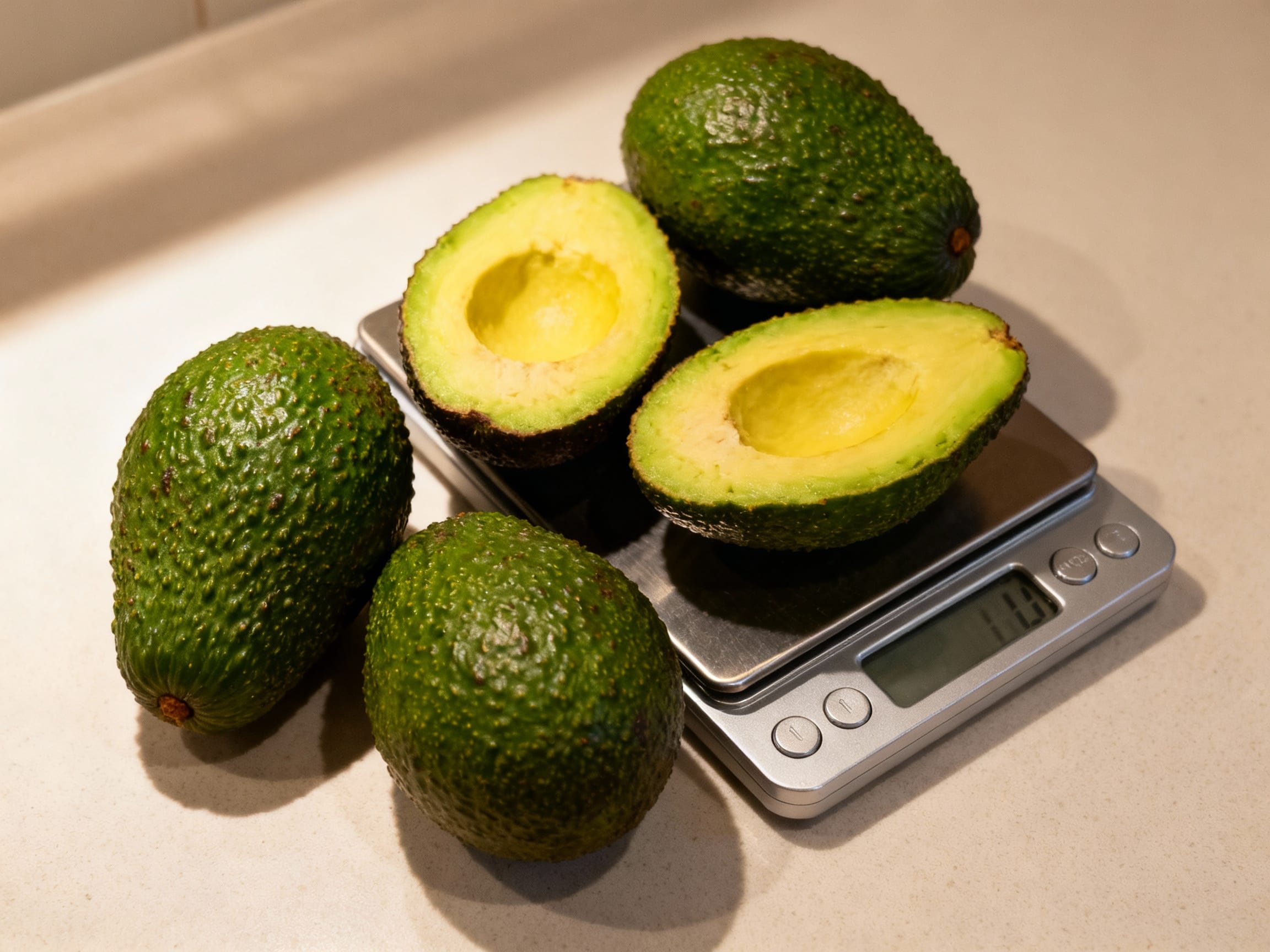
That "healthy" avocado toast might be secretly sabotaging your goals, or at least making you wonder. Ever wonder if your "small" avocado is actually a calorie bomb in disguise? It’s a common oversight to treat all avocados the same size, yet their calorie content can vary significantly.
Is that "small" avocado secretly a calorie bomb on your plate?
You grab a "small" avocado, thinking it’s a perfectly healthy addition to your salad or morning toast. Avocados are lauded for their health benefits, and for good reason! However, their delicious, creamy texture means they're also calorie-dense. Sometimes, what we perceive as "small" can still pack a surprising punch, especially if you're not paying close attention to size differences.
How many calories are really in a small avocado?
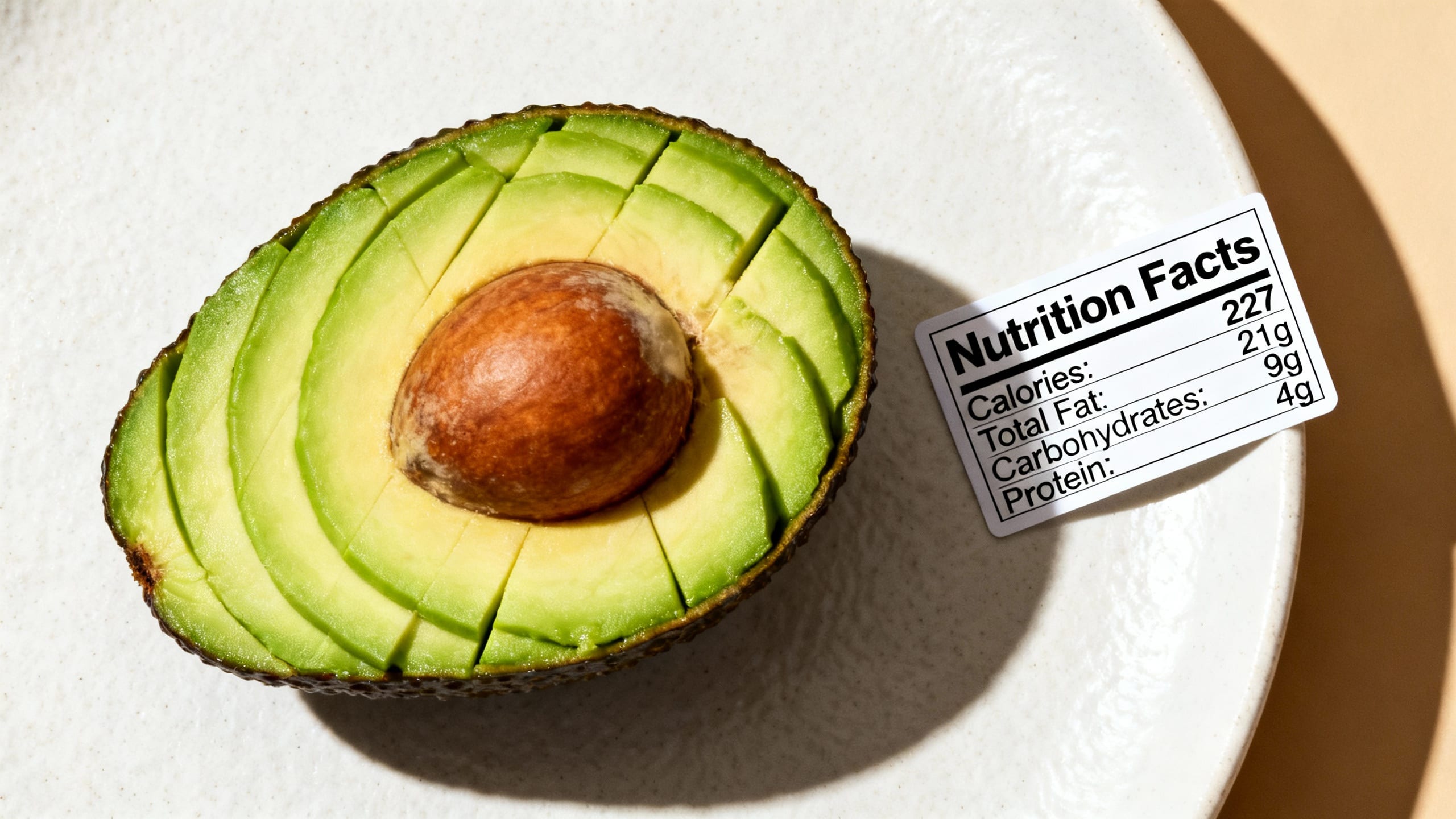
Let's get straight to the numbers. What constitutes a "small" avocado can vary, but generally, we're looking at one weighing around 5 ounces (about 150 grams) without the pit and skin. A small avocado of this size typically contains between 200 and 250 calories.
The majority of these calories come from healthy fats, with around 20-25 grams of fat per small fruit. While avocados do contain some carbohydrates and protein, these are minimal compared to their fat content. That's why it's easy to underestimate the calorie count if you're just eyeballing it.
Imagine you've just picked out an avocado and you're wondering if it really fits into your goals for the day. This is where Eatibo shines – just point your camera at it, and you'll get instant, accurate calorie and macro data based on its actual size. No more guesswork, just precise information to help you make informed choices.
Beyond the numbers: What makes avocado so good for you, even with its calories?
It’s easy to get caught up in calorie counting, but avocados offer so much more than just energy. They are packed with monounsaturated fats – the kind that’s good for your heart. These fats can help lower bad cholesterol levels and contribute to overall cardiovascular health.
Avocados are also a fantastic source of dietary fiber, which aids digestion, promotes satiety, and helps stabilize blood sugar levels. A small avocado can provide a significant portion of your daily fiber needs. Beyond that, they're rich in essential micronutrients like potassium (even more than a banana!), Vitamin K, Vitamin C, several B vitamins (including B6 and folate), and Vitamin E. These nutrients support everything from bone health and immune function to energy production and skin vitality. So, while they're calorie-dense, these are far from "empty" calories; they're nutrient powerhouses.
How can I enjoy avocado without overdoing it, no matter my dietary goals?
The key to enjoying avocado's benefits without overconsuming calories is mindful portion control. A common serving size is about one-third to one-half of a small avocado. This gives you all the deliciousness and nutritional boost without going overboard.
Here are some practical tips:
- Measure it out: If you're strict with calorie tracking, weigh your avocado portion.
- Use as a spread: Instead of slathering on butter or mayo, use a thin layer of mashed avocado.
- Swap it in: Replace less healthy fat sources in your meals with avocado. For instance, use it in place of cheese on a sandwich or as a creamy base for salad dressings.
- Balance your plate: Remember that avocado is a fat source. If you're adding it to a meal, consider reducing other fat sources to keep your overall intake in check.
Whether you're aiming for weight loss, muscle gain, or following a specific diet like low-sugar or seed-oil-free, Eatibo doesn't just tell you the calories; it rates each item as Eat, Limit, or Skip and suggests simple swaps to keep you on track. It’s like having a personal nutrition coach for your avocado intake, helping you align every bite with your health goals.
Small changes, big impact: Making avocado work for your health.
Avocado is undoubtedly a superfood, but like all good things, moderation is key. By understanding the calorie content of even a "small" avocado and appreciating its rich nutrient profile, you can make informed choices. Conscious eating and leveraging smart tools can empower you to enjoy this creamy green fruit without derailing your health objectives. It's about making avocado work for you, not the other way around.
Practical Takeaways:
- Always consider avocado size when estimating calories.
- Focus on the nutrient density, not just the calorie count.
- Practice portion control to avoid overconsumption.
- Use tools like Eatibo to help you track and make informed choices.
Decision framework
| What to check | Why it changes the answer | Practical next step |
|---|---|---|
| Serving size or portion | Calories, sodium, sugar, carbs, and fat scale with the amount actually eaten | Log the realistic portion, not the ideal one |
| Protein, fiber, sodium, added sugar, and saturated fat | These decide whether the choice supports fullness and long-term habits | Compare the tradeoff that matters most for your goal |
| Ingredients, sauces, breading, or add-ons | Small extras can change the result quickly | Compare the base item and extras separately |
| Personal restriction applies | General nutrition advice cannot know every boundary | Follow allergy, medication, religious, or clinician-directed rules first |
Concrete examples
- If the food looks healthy but the serving is tiny, check what a realistic portion does to calories, sodium, or sugar.
- If two options have similar calories, choose the one with more protein, fiber, or ingredients you tolerate.
- If the food is occasional and you enjoy it, log it honestly instead of building a strict rule you will not keep.
Limits and safety notes
This guide is for everyday food awareness. It is not a diagnosis tool, allergy authority, medication checker, eating-disorder recovery plan, or substitute for a clinician or registered dietitian. For diagnosed conditions, pregnancy, kidney disease, diabetes medication, severe allergies, or clinician-directed diets, get professional guidance before changing your routine.
Where Eatibo fits
Eatibo is useful when a question turns into something you need to compare or log. You can scan a meal photo, barcode, nutrition label, or ingredient list, review calories and macros, check sodium, added sugar, allergens, additives, and ingredients, then save the result to your Nutrition Log. The point is not one perfect judgment; it is making the next similar choice easier because your own pattern is visible.
Sources and references
- FDA: Calories on the Nutrition Facts Label
- FDA: How to understand and use the Nutrition Facts label
- HHS/ODPHP: Current Dietary Guidelines for Americans
Frequently asked questions
Is this something I need to avoid completely?
Usually no. The better question is portion, frequency, and fit. A food can be fine occasionally but less useful as an everyday default if it repeatedly pushes sodium, added sugar, saturated fat, calories, or allergens past your limits.
What should I check first?
Start with the serving size you will actually eat. Then check the tradeoff most relevant to your goal: calories, protein, fiber, sodium, added sugar, saturated fat, ingredients, or allergens. The order matters because a tiny serving can hide a bigger real-world intake.
How can Eatibo help me decide faster?
Eatibo helps you scan or log the choice, compare the practical nutrition details, and review the pattern later. It is most useful for repeat decisions because the app can show whether similar foods are helping your weekly routine or quietly pushing it off track.
Related reading
- Fueling Your Day: Smart Choices for High-Calorie Snacks
- Decoding Your Subway Meal: More Than Just 'Fresh'
- Cracking the Code: How Many Calories Are Really in Your Scrambled Eggs?
Last updated: June 1, 2026