
Gluten-Free Beer: How to Scan Labels Smarter
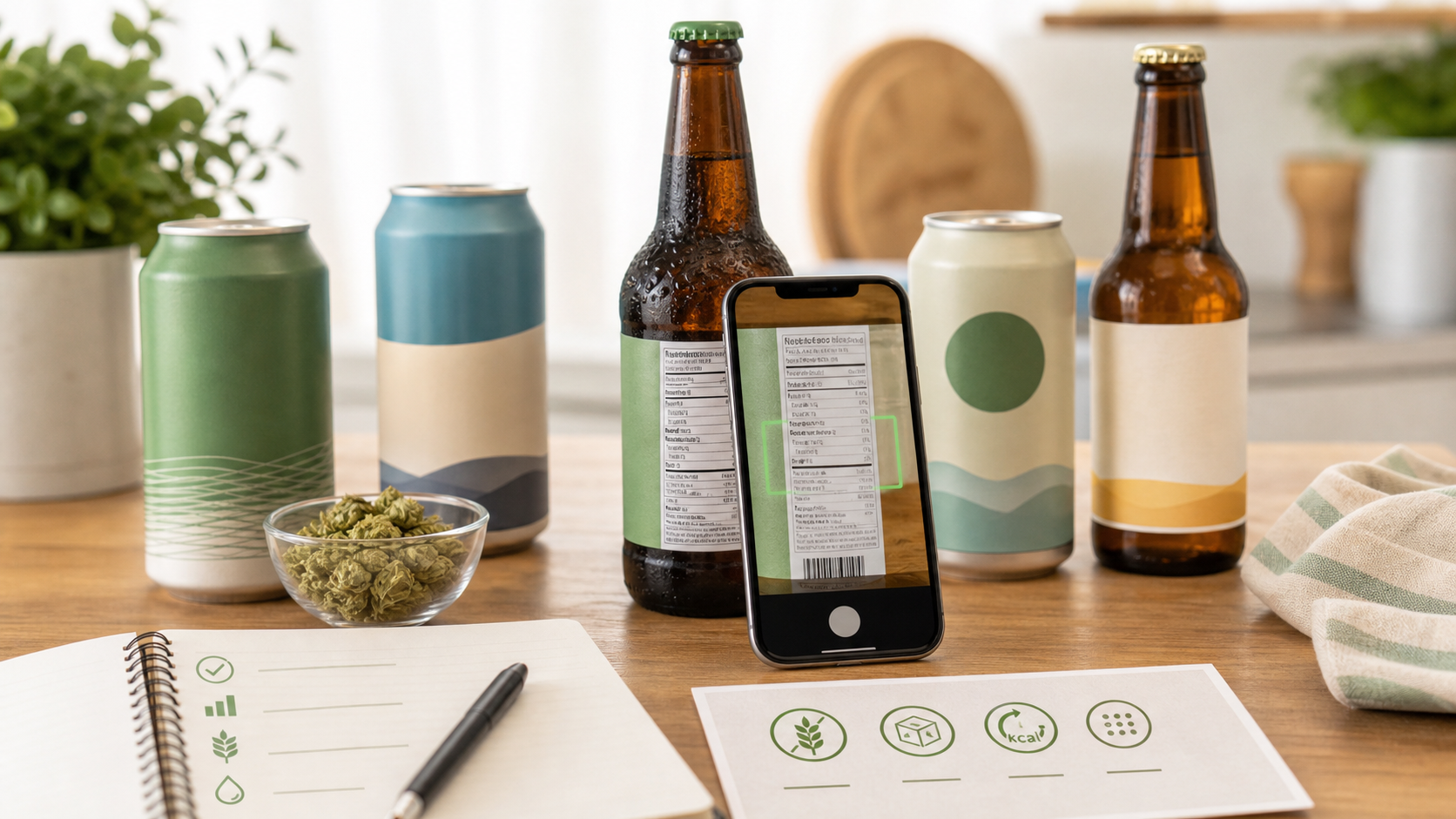
Quick answer: Gluten-free beer is worth scanning because the front label does not tell the whole story. Start by checking whether the beer is made from naturally gluten-free grains or is only processed to remove gluten. Then compare calories, carbs, alcohol by volume, ingredients, serving size, and any sensitivity notes before you log it. Eatibo can help organize the scan and the habit, but it should not be treated as a medical safety guarantee for celiac disease, diagnosed allergy, or strict medical gluten avoidance.
If you are an adult who drinks beer and avoids gluten, the beer aisle can be confusing. One can says gluten-free. Another says gluten-removed. Another is a hard seltzer, cider, light beer, non-alcoholic beer, or craft lager with no clear nutrition panel. Some products fit a gluten-free diet better than others, and some fit your calorie or carb goals better than others. The label scan matters because these are separate questions.
This is exactly the kind of choice where Eatibo is useful. The question is not only "does this beer contain gluten?" It is also "what tradeoff am I making tonight, and how does that fit the rest of my week?" A quick scan can separate gluten source, nutrition impact, additives, alcohol, and portion size before the drink disappears into a vague mental estimate.
Gluten-free beer vs gluten-removed beer
The first label distinction is the most important one. A gluten-free beer is usually brewed from grains that do not naturally contain gluten, such as sorghum, rice, millet, buckwheat, quinoa, or corn. That does not automatically make every product right for every person, but it means the base grain choice starts outside wheat, barley, rye, and related gluten-containing grains.
Gluten-removed beer is different. It usually starts with gluten-containing grains such as barley or wheat, then uses a process intended to break down or reduce gluten. That can be enough for some people who avoid gluten by preference or mild sensitivity, but it is a different risk profile for people with celiac disease or strict medical gluten avoidance. The Celiac Disease Foundation cautions that gluten-removed beers may not be safe for people with celiac disease, and FDA guidance treats gluten-free labeling on fermented or hydrolyzed foods as a specific compliance area rather than a casual marketing phrase.
That distinction should change the scan. If your boundary is strict, look for clear gluten-free labeling, certification, ingredients made from gluten-free grains, and manufacturer details. If your boundary is preference-based, you may still choose a gluten-removed product, but log it honestly and pay attention to how your body responds. Eatibo can help you read and remember the label; it cannot verify every production process or cross-contact risk.
A five-step scan before you choose
Use this sequence when comparing gluten-free beer, gluten-removed beer, cider, hard seltzer, or non-alcoholic alternatives.
| Step | What to check | Why it changes the decision |
|---|---|---|
| Gluten source | Gluten-free claim, base grains, barley, wheat, rye, malt, brewer's yeast, and certification | Confirms whether the product matches your gluten boundary before nutrition details matter. |
| Gluten-removed language | "Crafted to remove gluten," enzyme-treated, or similar wording | Signals a different choice than beer brewed only from gluten-free grains. |
| Calories + carbs | Calories per can, carbs, added sugars, and alcohol by volume | Shows whether the drink fits your energy, low-carb, or weight-management goal. |
| Ingredients | Flavorings, sweeteners, colors, preservatives, and additives | Helps compare plain beer, flavored beer, seltzer-style drinks, and sweeter alternatives. |
| Serving log | Can size, bottle size, pour size, and number of servings | Prevents a 12-ounce label from hiding a 16-ounce can, pint, or multi-drink night. |
The order matters. If gluten risk is the main reason you are scanning, handle that first. If the product passes your gluten boundary, then compare nutrition. A beer can be gluten-free and still higher in calories, carbs, or alcohol than you expected. A low-calorie drink can be lower in calories but still fail your gluten standard. The scan keeps those decisions separate.
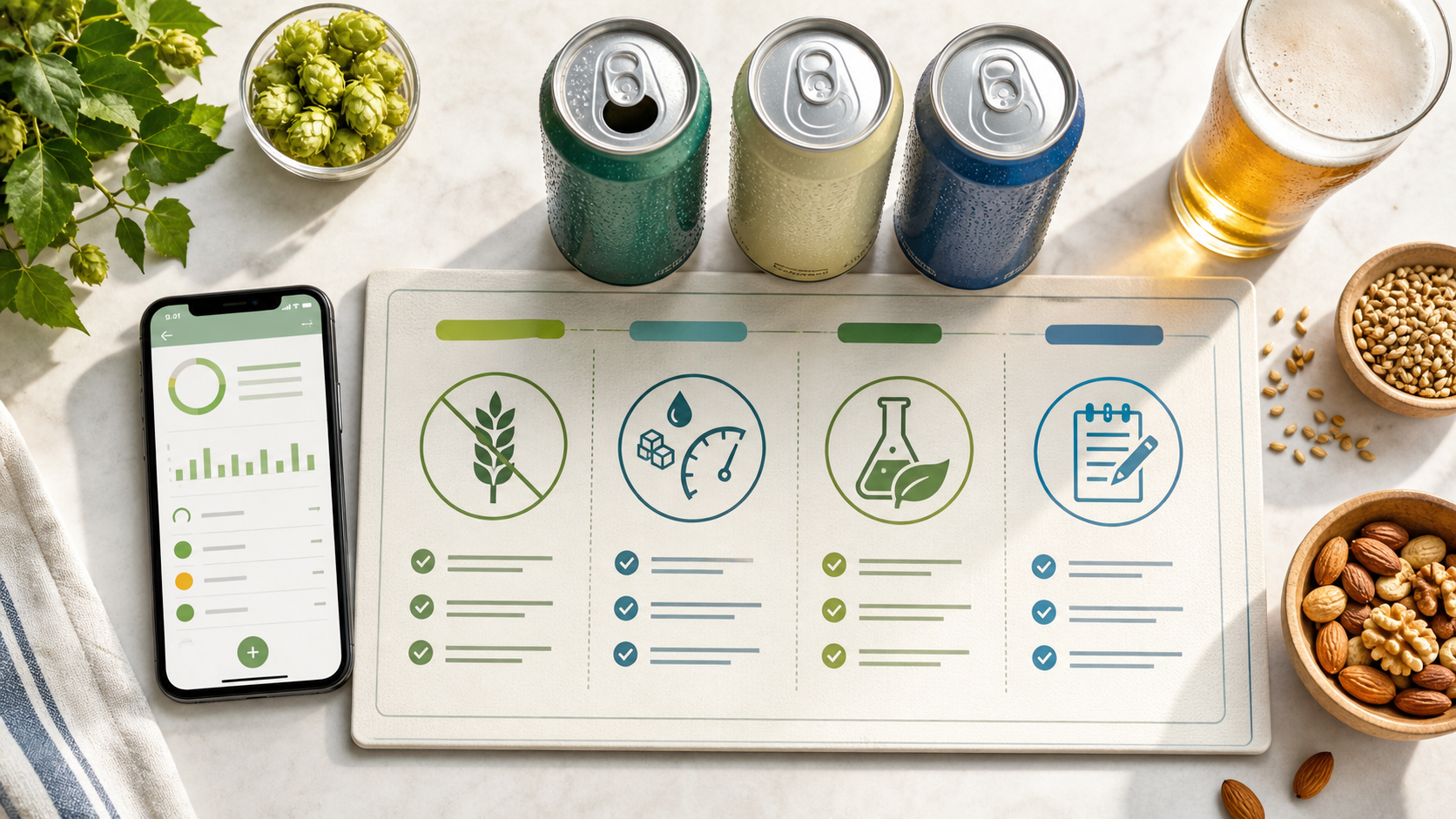
What usually makes a better gluten-free beer choice?
A better gluten-free beer choice starts with a label you can explain in one sentence. For example: "This is brewed from sorghum and rice, labeled gluten-free, 150 calories, 12 grams of carbs, and one 12-ounce serving." That sentence gives you enough to decide whether it fits your boundary and your day.
For strict gluten avoidance, the strongest label signals are gluten-free grain sources, a clear gluten-free claim, and any recognized certification or manufacturer explanation you trust. For casual gluten reduction, the decision may be broader, but it still helps to know whether the product is actually gluten-free or processed to remove gluten.
For nutrition goals, compare the whole drink, not only one number. Lower-carb beers can be useful if carbs are the main constraint, but alcohol and total calories still count. Non-alcoholic gluten-free beers can reduce alcohol, but some may contain more carbs or sugar. Flavored gluten-free beers, ciders, and malt-style alternatives can move closer to sweet drinks depending on the ingredient list.
The most practical choice is not always the lightest option. It is the option that matches your gluten boundary, tastes good enough that you will not feel deprived, and logs cleanly. A drink you can track accurately is easier to fit than one you keep guessing about.
Common label traps
The first trap is assuming "wheat-free" means gluten-free. It does not. Gluten can come from barley, rye, malt, brewer's yeast, and related grain ingredients. If the product does not clearly say gluten-free and your boundary is strict, keep scanning or choose another option.
The second trap is treating gluten-removed as the same as gluten-free. Some people tolerate gluten-removed beers; others do not. For celiac disease or serious reactions, do not use an app scan as a final safety decision. Use certified labels, manufacturer information, and professional guidance.
The third trap is overlooking serving size. A nutrition panel may refer to 12 ounces while the can is 16 ounces. A restaurant pour may be larger than the package serving. If you log only one standard serving, your calories, carbs, and alcohol record can be off by a meaningful amount.
The fourth trap is ignoring alcohol context. Alcohol can affect appetite, sleep, hydration, and next-day food choices. Even when a beer fits your gluten and macro targets, the pattern still matters. Eatibo's value is not telling you that a drink is "good" or "bad." It helps you see whether it is occasional, repeated, or quietly displacing better choices.
How Eatibo helps
Eatibo supports this decision in two layers. First, it helps you scan the label: ingredient list, nutrition facts, allergen language, additives, calories, carbs, and serving size. That is helpful when two cans look similar on the front but differ in the details that matter for your goal.
Second, it turns the choice into a logged pattern. One gluten-free beer at dinner is different from three higher-carb cans across a weekend, and both are different from a non-alcoholic option that you drink more often. Logging gives the Nutrition Coach better context, so future suggestions can reflect your real habits rather than a single isolated scan.
The Eat / Limit / Skip framing is especially useful here. "Eat" might mean the drink fits your gluten boundary and weekly pattern. "Limit" might mean the product is acceptable but higher in carbs, calories, alcohol, or uncertainty. "Skip" might mean the label is unclear, gluten-removed does not fit your medical needs, or the serving does not match your current goal.
For broader gluten label reading, read Gluten-Free Snacks: How to Scan Labels Smarter. If you are comparing gluten-free claims with carb goals, Is Gluten-Free Low Carb? explains why those are different decisions. If beer is mainly a macro question for you, Sip Smart: Your Guide to Enjoying Low-Carb Beers Without the Guilt gives a practical carb-focused view.
A simple shopping checklist
Before a gluten-free beer becomes your default, compare two or three options side by side.
- Start with the base grain and gluten claim.
- Separate gluten-free from gluten-removed.
- Check calories, carbs, sugar, and alcohol by volume.
- Confirm the real can, bottle, or pour size.
- Scan ingredients if you also avoid additives, colors, sweeteners, or specific allergens.
- Log the first few servings accurately so your future estimates are grounded.
- For celiac disease, diagnosed allergy, severe symptoms, pregnancy, medication concerns, or alcohol-use concerns, use professional guidance instead of relying on an app decision.
That checklist keeps the decision practical. You do not need to memorize every beer brand. You need a repeatable scan that matches your boundary, your goal, and your actual drinking pattern.
Frequently asked questions
Is gluten-free beer actually gluten-free?
It depends on the label and how it is made. A stronger gluten-free choice is brewed from naturally gluten-free grains and clearly labeled gluten-free. If you have celiac disease or strict medical gluten avoidance, rely on certified labels, manufacturer information, and professional guidance.
Is gluten-removed beer safe for celiac disease?
Do not assume it is. Gluten-removed beer typically starts with gluten-containing grains and is processed to reduce gluten. Some celiac-focused organizations caution against treating it as safe for celiac disease.
What should I scan first on a gluten-free beer label?
Start with gluten source: base grains, gluten-free claim, certification, and any gluten-removed wording. After that, compare calories, carbs, alcohol by volume, ingredients, and the actual serving size.
Can Eatibo tell me whether a beer is medically safe?
No. Eatibo can help you scan labels, flag relevant ingredients, and log your pattern, but it is not a medical diagnostic or safety-certification tool. Use clinician or dietitian guidance for celiac disease, allergies, severe symptoms, pregnancy, medications, or alcohol-use concerns.
Last updated: May 23, 2026
Sources
- FDA gluten-free labeling overview
- FDA questions and answers on gluten-free food labeling
- TTB Ruling 2020-2 on gluten claims for alcohol labels
- Celiac Disease Foundation on gluten-free vs gluten-removed beer
Related reading
- Gluten-Free Snacks: How to Scan Labels Smarter gives a broader gluten label scan for packaged snacks.
- Is Gluten-Free Low Carb? explains why gluten-free and low-carb are separate nutrition decisions.
- Sip Smart: Your Guide to Enjoying Low-Carb Beers Without the Guilt helps compare beer choices from a carb and calorie angle.