Gluten-Free Snacks: How to Scan Labels Smarter
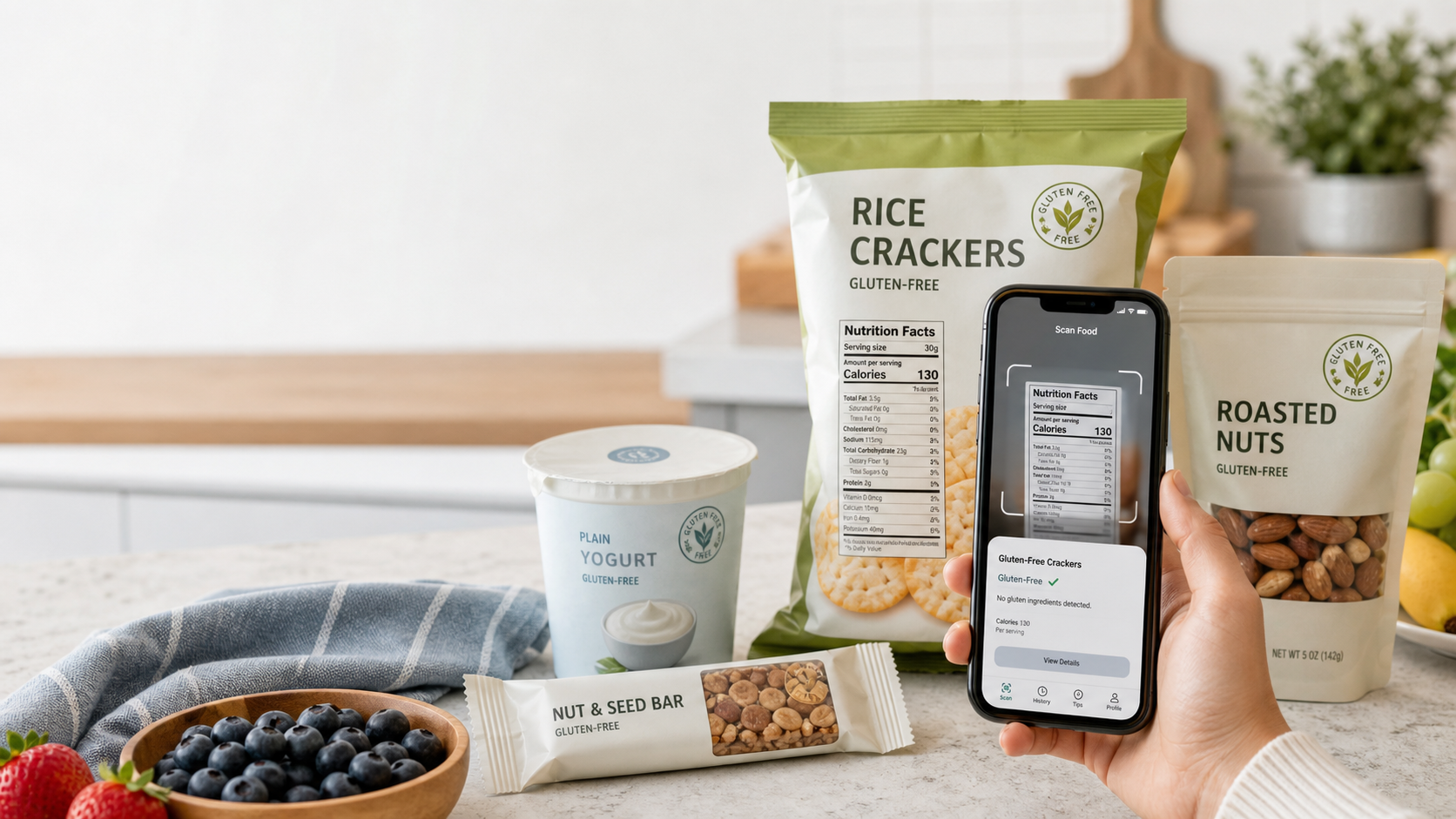
Quick answer: The best gluten-free snacks are not just snacks with a gluten-free claim on the front. A smarter choice starts with the ingredient list, then checks added sugar, fiber, protein, sodium, oils, and the real serving size. If you use a scanner or food log, scan the label before you buy or eat so the snack fits your sensitivity needs, energy goals, and weekly eating pattern.
Gluten-free snacking can be simple when the food is naturally gluten-free: fruit, plain yogurt, nuts, boiled eggs, cheese, hummus with vegetables, or popcorn made with a short ingredient list. It gets harder in the packaged snack aisle, where a gluten-free badge can sit on top of high sugar, low fiber, refined starches, or portions that are easy to overeat. The goal is not to make every snack perfect. The goal is to know what tradeoff you are making.
What makes a gluten-free snack worth choosing?
A good gluten-free snack does three jobs at once. It avoids gluten-containing ingredients, gives you enough nutrition to be useful between meals, and keeps the portion realistic. Many packaged gluten-free snacks solve only the first job. Rice crackers, cookies, bars, pretzels, and dessert-style bites can be gluten-free while still being mostly refined starch, oil, and sugar.
That does not mean you need to skip them forever. It means the front label is only the first screen. The back label is where the useful decision happens. For people with celiac disease, diagnosed wheat allergy, or strict medical gluten avoidance, certification and cross-contact language matter. For people with gluten sensitivity or a preference to avoid gluten, the same label reading still helps, but the risk threshold may be different. When symptoms are severe or diagnosis is unclear, a clinician or dietitian is the safer source of medical guidance.
A four-step label scan for gluten-free snacks
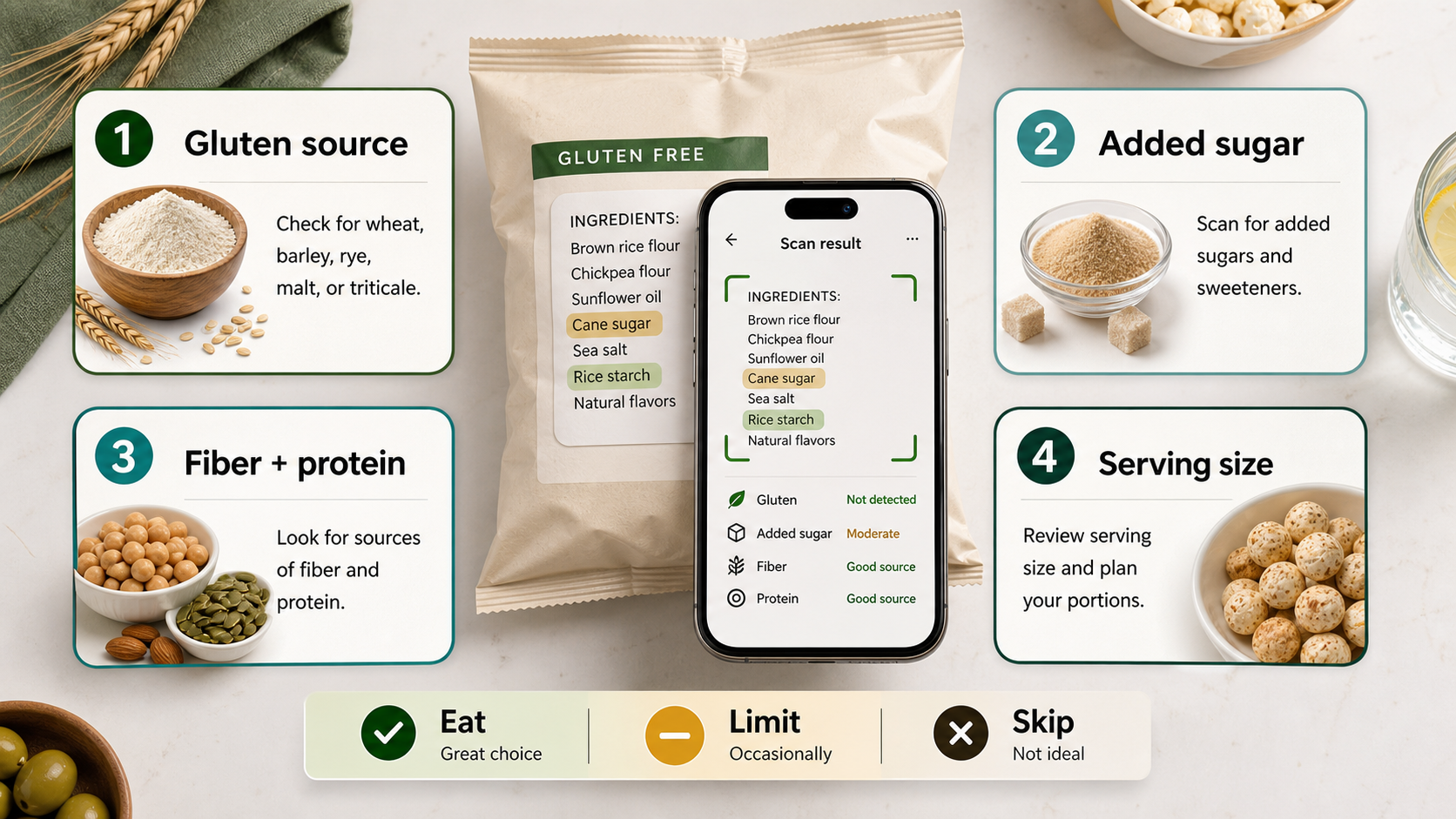
Use this quick framework before a snack goes in your cart or your daily log.
| Step | What to check | Why it changes the decision |
|---|---|---|
| Gluten source | Wheat, barley, rye, malt, brewer's yeast, triticale, and cross-contact notes | Confirms whether the snack matches your gluten boundary. |
| Added sugar | Added sugars, syrups, candy coatings, sweetened fillings | Some gluten-free snacks behave more like desserts than steady snacks. |
| Fiber + protein | Fiber, protein, nuts, seeds, dairy, legumes, or whole grains | Helps the snack keep you full instead of causing a quick crash. |
| Serving size | Grams, pieces, calories per serving, and servings per bag | Prevents a small label serving from hiding a large real portion. |
This same sequence works for most snack categories. If the gluten check fails for your needs, stop there. If it passes, compare the nutrition quality. A snack with 2 grams of protein, 0 grams of fiber, and a tiny serving size might still be fine as a treat, but it should not be your default "healthy" snack just because the front says gluten-free.
Gluten-free snacks that usually scan well
The easiest wins are snacks built from whole foods or short ingredient lists. These are not automatically perfect for everyone, but they tend to give you clearer nutrition for less label detective work.
- Plain Greek yogurt with berries gives protein, calcium, and sweetness without needing a cookie-style base.
- Apple slices with peanut butter or almond butter can be filling, but the nut butter serving size still matters.
- Roasted chickpeas, edamame, or lentil snacks often bring more fiber and protein than rice-based crackers.
- Nuts and seeds are naturally gluten-free, calorie-dense, and useful when portions are measured instead of guessed.
- Popcorn can be a strong snack when the ingredient list is mostly corn, oil, and salt, with sodium kept reasonable.
- Cheese sticks, boiled eggs, tuna packets, and jerky can work for higher-protein snack needs, but sodium and additives deserve a check.
If you are choosing packaged bars, crackers, cookies, or chips, compare two similar products side by side. The better option is often not the lowest-calorie one. It is the one with a serving you will actually eat, fewer surprise ingredients, more fiber or protein, and less added sugar for the same satisfaction.
The common traps in packaged gluten-free snacks
The biggest trap is the health halo. "Gluten-free" describes the absence of gluten; it does not promise a balanced snack. A gluten-free cookie can still be a cookie. A gluten-free pretzel can still be mostly refined starch and salt. A gluten-free granola bar can still be closer to candy than breakfast.
The second trap is starch stacking. Many gluten-free packaged foods use rice flour, tapioca starch, potato starch, corn starch, or other refined starches to replace wheat texture. These ingredients can be useful for baking, but they often leave the snack low in fiber and easy to eat quickly. If the first few ingredients are refined starches plus sugar or oil, treat the snack as an occasional option.
The third trap is hidden portion drift. A package may show 130 calories per serving while holding three servings. If you usually finish the bag, log the bag. If you pour crackers into a bowl, check the gram amount once so your future estimates are closer to reality.
Where Eatibo fits
Eatibo is useful here because gluten-free snack decisions are label-heavy. You can scan a nutrition label or ingredient list, then look at the parts that change the decision: calories, macros, added sugar, sodium, additives, oils, allergens, and your own diet preferences. Eatibo's Eat / Limit / Skip framing is meant to speed up everyday choices, not diagnose gluten reactions or guarantee that every cross-contact risk has been removed.
The more important benefit comes after the snack is logged. One gluten-free bar might fit your day. Five similar bars in a week may show a pattern: low protein, low fiber, higher added sugar, or more calories than expected. That weekly view is where a scanner becomes more than a one-off label reader. It helps you decide whether your default snack list needs a better rotation.
If you are also balancing carbs, read Is Gluten-Free Low Carb? before assuming a gluten-free snack is automatically lower in carbohydrates. For a broader label-reading method, use the food label decision framework in Deconstructing Food for Better Health.
How to build a better gluten-free snack rotation
Start with three everyday options, two backup packaged options, and one treat option. Everyday options should be easy enough that you will actually use them: yogurt and berries, popcorn and a cheese stick, hummus and vegetables, nuts with fruit, or roasted chickpeas. Backup packaged options are for bags, offices, travel, or late grocery trips. Treat options can stay in the rotation, but they should be labeled honestly in your own mind.
Then decide what each snack is supposed to do. If you need fullness, prioritize protein and fiber. If you need something before a workout, simple carbs might be useful. If you are managing sodium, compare salty snacks carefully. If you are avoiding specific allergens or seed oils, scan the ingredient list before the nutrition panel. The "best" gluten-free snack is the one that fits the job you need it to do.
Frequently asked questions
Are all gluten-free snacks healthy?
No. Gluten-free only tells you the product avoids gluten-containing ingredients or meets a gluten-free standard. You still need to check added sugar, fiber, protein, sodium, oils, additives, and serving size.
What should I scan first on a gluten-free snack label?
Start with the ingredient list if gluten avoidance is the main reason you are buying it. After that, scan the nutrition facts for added sugar, fiber, protein, sodium, and calories per realistic portion.
Can Eatibo tell me if a snack is safe for celiac disease?
Eatibo can help you read labels and track foods, but it should not replace medical guidance, certified gluten-free labeling, or your clinician's advice. For celiac disease or serious allergy risk, use strict label standards and professional guidance.
What is a good gluten-free snack for weight management?
Look for a snack with a realistic portion, some protein or fiber, and modest added sugar. Plain yogurt with berries, popcorn with a protein side, fruit with nut butter, or roasted chickpeas can work better than many cookie-style gluten-free snacks.
Last updated: May 18, 2026
Related reading
- Is Gluten-Free Low Carb? explains why a gluten-free claim does not automatically mean lower carbs.
- Deconstructing Food for Better Health gives a practical framework for breaking down labels and meals.
- Navigating the Dairy Aisle shows how to compare ingredients, additives, and personal dietary needs in packaged foods.