Lactose-Free Milk: How to Scan Labels Smarter
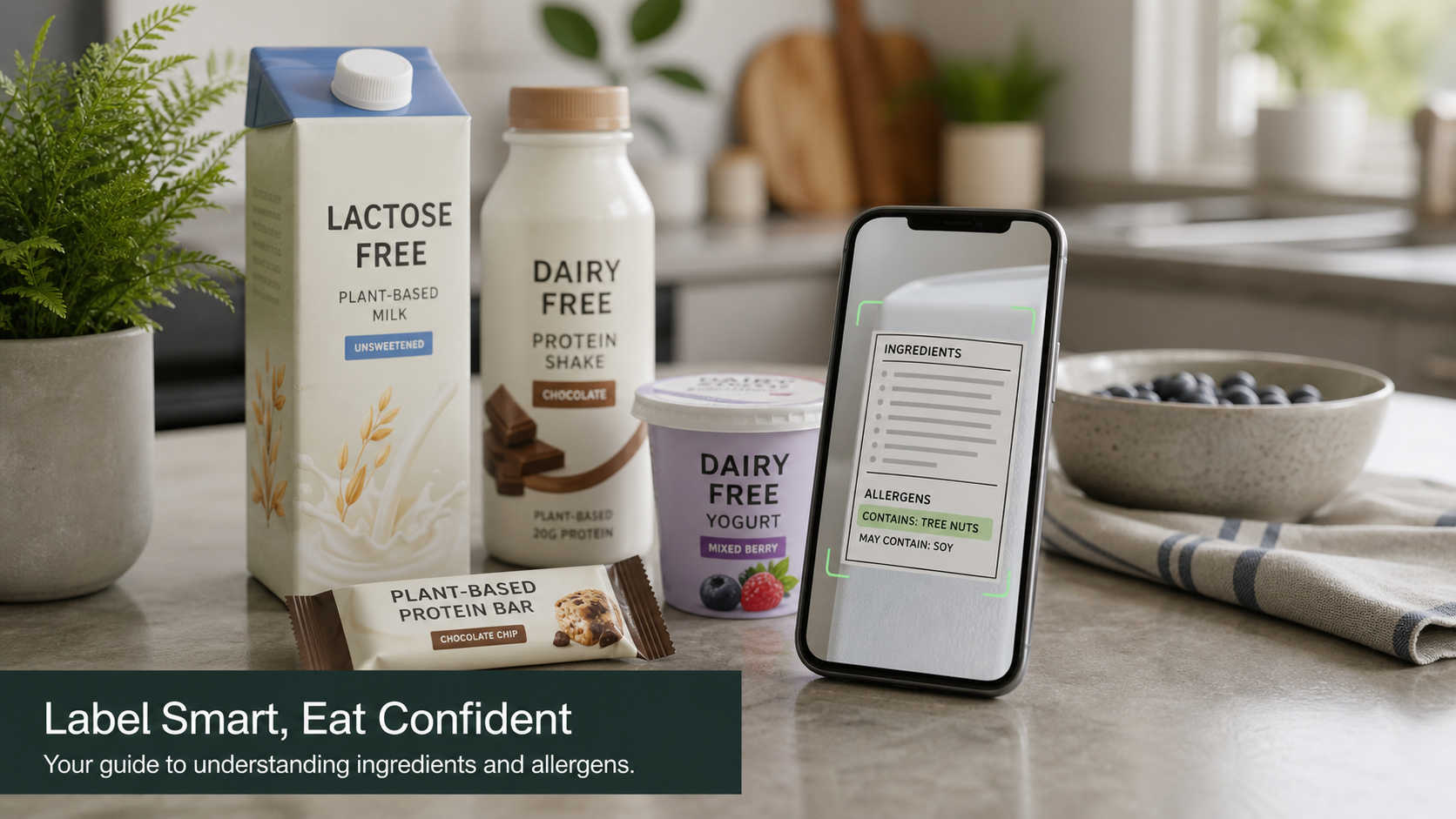
Quick answer: Lactose-free milk and dairy-free milk solve different problems. Lactose-free milk is often dairy milk with lactose broken down, while dairy-free milk is usually made from plants, nuts, grains, or seeds. Scan the label for milk proteins, allergens, protein, added sugar, fortification, additives, and serving size before making it a daily default. Eatibo can help organize that label review, but it cannot diagnose lactose intolerance, dairy allergy, or other digestive conditions.
The milk case is a small maze. One carton says lactose-free. One says dairy-free. Another says oat, pea, soy, almond, ultra-filtered, unsweetened, barista, high-protein, or zero sugar. They can sit side by side, but they are not interchangeable.
That matters most when the reason behind the choice is personal: lactose intolerance, dairy allergy, vegan eating, blood sugar steadiness, protein goals, coffee taste, or a child who drinks the same carton every day.
Key takeaways
- Lactose-free usually means the lactose is reduced or broken down; it does not automatically mean dairy-free.
- Dairy-free products can still contain allergens such as nuts, soy, gluten cross-contact, or other ingredients that matter to you.
- Plain lactose-free dairy milk often keeps the protein profile of milk; many plant milks vary widely.
- Added sugar, serving size, fortification, and daily frequency are just as important as the front claim.
- Use Eatibo for label scanning and pattern review, not as a medical safety verdict.
Lactose-free milk is best understood as a label boundary, not a health halo: it may solve lactose digestion for some people, but the product still needs a full scan for allergens, protein, sugar, additives, and real serving size.
Lactose-free vs dairy-free: the line people miss
Lactose is a milk sugar. Lactose-free dairy milk is commonly made by adding lactase, the enzyme that breaks lactose down. That can make dairy milk easier to tolerate for some people with lactose intolerance. It does not remove milk proteins such as casein or whey.
Dairy-free milk is different. Almond, oat, soy, pea, coconut, rice, and cashew milks are plant-based products. They do not contain dairy by design, but their nutrition is all over the map. Some are mostly water and flavor. Some are fortified. Some bring useful protein. Some are sweetened enough that they behave more like a sweet drink than a daily milk replacement.
If you have a diagnosed milk allergy, severe symptoms, celiac disease, unexplained digestive issues, or a clinician-directed diet, do not treat a grocery label or an app scan as the final authority. Use professional guidance and read the full allergen statement.
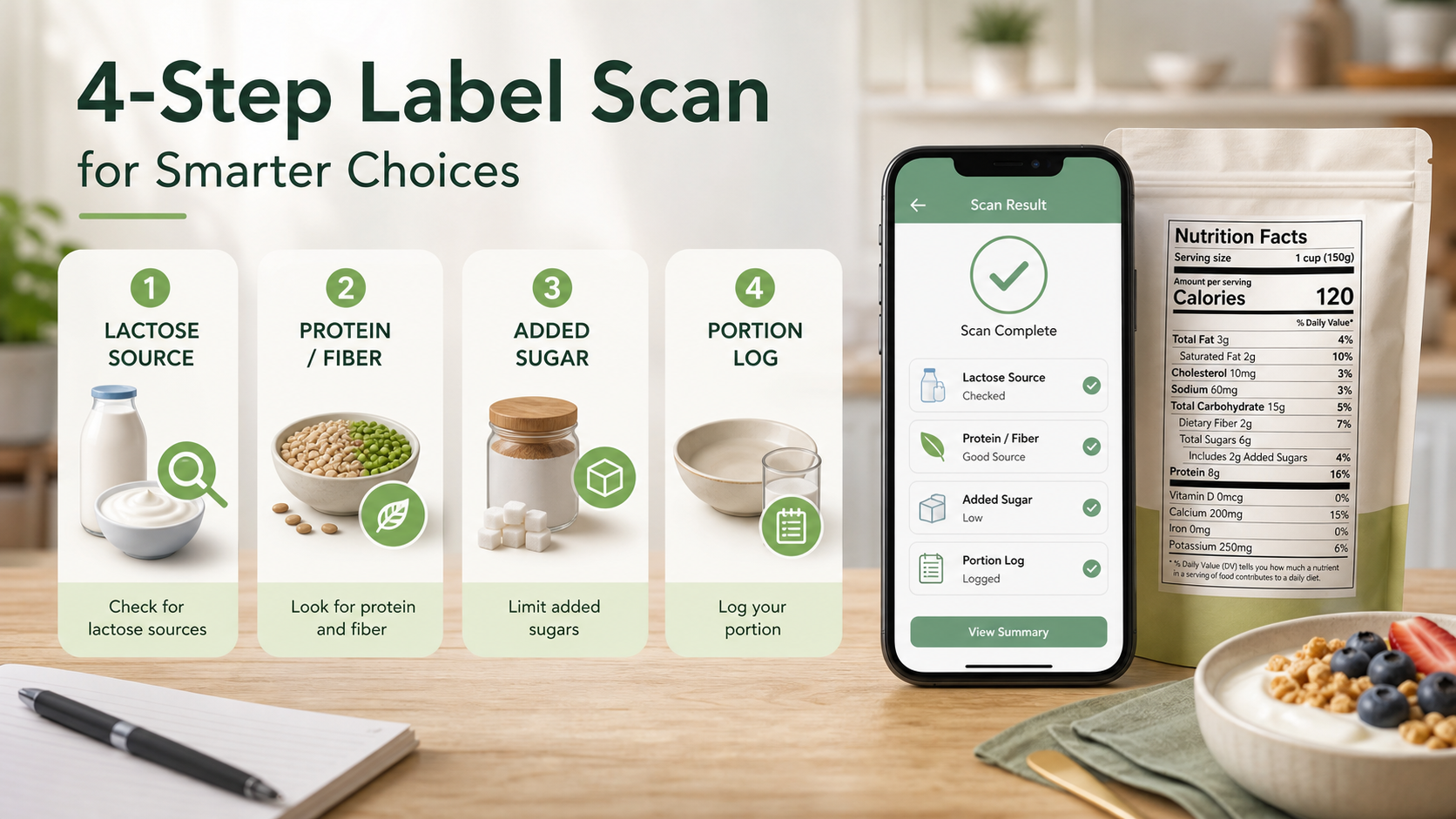
A four-step label scan
Use the same order every time. It keeps the decision from being driven by whichever claim is printed largest on the carton.
| Step | What to check | Why it changes the decision |
|---|---|---|
| Boundary | Lactose-free claim, dairy ingredients, milk proteins, vegan claim, allergen statement | Confirms whether the product matches lactose intolerance, dairy avoidance, allergy risk, or personal preference. |
| Nutrition job | Protein, calcium, vitamin D, B12, calories, and fortification | Shows whether the drink supports a meal or is mainly a flavored beverage. |
| Sugar and additives | Added sugar, sweeteners, gums, oils, flavors, stabilizers, and sodium | Prevents a "healthy" carton from becoming a daily sugar or additive source. |
| Real serving | One-cup serving, coffee pours, cereal bowls, smoothies, and shakes | Your actual amount may be very different from the label serving. |
This is where a quick scan saves time. You are not trying to memorize every milk alternative. You are deciding whether this carton fits the job you need it to do.
Which choice fits which situation?
If you tolerate dairy proteins and only need help with lactose, plain lactose-free dairy milk can be a practical default. It often keeps the familiar protein and micronutrient profile of milk, which can matter for cereal, smoothies, and post-workout meals.
If you avoid all dairy, soy and pea milks are often closer to dairy milk on protein than almond, oat, coconut, or rice milk. That does not make them automatically better. A lower-protein milk may be perfectly fine as a splash in coffee. It may be less useful as the base of a breakfast that needs to keep you full.
Oat milk can taste great in coffee, but some versions are higher in carbohydrates or include oils and stabilizers for texture. Almond milk can be lower in calories, but unsweetened versions may also be low in protein. Coconut milk drinks can be pleasant but may bring saturated fat depending on the product. The answer changes with the job.
Here is the practical shortcut: do not ask "Which milk is healthiest?" Ask "What am I using it for?"
Common traps in the dairy case
The first trap is assuming lactose-free means safe for milk allergy. It does not. If the label contains milk, whey, casein, cream, or a milk allergen statement, a person with milk allergy needs a stricter review.
The second trap is sweetened flavor drift. Vanilla, chocolate, barista, and protein-shake versions can be enjoyable, but daily added sugar adds up quietly. Check added sugar, not just total sugar, and compare the serving you actually pour.
The third trap is undercounting. A carton serving may be one cup. A morning latte, smoothie, cereal bowl, and evening drink can become several servings without feeling like several foods.
The fourth trap is treating plant-based as allergen-free. Nut milks contain tree nuts. Soy milk contains soy. Oat products may matter for people avoiding gluten cross-contact. Advisory statements such as "may contain" or "made in a facility with" can matter when sensitivity risk is high.
How Eatibo helps with the choice
Eatibo is useful because milk decisions are rarely about one nutrient. Scan the label and compare the details that change the outcome: lactose claim, milk proteins, added sugar, protein, calories, allergens, oils, gums, fortification, and serving size.
Then check the Nutrition Log. One oat latte is not the issue. The pattern might be two sweetened drinks every day, a breakfast that stays low in protein, or a milk alternative that looks clean but does not support the meal. When the drink is logged a few times, you can see whether it is a useful default or just a nice-tasting habit.
Use the Eat / Limit / Skip framing carefully:
- Eat: The product matches your boundary, has a serving you understand, and supports the meal.
- Limit: The product is fine occasionally but brings added sugar, low protein, oils, additives, or an awkward serving pattern.
- Skip: The product conflicts with an allergy, medical boundary, vegan rule, or personal trigger.
For a broader packaged-food scan, read Food Additives: How to Scan Ingredient Lists Smarter. If you are comparing yogurt and dairy-case products, Oikos Triple Zero Calories and Nutrition shows how protein, sweeteners, and dairy tolerance interact.
When to be stricter
Be stricter if the choice is for a child, pregnancy, a diagnosed allergy, severe digestive symptoms, celiac disease, diabetes medication, kidney disease, or a clinician-directed diet. Also be stricter when the product is a daily staple. A milk used once a week in coffee deserves a different review than the carton that anchors breakfast every morning.
If symptoms are new, persistent, or severe, do not self-diagnose from a label scan. Lactose intolerance, milk allergy, irritable bowel symptoms, celiac disease, and other digestive conditions can overlap in confusing ways.
Frequently asked questions
Is lactose-free milk the same as dairy-free milk?
No. Lactose-free milk is often dairy milk with lactose broken down. Dairy-free milk is made without dairy ingredients. If you have a dairy allergy or vegan diet, check for milk proteins and dairy ingredients, not just the lactose claim.
Is lactose-free milk healthier than regular milk?
It depends on why you are choosing it. If lactose bothers you, lactose-free milk can make dairy easier to use. Nutritionally, plain lactose-free dairy milk is often similar to regular milk, while flavored versions may add sugar.
What should I scan first on a lactose-free milk label?
Start with the ingredient list and allergen statement. Then check protein, added sugar, fortification, calories, additives, and serving size. The first scan confirms whether the product fits your dietary boundary.
Can Eatibo tell me if dairy is medically safe for me?
No. Eatibo can help you scan labels, flag ingredients, and log your pattern. It does not replace medical advice for dairy allergy, severe symptoms, celiac disease, diagnosed gastrointestinal conditions, or clinician-directed diets.
Last updated: May 31, 2026
Sources
- NIDDK: Lactose Intolerance
- FDA: Food Allergies
- FDA: How to Understand and Use the Nutrition Facts Label
Related reading
- Food Additives: How to Scan Ingredient Lists Smarter gives a repeatable method for additives, allergens, and serving patterns.
- Navigating the Dairy Aisle shows how to compare dairy and dairy-free products beyond the front label.
- Oikos Triple Zero Calories and Nutrition explains why protein, sugar, and dairy tolerance all matter in yogurt-style products.