
Food Additives: How to Scan Ingredient Lists Smarter
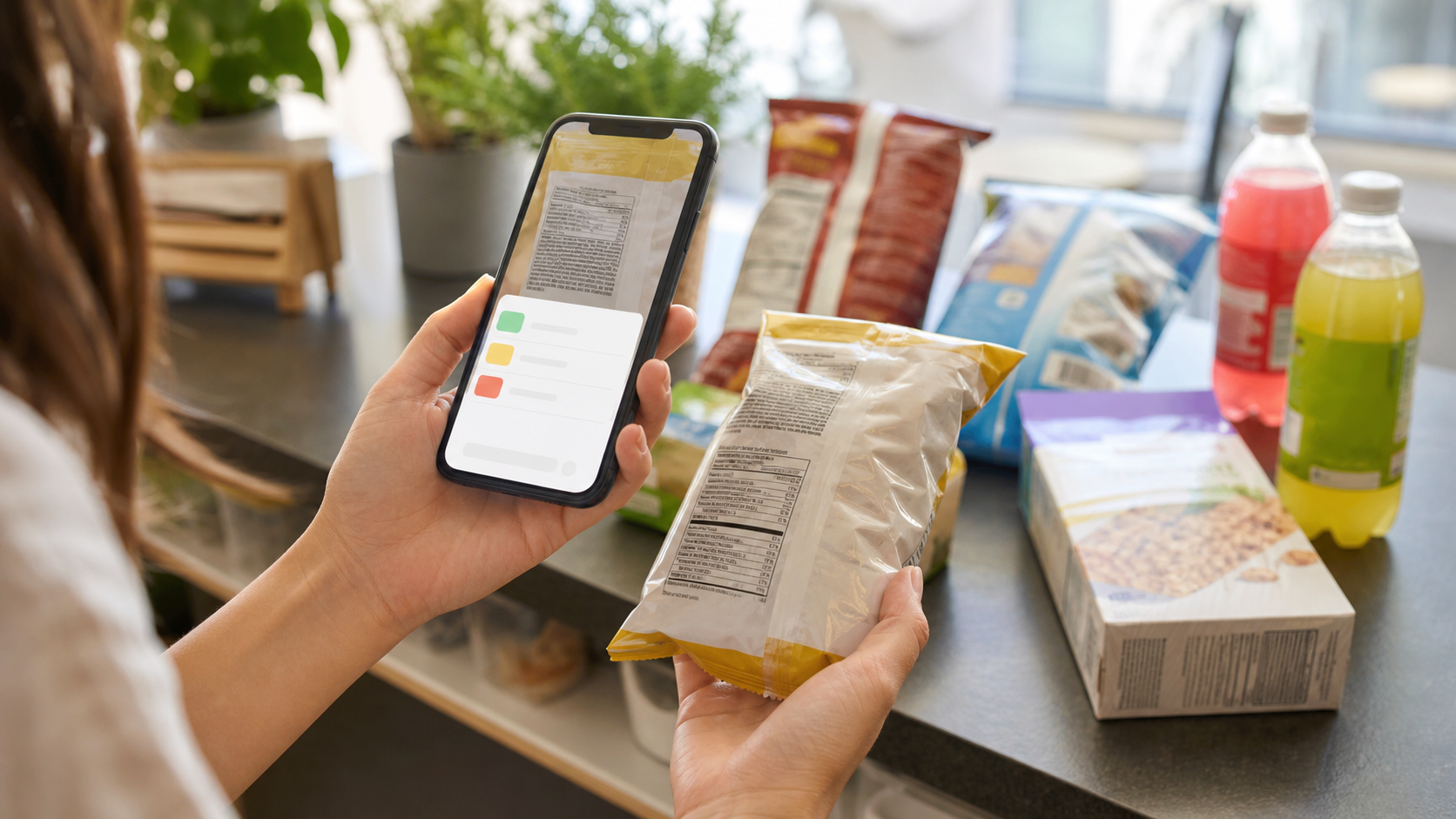
Quick answer: A food additive label scan should not start with fear or a random "never eat" list. Start by reading the full ingredient list, identify why additives are present, check allergens and sensitivities, compare sodium and added sugar, then log the real serving. Eatibo can help flag additive, allergen, and ultra-processed signals, but it should not replace medical guidance for diagnosed allergies, severe reactions, pregnancy, medication questions, or clinician-directed diets.
Food additives show up in everyday foods: sauces, protein bars, drinks, breads, snacks, frozen meals, yogurts, dressings, cereals, and plant-based alternatives. Some help preserve freshness. Some change texture. Some add sweetness, color, acidity, thickness, or flavor. The hard part is that a label can feel technical before you even know whether the food fits your routine.
The better question is not "Are all additives bad?" It is "What does this ingredient list tell me about this product, this serving, and my own goals?" A practical scan turns a long label into a few decisions: eat it often, limit it, skip it, or save it for a specific use.
What counts as a food additive?
Food additives are ingredients used for a function in the food. They may help with safety and freshness, nutrition, flavor, texture, acidity, color, or consistency. The FDA explains that ingredients can be added to maintain or improve safety, improve nutritional value, or improve taste and texture.
That means an unfamiliar word is not automatically a red flag. Ascorbic acid can act as an antioxidant. Lecithin can help texture. Pectin can thicken. Preservatives can slow spoilage. Fortified vitamins and minerals can raise nutritional value. At the same time, a label that depends on many sweeteners, colors, stabilizers, flavors, sodium, and refined ingredients may deserve a closer look if you are trying to eat more simply.
For most shoppers, the goal is not to memorize every chemical name. The goal is to understand the role of the ingredient and whether the overall food still makes sense for your body, budget, taste, and routine.
A five-step additive label scan
Use the same order each time so the decision stays consistent.
| Step | What to check | Why it changes the decision |
|---|---|---|
| Ingredient order | The first few ingredients, then the long tail of stabilizers, colors, flavors, preservatives, and sweeteners | Ingredients are listed in a way that helps you see what the product is mostly built from. |
| Additive role | Is the additive preserving freshness, improving texture, adding color, sweetening, thickening, or fortifying? | Function matters. A preservative in a shelf-stable food is different from several sweeteners in a daily snack. |
| Allergen and sensitivity fit | Milk, eggs, fish, shellfish, tree nuts, peanuts, wheat, soybeans, sesame, gluten, lactose, dyes, sugar alcohols, or personal triggers | A safe-looking macro label can still be wrong for a sensitivity or allergy boundary. |
| Nutrition tradeoff | Sodium, added sugar, saturated fat, fiber, protein, calories, and serving size | Additives are only one part of the choice. The Nutrition Facts panel may reveal the bigger issue. |
| Real-use pattern | How often you eat it, how much you eat, and whether it replaces a better option | A once-a-month convenience food and an everyday default deserve different standards. |
Start with ingredient order because it tells you what the food is made from before you react to one word. Then ask what each flagged additive is doing. After that, check allergens, sodium, added sugar, and serving size. The final step is the most important: log how the food actually appears in your week.
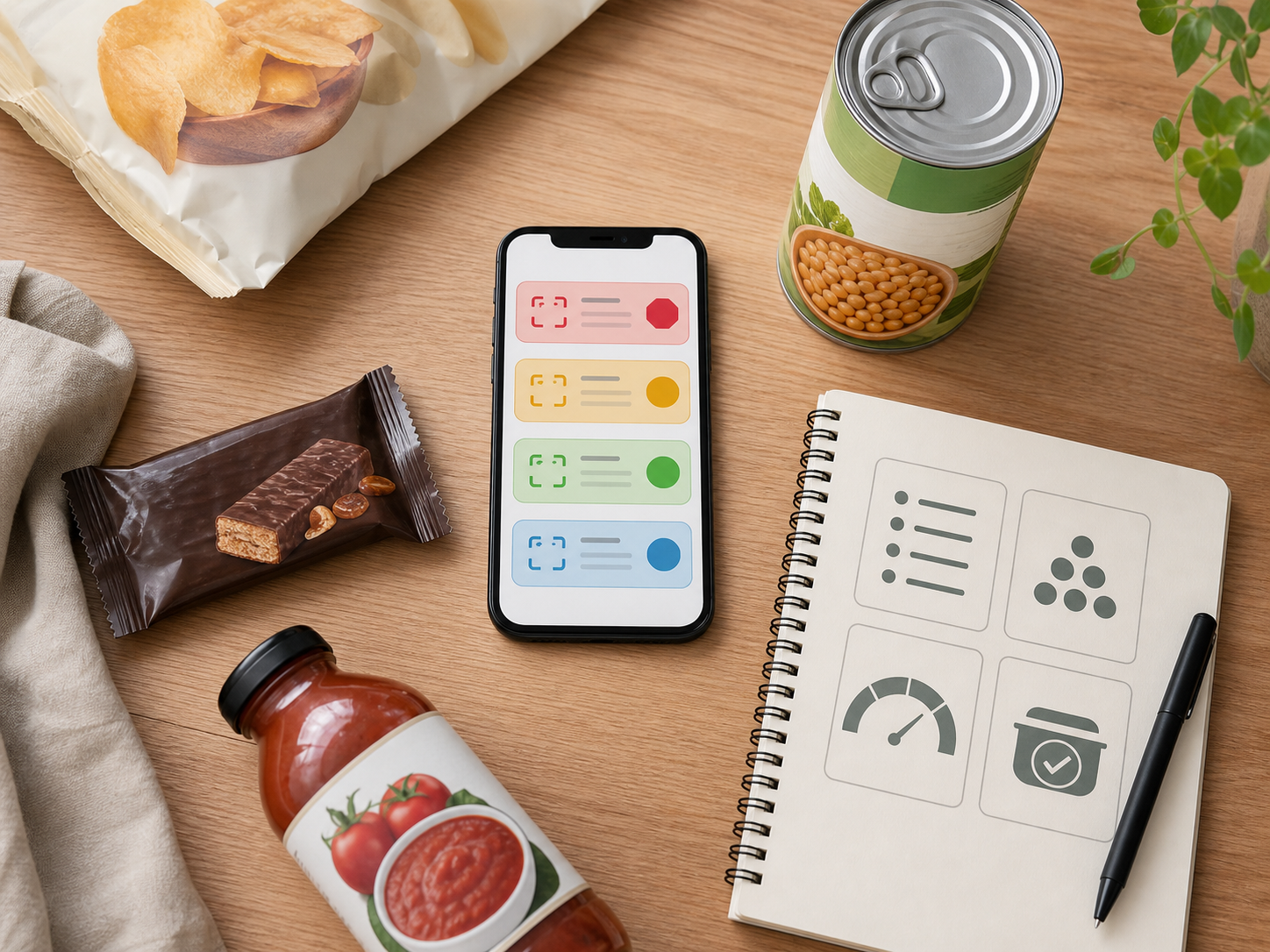
Common additive signals worth a second look
Preservatives are common in breads, sauces, meat snacks, baked goods, and packaged meals. They can help foods last longer, but the product still deserves a full scan. If a food is also high in sodium, low in fiber, and easy to overeat, the preservative is not the only reason to limit it.
Colors and flavor systems show up in drinks, candy, cereals, flavored snacks, desserts, and kids' products. A color or flavor does not automatically make a product unsafe, but it can signal that the food is more about sensory appeal than nutrition. If your goal is steady energy, appetite control, or fewer ultra-processed defaults, scan the whole pattern.
Sweeteners and sugar alcohols often appear in low-sugar, low-carb, protein, and "better-for-you" products. They can be useful for some people, but they can also create digestive discomfort or keep sweet snacks in heavy rotation. If low sugar is your goal, compare added sugar, total calories, fiber, and protein instead of trusting the front claim.
Emulsifiers, gums, thickeners, and stabilizers are common in sauces, ice cream, dairy alternatives, protein drinks, dressings, and gluten-free products. They are often used for texture. The practical question is whether the product still fits your needs: Is it a daily staple? Does it crowd out simpler foods? Does it affect your digestion? Does it contain allergens or ingredients you personally avoid?
Fortification is different. Added vitamin D, calcium, iron, folic acid, or other nutrients may be useful in some foods. Do not treat every added ingredient as a negative signal. Scan why it is there, then compare the full nutrition profile.
Additive scan examples
Use this table when comparing two products in the same aisle.
| Product type | Label signal | Eatibo-style decision |
|---|---|---|
| Flavored yogurt | Milk base plus added sugar, stabilizers, flavors, and low protein | Limit if it works as dessert, skip as a daily protein default, or choose plain yogurt when protein is the job. |
| Protein bar | High protein claim plus sugar alcohols, isolated fibers, chocolate coating, and a long ingredient list | Eat occasionally if it solves a real gap; limit if it becomes your main snack pattern. |
| Bottled drink | Bright color, flavor system, sweeteners, low nutrients, and multiple servings per bottle | Limit or skip for daily hydration; use water or an unsweetened drink as the default. |
| Tomato sauce | Tomatoes first, herbs, olive oil, modest sodium, no added sugar | Eat more often if the serving fits the meal and your sodium target. |
| Frozen meal | Preservatives plus high sodium, low fiber, and small serving size | Limit unless it is paired with vegetables, protein, or a clearer meal plan. |
The decision is not based on one additive. It is based on how the ingredient list, Nutrition Facts panel, serving size, and your real routine fit together.
How Eatibo helps
Eatibo is useful because additive decisions are rarely visible from the front of the package. You can scan an ingredient list or nutrition label, then review the parts that change the choice: additives, allergens, added sugar, sodium, saturated fat, serving size, and your personal preferences.
The Food Additive Risk Alerts feature is designed for this exact job. It helps surface additive, allergen, seed-oil, and ultra-processed signals so you can make a faster Eat / Limit / Skip decision without pretending that a consumer app is a medical safety certificate.
For a quick paste-only review on desktop, use the free Food Additive Checker before saving or scanning the label in the Eatibo app.
Eatibo also keeps the scan attached to the Nutrition Log. That matters because additive exposure is usually a pattern question. One packaged sauce at dinner may not matter much. Three sweetened drinks, two bars, and a frozen meal every day may change how you want to shop next week.
Use the AI Nutrition Coach for pattern questions, not fear-based certainty:
- Eat: The food has a clear ingredient list, fits your sensitivities, and supports the meal you are building.
- Limit: The food is convenient but leans on sweeteners, colors, flavors, sodium, or a small serving size.
- Skip: The label conflicts with an allergy, sensitivity, personal rule, or clinician-directed boundary.
When to be stricter
Be stricter when the risk is personal or high-stakes. If you have a diagnosed food allergy, severe reaction history, celiac disease, pregnancy-specific restrictions, medication interactions, kidney disease, diabetes medication, or a clinician-directed diet, do not use a label app as the final authority. Use professional guidance and product-specific safety information.
Be stricter with foods you eat often. A snack you keep in your desk drawer deserves more scrutiny than a party food you eat twice a year. The same label can lead to different choices depending on frequency.
Be stricter when a product has a health halo. "Natural," "plant based," "gluten free," "keto," "high protein," and "low sugar" are not full nutrition reviews. Scan the ingredient list and Nutrition Facts panel anyway.
Be stricter when the serving size is unrealistic. A product can look moderate when the label assumes half a bottle, half a bar, or a tiny handful. Log the amount you actually consume.
A practical additive checklist
Before a packaged food becomes a default, scan it a few times with the same questions.
- What are the first three ingredients?
- Which additives are present, and what role do they play?
- Does the label contain allergens or personal sensitivity triggers?
- Are sodium, added sugar, saturated fat, and calories still reasonable?
- Does the serving size match how much you eat?
- Is the product solving a real job, or just replacing a simpler food?
- How often does it appear in your Eatibo log?
- What does the weekly pattern suggest: keep, limit, swap, or skip?
This keeps additive scanning practical. You are not trying to become a food chemist in the grocery aisle. You are building a repeatable decision that protects your goals without making every label feel like a crisis.
Frequently asked questions
Are all food additives harmful?
No. Additives can serve functions such as preserving freshness, improving texture, adding nutrients, or supporting flavor. The better scan asks what role the ingredient plays and whether the full product fits your needs.
What should I scan first on an ingredient list?
Start with the first few ingredients, then look for additive roles such as preservatives, colors, sweeteners, emulsifiers, thickeners, flavors, and fortification. After that, check allergens, sodium, added sugar, serving size, and how often you eat the product.
Can Eatibo tell me whether an additive is medically safe for me?
No. Eatibo can help flag ingredients and organize the decision, but medical safety depends on your allergy history, diagnoses, medications, pregnancy status, and clinician guidance.
Should I avoid every product with a long ingredient list?
Not automatically. A long list can mean a more processed product, but context matters. Compare the ingredient roles, nutrition tradeoffs, serving size, frequency, and whether the product helps or hurts your weekly pattern.
Last updated: May 28, 2026
Sources
- FDA: Food Additives and GRAS Ingredients - Information for Consumers
- FDA: How to Understand and Use the Nutrition Facts Label
- FDA: Food Allergies
Related reading
- Food Additive Checker lets you paste an ingredient list and review common additive signals.
- Gluten-Free Snacks: How to Scan Labels Smarter applies the same ingredient scan to gluten-aware snack choices.
- Low-Carb Snacks: How to Scan Labels Smarter shows how additives, sweeteners, carbs, and serving size interact.
- Deconstructing Food: How Eatibo Reveals What Is Really in Your Meal explains how food scanning supports better daily decisions.
- Navigating the Dairy Aisle gives another packaged-food label workflow for additives, allergens, and personal fit.