Ultra-Processed Food Scanner App: Read the Label Without Overreacting
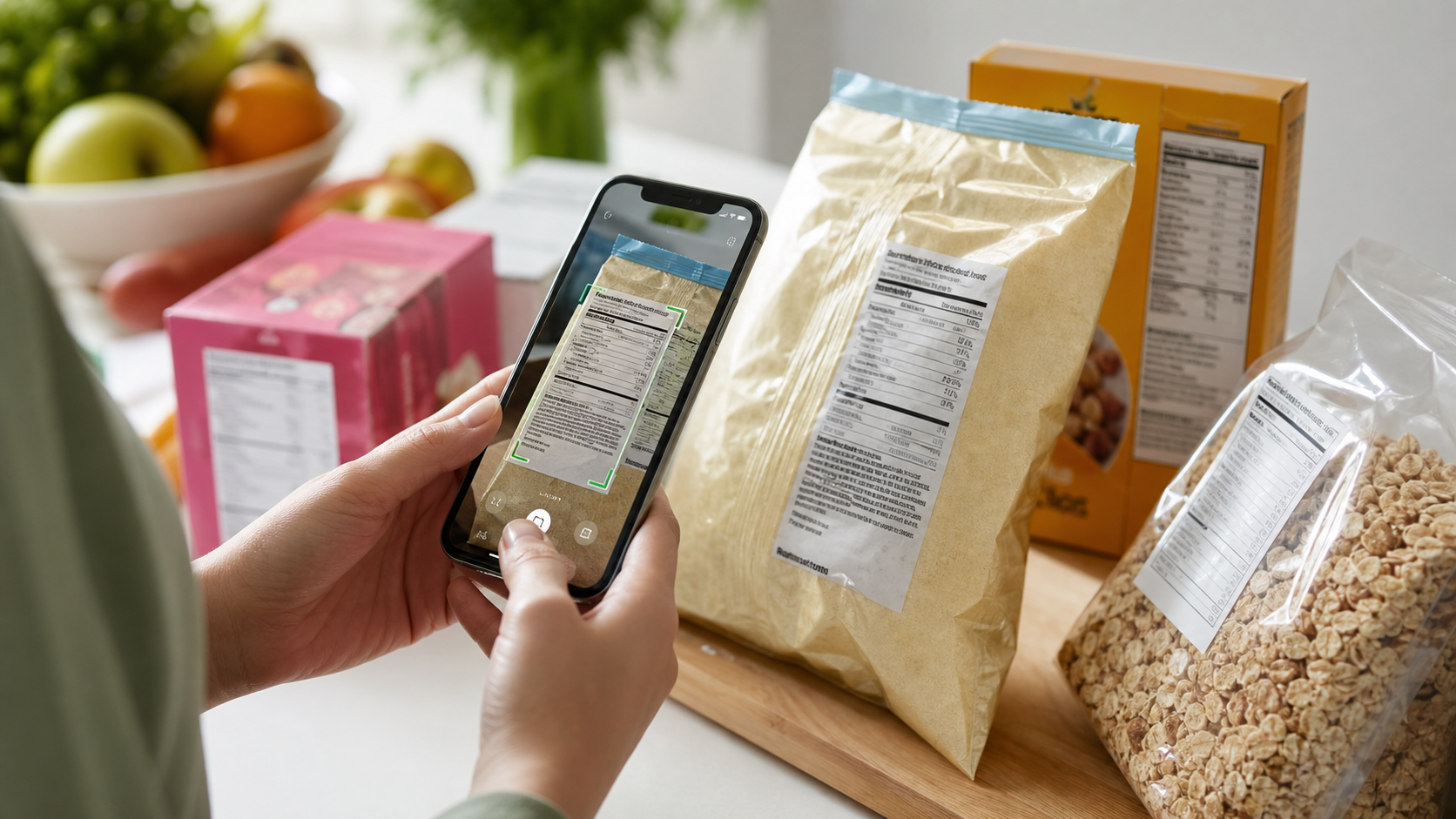
Quick answer: An ultra-processed food scanner app can help you slow down a packaged-food decision, but it should not act like a judge. Use it to scan the ingredient list, Nutrition Facts panel, serving size, added sugar, sodium, fiber, protein, and additives. Then look at your repeat pattern in a Nutrition Log. The practical question is not "Is this food bad?" It is "How often does this product show up, what does the label say, and does it fit the job of this meal?"
Ultra-processed foods are easy to talk about badly and hard to use well as a shopping rule. A frozen meal, protein bar, sweetened drink, breakfast cereal, packaged pastry, flavored yogurt, plant-based meat, instant noodle cup, or snack bag can all raise different questions. Some are mostly convenience. Some are dessert in a health costume. Some are useful in a busy week but weak as a daily default.
That is where scanning helps. A scanner cannot certify whether a food is "healthy." It can make the label less blurry.
Table of contents
- What ultra-processed food means
- What a scanner can actually check
- The five-signal label scan
- Where Eatibo fits
- When the label is not enough
- Frequently asked questions
Key takeaways
- Use an ultra-processed food scanner app as a label-reading assistant, not as a moral score.
- The ingredient list helps spot processing clues, but the Nutrition Facts panel still matters.
- Added sugar, sodium, fiber, protein, serving size, and repeat frequency usually tell you more than one scary ingredient name.
- CDC data for August 2021-August 2023 estimated that 55.0% of calories for people age 1 and older in the United States came from ultra-processed foods.
- Eatibo works best when the scan becomes a repeatable Eat / Limit / Skip decision in your Nutrition Log.
An ultra-processed food scanner app is a tool for structured label review: it reads the package, highlights signals, and helps you decide whether the product fits your routine.
What ultra-processed food means
"Ultra-processed" usually refers to the NOVA food classification system. NOVA groups foods by the extent and purpose of industrial processing, not just by nutrients. The ultra-processed group covers industrial formulations that often combine refined ingredients, additives, flavor systems, colors, emulsifiers, sweeteners, and highly engineered textures.
That definition is useful, but it can be messy in a grocery aisle.
A plain bag of oats is not the same as a frosted cereal. A canned bean is not the same as a candy bar. A protein drink, plant-based burger, frozen dinner, packaged bread, flavored yogurt, and instant soup may all sit somewhere on the processing spectrum, but they do different jobs. Some have useful protein or fiber. Some mainly deliver sugar, sodium, refined starch, and snackability.
The scanner should help you separate those details. If it only flashes a red warning, it is not doing enough.
The public-health reason this matters is not small. CDC's 2025 NCHS Data Brief reported that ultra-processed foods accounted for 55.0% of total calories among people age 1 and older in the United States during August 2021-August 2023. The same report estimated 61.9% for youth ages 1-18 and 53.0% for adults 19 and older. Those numbers do not mean every scanned package is a crisis. They do mean the repeat pattern is worth seeing.
What a scanner can actually check
A scanner can read the parts of the package that are easy to miss when you are hungry, busy, or shopping fast.
| Scanner check | What it can reveal | What it cannot decide alone |
|---|---|---|
| Ingredient list | Long ingredient lists, sweeteners, oils, refined starches, protein isolates, gums, colors, preservatives, and flavor terms | Whether the whole food pattern is good or bad for you |
| Nutrition Facts | Calories, serving size, sodium, added sugar, fiber, protein, saturated fat, and total carbohydrate | Whether the food fits your medical needs or clinician plan |
| Allergen and sensitivity cues | Milk, egg, fish, shellfish, tree nuts, peanuts, wheat, soy, sesame, gluten cues, and advisory language | Whether a food is safe for a diagnosed allergy |
| Barcode match | Product identity, flavor, package size, and saved repeat item | Whether the database entry is current |
| Nutrition Log pattern | How often the product appears and what else is around it | Whether one isolated snack defines your diet |
The annoying part is that one signal can mislead. A food with many ingredients can still be useful in a specific situation. A food with a short ingredient list can still be high in sodium or added sugar. A "high protein" front label can hide a tiny serving size, low fiber, or a lot of sweetener.
That is why a good scan checks multiple signals before it asks you to decide.
The five-signal label scan
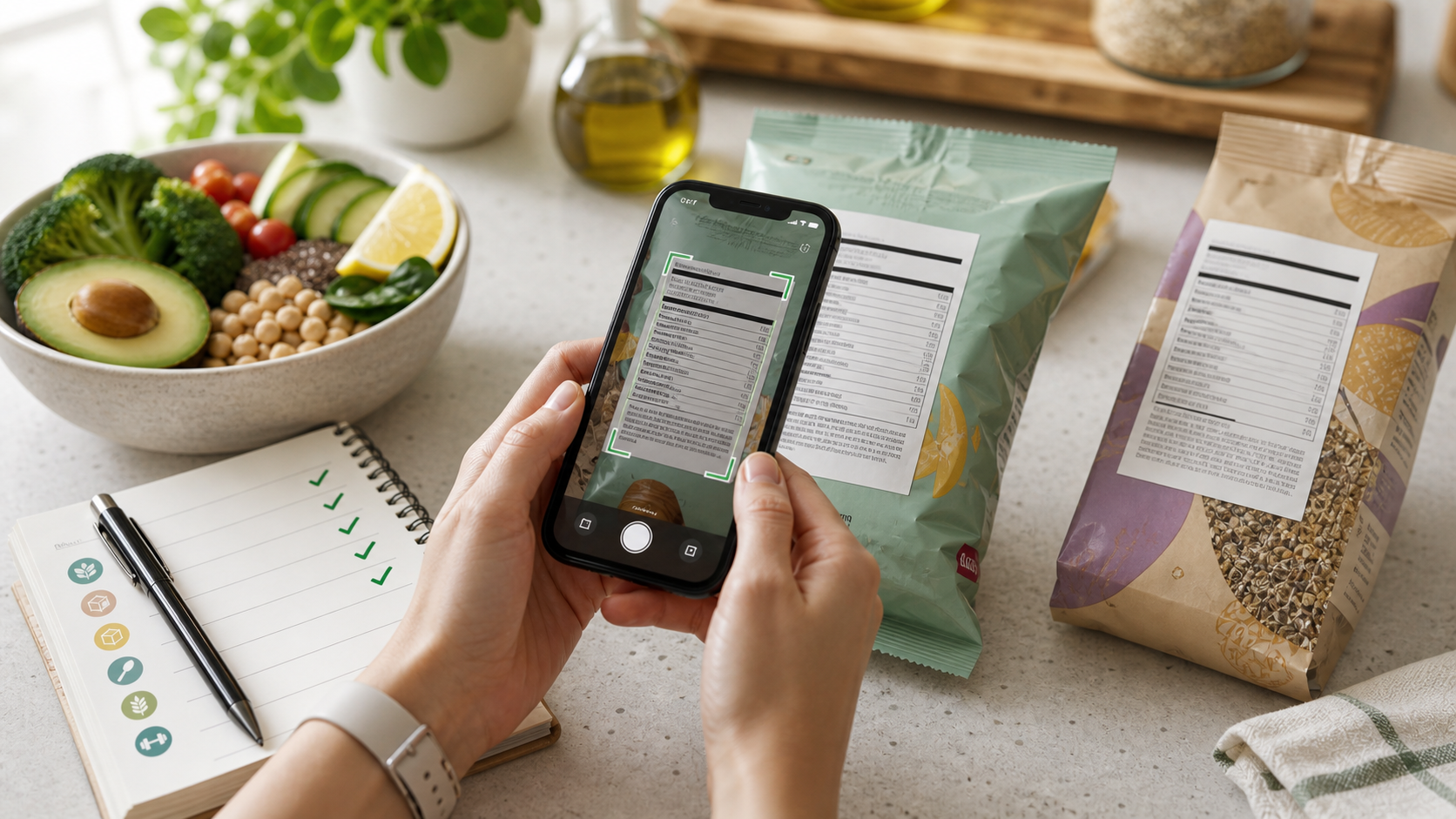
Use this sequence when you scan packaged snacks, frozen meals, breakfast foods, drinks, bars, desserts, sauces, instant meals, and "healthy" convenience products.
1. Start with serving size
Serving size controls every number on the label. The FDA's Nutrition Facts guidance puts serving size first for a reason: if you eat two servings, the calories and nutrients double.
Before judging processing, ask:
- Is this serving the amount I actually eat?
- Is the package one serving or multiple servings?
- Does the barcode entry match the label in my hand?
- Would this serving satisfy the meal job, or would I need a second item?
This catches a lot of fake clarity. A snack can look moderate per serving but become less useful if the realistic portion is two servings.
2. Check added sugar and sodium
Ultra-processed products often become a daily problem through ordinary rows on the label. Added sugar and sodium are the two that show up over and over.
FDA guidance lists added sugars on the Nutrition Facts label and uses a 50 gram Daily Value for a 2,000 calorie diet. The FDA also treats 20% Daily Value or more as high for nutrients such as sodium. That does not mean you need to calculate your whole day in the store. It means a scanner should surface these rows before the front of the package wins.
Useful questions:
- Is added sugar doing most of the flavor work?
- Is sodium high for a food I eat often?
- Does a "healthy" front claim hide a less useful back label?
- Would this food push the same limit several days per week?
3. Look for fiber and protein, not just calories
Calories matter for some goals, but they are a weak shortcut by themselves. Fiber and protein help explain whether a food is likely to be filling, whether it supports a meal, and whether it is mostly a quick snack.
A scanner should make these rows visible:
| Product type | A stronger label pattern | A weaker label pattern |
|---|---|---|
| Cereal or granola | More fiber, moderate added sugar, realistic serving | Small serving, high added sugar, low fiber |
| Snack bar | Useful protein and fiber, clear serving | Candy-like sugar with a health halo |
| Frozen meal | Enough protein, vegetables or grains, sodium you can plan around | High sodium, low fiber, tiny portion |
| Flavored yogurt | Protein plus controlled added sugar | Dessert-level sugar with a wellness label |
| Packaged drink | Clear calories and sugar, useful reason to drink it | Sweetened drink that does not satisfy hunger |
No single row makes a product good. The rows tell you what job the product can reasonably do.
4. Read ingredients for processing clues
The ingredient list is where you spot patterns that a macro panel cannot show well.
Look for:
- Refined starches and flours when the product is positioned as filling.
- Added sugars under different names, including syrups and concentrated sweeteners.
- Isolated proteins, gums, emulsifiers, colors, flavors, and preservatives.
- Oils and fats that matter to your preferences.
- Allergen cues or sensitivity conflicts.
- Ingredient order, especially when sweeteners, refined grains, or fats appear near the top.
Do not turn this into ingredient-name panic. Some unfamiliar words are normal label terms. Some additives serve texture or preservation roles. The better question is whether the ingredient list matches the role you want this food to play.
If a packaged snack is clearly a dessert, treat it as a dessert. If it is marketed as a daily health default, hold it to a higher label standard.
5. Save the repeat pattern
One packaged item is rarely the whole story. The repeat pattern is where a scanner app becomes useful.
Use a Nutrition Log to answer:
- How many times did this product show up this week?
- Is it replacing a meal, adding a snack, or solving a busy-day problem?
- Are the same label issues repeating: high sodium, high added sugar, low fiber, low protein?
- Does the product help you eat better overall, or does it make the week more snack-heavy?
- Would a simple swap improve the pattern without making your life harder?
This is the least dramatic part of the workflow, but it is the most useful. A food you eat once a month needs a different decision than a food that appears every afternoon.
Where Eatibo fits
Eatibo is built for the scan-then-log workflow. Scan the barcode, Nutrition Facts panel, or ingredient list. Review the label signals. Then save the product into a Nutrition Log so the decision is not trapped in one shopping moment.
Use a practical Eat / Limit / Skip frame:
- Eat: The label matches the product's job, the serving is realistic, and the product fits your weekly pattern.
- Limit: The product is convenient, but sodium, added sugar, low fiber, low protein, ingredient conflicts, or repeat frequency make it a sometimes choice.
- Skip: The label is unclear, the barcode match is stale, the product conflicts with a personal boundary, or the food touches a medical/allergy decision you cannot verify.
For broader label reading, use Nutrition Label Scanner App: Scan Before You Log. If ingredient details are the main issue, Food Additives: How to Scan Ingredient Lists Smarter goes deeper. For scanner trust, read Can You Trust a Food Barcode Scanner? Verify the Label First. For allergy boundaries, use Food Allergy Scanner App: What a Label Scan Can and Cannot Do.
When the label is not enough
Use extra caution when food decisions involve diagnosed allergies, celiac disease, diabetes medication, kidney disease, high blood pressure, heart disease, pregnancy, pediatric nutrition, eating disorder recovery, medication or supplement timing, hydration restrictions, or any clinician-directed diet.
Eatibo can help scan, organize, and log food information. It is not a medical device, registered dietitian, allergist, food safety authority, medication interaction checker, or substitute for medical care. If the decision is high-stakes, verify the current package, contact the manufacturer when needed, and follow qualified medical guidance.
Also remember that ultra-processed research is about patterns and populations, not a personalized verdict on one package. A scanner gives you better visibility. Your overall routine still matters.
Frequently asked questions
What does an ultra-processed food scanner app do?
It helps read packaged-food signals such as ingredient lists, serving size, added sugar, sodium, fiber, protein, additives, allergens, and barcode matches. The best use is not a red or green verdict. It is a structured check before you save the food to a repeatable Nutrition Log.
Can a scanner tell if a food is ultra-processed?
It can highlight clues that often fit ultra-processed foods, including long ingredient lists, industrial ingredients, additives, sweeteners, refined starches, and engineered texture. But classification can be nuanced. Use the scan as evidence, then review the label and your eating pattern.
Are all processed foods unhealthy?
No. Processing includes many ordinary steps such as freezing, canning, drying, fermenting, pasteurizing, or packaging. Ultra-processing is a narrower concern about industrial formulations and repeat dietary patterns. A scanner should help separate useful convenience from products that crowd out more filling meals.
What label rows matter most for ultra-processed foods?
Start with serving size, added sugar, sodium, fiber, protein, saturated fat, and ingredient order. These rows usually explain the practical tradeoff better than a front-of-pack claim. If the product appears often in your week, log it and review the pattern.
Should I avoid every food a scanner flags as ultra-processed?
Not automatically. A flagged product may still solve a real problem, such as a busy commute, travel day, or protein gap. The better decision is frequency-based: decide whether it is an occasional convenience, a regular default, or something that keeps pushing the same weak label pattern.
Can Eatibo replace medical nutrition advice?
No. Eatibo can scan labels and organize a Nutrition Log, but it cannot diagnose, treat, certify allergy safety, manage medication interactions, or replace a clinician. For allergies, chronic disease, pregnancy, pediatric nutrition, eating disorder recovery, or clinician-directed diets, use professional guidance.
Summary
An ultra-processed food scanner app is most useful when it turns a vague package into a clear decision. Scan the label, check the five signals, save the product, and review the repeat pattern. That is calmer and more useful than treating every packaged food as either perfect or forbidden.
Last updated: June 24, 2026
Sources
- CDC NCHS Data Brief No. 536: Ultra-processed Food Consumption in Youth and Adults, United States, August 2021-August 2023
- FDA: How to Understand and Use the Nutrition Facts Label
- FDA: Added Sugars on the Nutrition Facts Label
- NIH: NIH study finds heavily processed foods cause overeating and weight gain
- Public Health Nutrition: Ultra-processed foods: what they are and how to identify them