
Seed-Oil-Free Snacks: Scan Ingredient Lists Without Overreacting
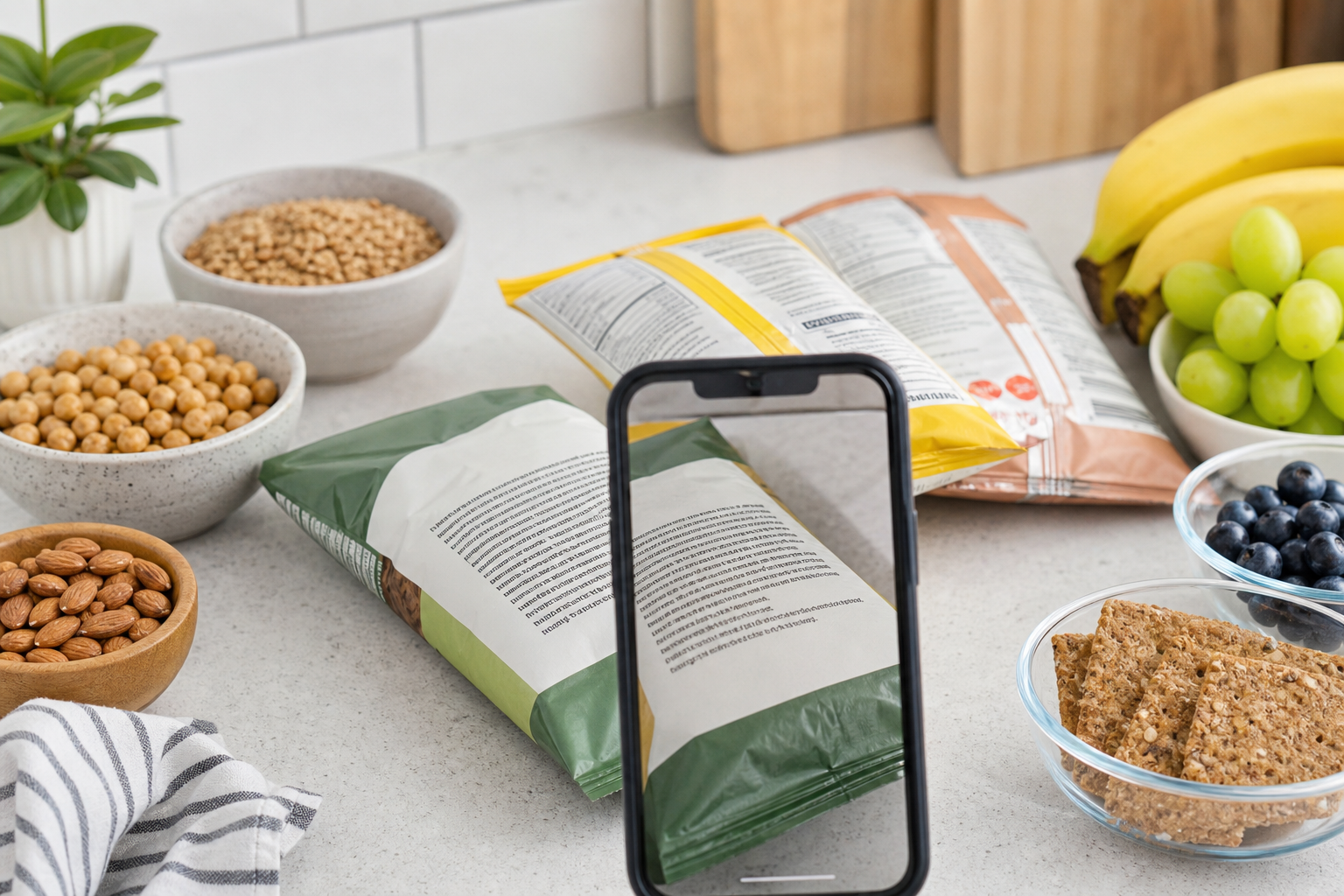
Quick answer: A seed-oil-free snack is worth considering when the ingredient list matches your preference, the oil swap does not create a worse tradeoff, and the full label still works for your routine: serving size, calories, saturated fat, sodium, added sugar, allergens, protein, fiber, and repeat frequency. Eatibo can help you scan and log that decision, but it should not be used as medical advice or as proof that a food is safe for allergies, heart disease, digestive conditions, pregnancy, eating disorder recovery, or a clinician-directed diet.
Seed-oil-free snacks are having a moment. Some shoppers want fewer ultra-processed foods. Some are trying to avoid soybean, canola, sunflower, safflower, cottonseed, corn, or grapeseed oil. Some just want a shorter ingredient list and a snack that feels less engineered.
That is a reasonable preference. The problem starts when the rule becomes too dramatic. A snack without seed oils can still be high in saturated fat, sodium, added sugar, calories, or allergens. A snack with a seed oil is not automatically a disaster. The useful move is quieter: scan the ingredient list, check the fat tradeoff, and log the snack like any other packaged food.
Key takeaways
- Start with the ingredient list, not the front claim. Look for oils by name and notice where they appear.
- Ingredient order matters because ingredients are generally listed by weight from most to least.
- Seed-oil-free does not mean healthier by default. Check saturated fat, sodium, added sugar, calories, fiber, and protein.
- Watch oil swaps. Coconut oil, palm oil, butter, ghee, or beef tallow may fit your preference but can change saturated fat.
- Use Eatibo to save the real serving and review the weekly pattern instead of making every snack decision from one label.
A useful seed-oil-free snack is not just a snack with one avoided ingredient missing. It is a snack whose oil choice, serving size, nutrition label, ingredients, and repeat-use pattern make sense together.
The five-step seed-oil-free snack scan
Use this scan for crackers, chips, granola, bars, popcorn, trail mix, roasted chickpeas, jerky, cookies, protein snacks, and "clean label" lunchbox snacks.
| Scan step | What to check | Why it matters |
|---|---|---|
| Ingredient list | Soybean, canola, sunflower, safflower, cottonseed, corn, grapeseed, vegetable oil blends, or "contains 2% or less" oil notes | This tells you whether the snack actually matches your avoid-list. |
| Ingredient order | Whether the oil appears near the top, middle, or end | A first-three ingredient is a different signal than a tiny processing aid near the end. |
| Oil replacement | Olive oil, avocado oil, coconut oil, palm oil, butter, ghee, tallow, nuts, seeds, or no added oil | The replacement changes saturated fat, calories, taste, and price. |
| Nutrition Facts | Serving size, calories, saturated fat, trans fat, sodium, added sugar, fiber, and protein | A seed-oil-free snack can still be a weak daily default. |
| Weekly pattern | How often you eat it, what it replaces, and whether the serving is honest | The real risk is often the repeated snack habit, not one package. |
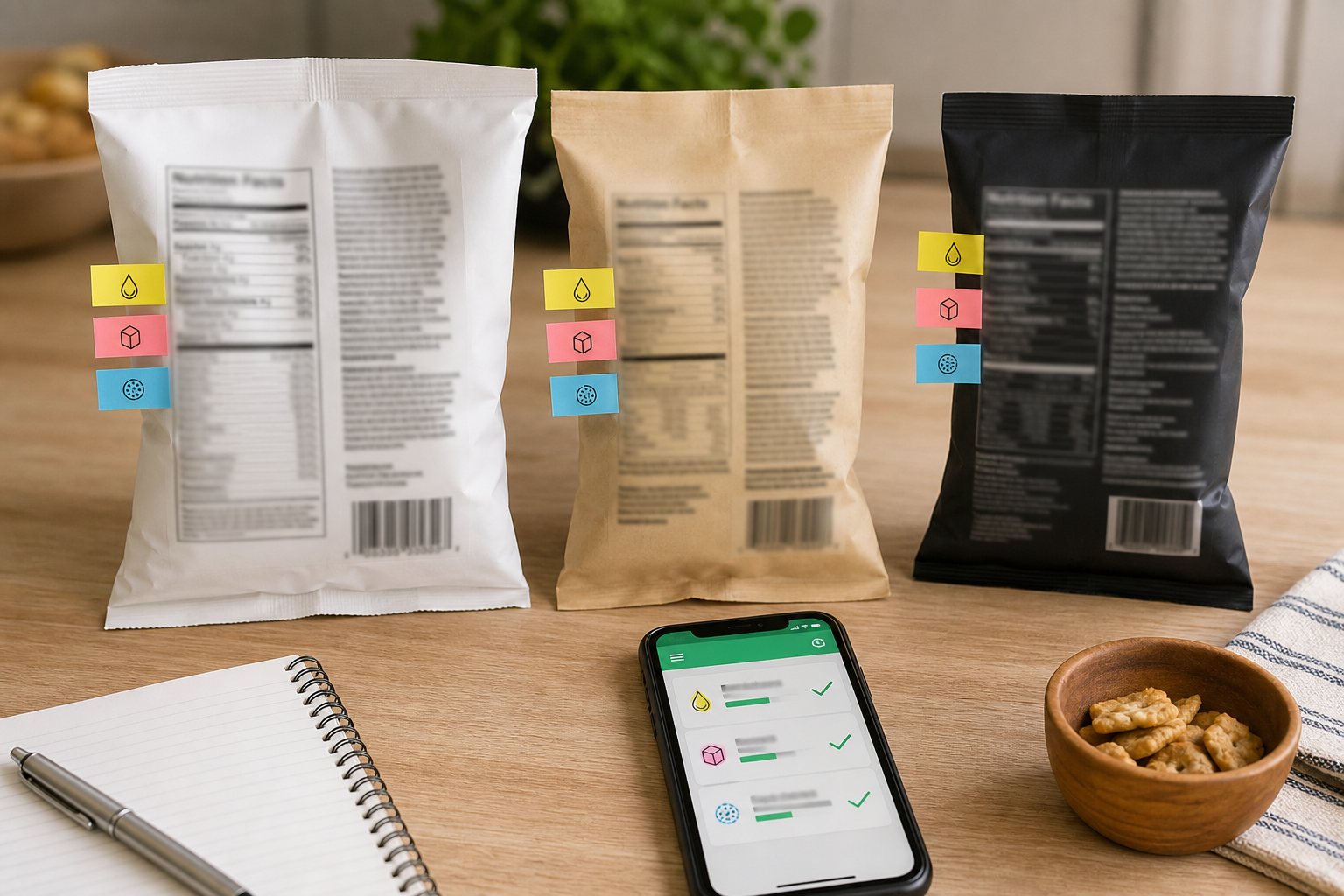
Read the ingredient list like a grown-up, not like a panic list
Here is where people mess this up. They scan for one oil name, then stop reading.
That misses the better clues. If a chip uses avocado oil but the serving is tiny and the sodium is high, the oil swap did not solve the snack. If a granola bar has no seed oils but has syrup, chocolate coating, and low fiber, the front claim is doing too much work. If a cracker contains sunflower oil near the bottom of a long ingredient list, you may still choose to avoid it, but the label is telling a different story than a snack built around oil as a main ingredient.
The FDA's consumer guidance explains that food ingredients are listed in descending order by predominance by weight. That does not tell you exact percentages. It does give you a practical shortcut: what shows up early deserves more attention.
A better reading order:
- Find every oil or fat named in the ingredient list.
- Notice whether the oil is one of the first few ingredients or tucked near the end.
- Check whether the product uses a broad term such as vegetable oil blend.
- Compare the Nutrition Facts rows that oil choices can affect: calories, saturated fat, trans fat, and serving size.
- Then decide whether the snack still fits the job you wanted it to do.
This is not about memorizing every possible oil. It is about slowing down the label long enough to avoid being sold a mood.
Common snack examples
For chips and puffs, oil often matters because the snack is fried, baked with oil, or coated. Seed-oil-free versions may use avocado oil, coconut oil, palm oil, or beef tallow. Scan saturated fat and sodium before treating the swap as automatically better.
For crackers, check whether oil appears near the top and whether the product also uses refined flour, sugar, or a small serving size. A short ingredient list is nice, but it does not replace the Nutrition Facts panel.
For granola and bars, oil is only one part of the story. Syrups, chocolate coatings, added sugar, dried fruit concentrates, low fiber, and low protein can matter more for the snack's role. A seed-oil-free bar can still be candy-adjacent.
For popcorn, scan the oil, sodium, serving size, and flavoring. Some bags are simple. Some hide a large serving behind a small listed portion.
For roasted chickpeas, lentil snacks, and bean-based snacks, compare oil, sodium, protein, fiber, and whether you eat the whole bag. These can be useful snacks, but a crunchy plant-based label is not the same as a balanced portion.
For nut and seed mixes, the irony is obvious: the snack may be "seed-oil-free" while still being calorie-dense because nuts and seeds naturally contain fat. That is not bad. It just means the serving matters.
Seed-oil-free does not mean low-fat or heart-healthy
The annoying part is that oil choices are easy to turn into slogans. Labels do it. Influencers do it. Shoppers do it when they are tired.
Nutrition is less tidy. The FDA Nutrition Facts label still asks you to look at total fat, saturated fat, trans fat, sodium, added sugars, serving size, and calories. The American Heart Association also emphasizes replacing saturated and trans fats with unsaturated fats, rather than treating all fats as one category.
That creates a practical tension. Some seed-oil-free snacks use oils or fats that are higher in saturated fat. Some seed-oil-containing snacks use mostly unsaturated oils. Some snacks with no added oil are still high in sugar or sodium. The label is the only way to see which tradeoff you are actually making.
Use this decision table:
| If the label says... | Slow down and check... | Practical interpretation |
|---|---|---|
| "Seed oil free" | Saturated fat, sodium, added sugar, serving size | The front claim is not a full nutrition review. |
| "Avocado oil" or "olive oil" | Whether it is the main oil, and what else is in the snack | A better oil cue can still come with a weak snack. |
| "Coconut oil" or "palm oil" | Saturated fat per serving | It may fit the avoid-list but change the fat profile. |
| "Vegetable oil" | The parenthetical oil names, if listed | The blend may include several oils you want to track. |
| "No added oil" | Sugar, refined starch, sodium, and portion | Removing oil does not automatically make the snack useful. |
Where Eatibo fits
Eatibo is useful when the ingredient list is doing more work than your eyes want to do. Scan the package, check the oil names, and log the serving you actually ate. If seed oils are on your personal avoid-list, the point is not to panic. The point is to make the rule visible.
That matters because the same snack can look different after a week.
Maybe the seed-oil-free chips are fine on Friday but not as a nightly default. Maybe the avocado-oil crackers fit, but the sodium does not. Maybe a regular sunflower-oil snack is not your first choice, but it is more balanced than the "clean" alternative in front of it. Eatibo's Nutrition Log gives you the repeat pattern instead of one isolated package decision.
Use a simple Eat / Limit / Skip frame:
- Eat: The snack matches your oil preference, the serving is realistic, and saturated fat, sodium, added sugar, calories, fiber, protein, and ingredients still fit.
- Limit: The snack avoids seed oils but leans on high sodium, high saturated fat, tiny servings, sweet coatings, or low satiety.
- Skip: The ingredient list conflicts with an allergy, sensitivity, clinician-directed boundary, religious/cultural requirement, or personal avoid-list.
If ingredient quality is the main concern, start with Food Additives: How to Scan Ingredient Lists Smarter. For the broader package workflow, use Nutrition Label Scanner App: Scan Before You Log. If you are comparing snack claims more generally, Low-Sugar Snacks: Scan Added Sugar Before You Buy and High-Protein Snacks: Scan Labels Before You Buy cover two common tradeoffs.
What not to do
Do not use "seed-oil-free" as a license to ignore the rest of the label. That is the obvious one.
Also avoid the opposite mistake: treating one tiny amount of oil near the end of an ingredient list as proof that the whole product is worthless. You can still choose to avoid it. Just make the choice proportional.
Do not assume expensive means better. Some seed-oil-free snacks are well made. Some are just higher-priced snacks with a cleaner front panel.
Do not make this rule the only rule in your food life. If it crowds out fiber, protein, fruits, vegetables, enough calories, or meals you can actually sustain, the rule has gotten too loud.
Health boundaries
Use extra caution when fat choices are tied to heart disease, high cholesterol, diabetes, kidney disease, liver disease, digestive disease, pregnancy, eating disorder recovery, pediatric nutrition, food allergies, celiac disease, or a clinician-directed eating plan. Oil preference is not the same as medical suitability.
Eatibo can help organize labels, ingredients, and repeat patterns. It is not a medical device, allergy authority, religious certification tool, cholesterol treatment plan, or substitute for a clinician or registered dietitian.
Frequently asked questions
What oils should I scan for in seed-oil-free snacks?
Common names include soybean, canola, sunflower, safflower, cottonseed, corn, grapeseed, and generic vegetable oil blends. Your personal avoid-list may be narrower or broader. Scan the full ingredient list because oils can appear in coatings, flavorings, or "contains 2% or less" sections.
Are seed-oil-free snacks automatically healthier?
No. They may fit your ingredient preference, but the rest of the label still matters. Check serving size, saturated fat, trans fat, sodium, added sugar, fiber, protein, calories, and allergens. A snack can avoid seed oils and still be a poor daily default.
Is avocado oil always better than canola or sunflower oil?
Not automatically. Avocado oil can be a useful label cue, but you still need to check the whole product. The snack may be high in sodium, calories, saturated fat, or added sugar. Also check whether avocado oil is the main oil or just one part of a blend.
Can Eatibo tell me whether seed oils are bad for me?
No. Eatibo can scan labels, flag ingredients, and help you review your own food patterns. It should not diagnose inflammation, heart risk, allergies, or any medical condition. If fat choices are part of a medical plan, use guidance from a qualified clinician or registered dietitian.
Summary
Seed-oil-free can be a useful shopping preference, especially if it pushes you to read ingredient lists more carefully. Just keep the rule grounded. Scan the oil names, notice ingredient order, compare the Nutrition Facts label, and log the real serving. A snack that survives that check is more useful than one that only wins because the front label sounds clean.
Last updated: June 5, 2026
Sources
- FDA: Types of Food Ingredients
- FDA: What's on the Nutrition Facts Label
- American Heart Association: Fats in Foods
- Dietary Guidelines for Americans, 2020-2025
Related reading
- Food Additives: How to Scan Ingredient Lists Smarter helps when additives or ingredient order drive the decision.
- Nutrition Label Scanner App: Scan Before You Log gives the full package review workflow.
- Low-Sugar Snacks: Scan Added Sugar Before You Buy keeps sugar claims in context.
- High-Protein Snacks: Scan Labels Before You Buy helps compare protein-forward snack labels.