Low-Sugar Snacks: Scan Added Sugar Before You Buy
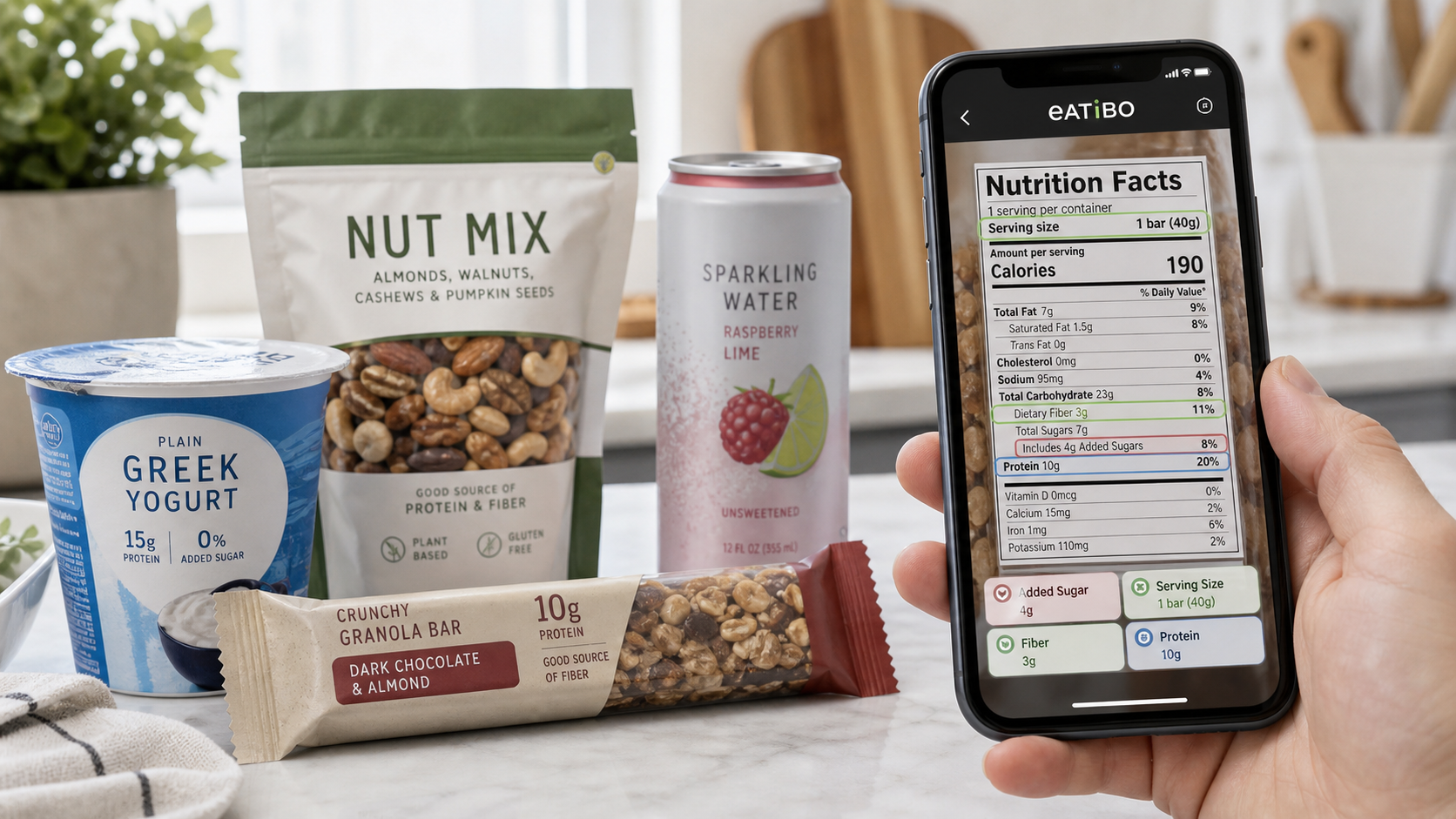
Quick answer: A low-sugar snack is worth buying when the serving size matches what you actually eat, added sugar is low enough for the snack's role, and the rest of the label still makes sense: fiber, protein, calories, sodium, sweeteners, allergens, and ingredients. Eatibo can help you scan the nutrition label and log the pattern, but it should not be used as medical guidance for diabetes, hypoglycemia, pregnancy, kidney disease, eating disorder recovery, food allergies, or clinician-directed diets.
"Low sugar" sounds simple until you stand in the snack aisle. A yogurt cup may show 0g added sugar but rely on sweeteners. A granola bar may look wholesome and still carry syrup in the first few ingredients. A drink can feel light because it has few calories, then turn out to be the sweetest part of your day.
The better move is not to hunt for a perfect zero. It is to scan the label in the same order every time, then decide whether the snack deserves a regular spot in your log.
Key takeaways
- Start with serving size. Sugar numbers only mean something when the serving matches your real portion.
- Read total sugars and added sugars together. Added sugar tells you what was added during processing; total sugars also includes naturally occurring sugar.
- A useful low-sugar snack still needs a job: fullness, protein, fiber, meal bridge, travel backup, or a treat you can log honestly.
- Scan sweeteners, syrups, coatings, fruit concentrates, and flavored bases in the ingredient list.
- Use your weekly Eatibo log to catch repeat patterns, not just one good-looking label.
A practical low-sugar snack is not simply the snack with the smallest sugar number. It is the snack whose sugar, serving size, ingredients, and repeat-use pattern fit the rest of your day.
The six-row low-sugar snack scan
Use this order for yogurt, snack bars, cereal cups, trail mix, dried fruit, jerky, protein snacks, crackers, puddings, and bottled drinks.
| Label row | What to check | Why it changes the decision |
|---|---|---|
| Serving size | Grams, pieces, cup size, bottle size, and servings per package | A small serving can make added sugar look harmless even when you eat double. |
| Total sugars | Naturally occurring sugar plus added sugar | Helps you understand yogurt, fruit, dairy, and mixed snacks without overreacting. |
| Added sugars | Grams and % Daily Value on the Nutrition Facts label | Shows how much sugar was added during processing, sweetening, or preparation. |
| Fiber and protein | Dietary fiber, protein grams, nuts, seeds, dairy, legumes, or whole grains | A lower-sugar snack still needs enough structure to feel useful. |
| Calories and sodium | Calories per real portion, sodium, saturated fat, and whether it is a snack or mini-meal | Some "better" snacks trade sugar for calories, salt, or fat. |
| Ingredients | Syrups, cane sugar, honey, fruit juice concentrate, sweeteners, allergens, oils, and additives | This is where the front claim either holds up or falls apart. |
This is the same reason a nutrition label scanner is useful. You are not trying to memorize every sugar alias in the store. You are trying to slow the decision down just enough to see the tradeoff.
Low sugar is not the same as no sugar
Here is where people get tripped up. Total sugars and added sugars are related, but they are not the same row.
Plain yogurt, milk, and whole fruit can contain naturally occurring sugars. A sweetened yogurt, granola bar, cookie, cereal, or flavored drink may contain both naturally occurring sugars and added sugars. The FDA's Nutrition Facts label separates added sugars so you can see what was added beyond what is naturally present.
That distinction matters in a grocery decision. A plain Greek yogurt with some naturally occurring sugar and strong protein may be a very different snack from a dessert-style yogurt with added sugar and candy toppings. A trail mix with dried fruit may be different from one coated in chocolate and syrup. The label helps you compare them without pretending all sugar sources are identical.
A better shortcut:
- If the snack is dairy or fruit based, check total sugars, added sugars, protein, fiber, and the ingredient list before judging it.
- If the snack is a bar, cereal, cookie, drink, or "healthy" dessert, give added sugar and serving size more weight.
- If the snack says "no added sugar," still scan sweeteners, sugar alcohols, calories, and how often you eat it.
How to compare common low-sugar snacks
For Greek yogurt, start with added sugar, protein, saturated fat, and the base ingredients. Plain yogurt often gives you more control because you can add fruit, nuts, or cinnamon yourself. Flavored cups can still work, but scan the sweetened base and toppings before treating them like the plain version.
For granola bars and protein bars, compare added sugar with protein, fiber, calories, and ingredient order. A bar with 3g added sugar and 2g fiber may feel different from a bar with 3g added sugar, 10g protein, and a realistic serving. The front label will not explain that difference for you.
For trail mix, look for chocolate pieces, sweetened dried fruit, yogurt coatings, honey roasting, and package servings. Nuts and seeds can be useful, but a "handful" is easy to under-log. Eatibo is more honest when you scan the package and save the amount you actually eat.
For drinks, check the bottle size before the sugar number. Some labels are easy to read per serving while the bottle contains more than one serving. Sparkling water, unsweetened tea, or lightly flavored drinks may be good swaps, but caffeine, sweeteners, and sodium can still matter. If the drink is replacing plain water through the day, estimate a practical baseline with the free Water Intake Calculator before you judge the swap.
For jerky or savory snacks, do not assume low sugar means clean. Scan sodium, preservatives, sweet marinades, allergens, and serving size. A low-sugar jerky can still be a high-sodium daily habit.
Where Eatibo fits
Eatibo is useful when the label has too many rows to compare in your head. Scan the Nutrition Facts panel or barcode, check the ingredient list, and save the snack to your Nutrition Log instead of making a one-time aisle guess.
That log is the part that makes the scan practical. One low-sugar snack may be fine. A pattern of low-sugar snacks may show something else: the "healthy" bar appears every afternoon but does not keep you full, the sweetened yogurt adds up faster than expected, or the zero-sugar drink replaces water all day.
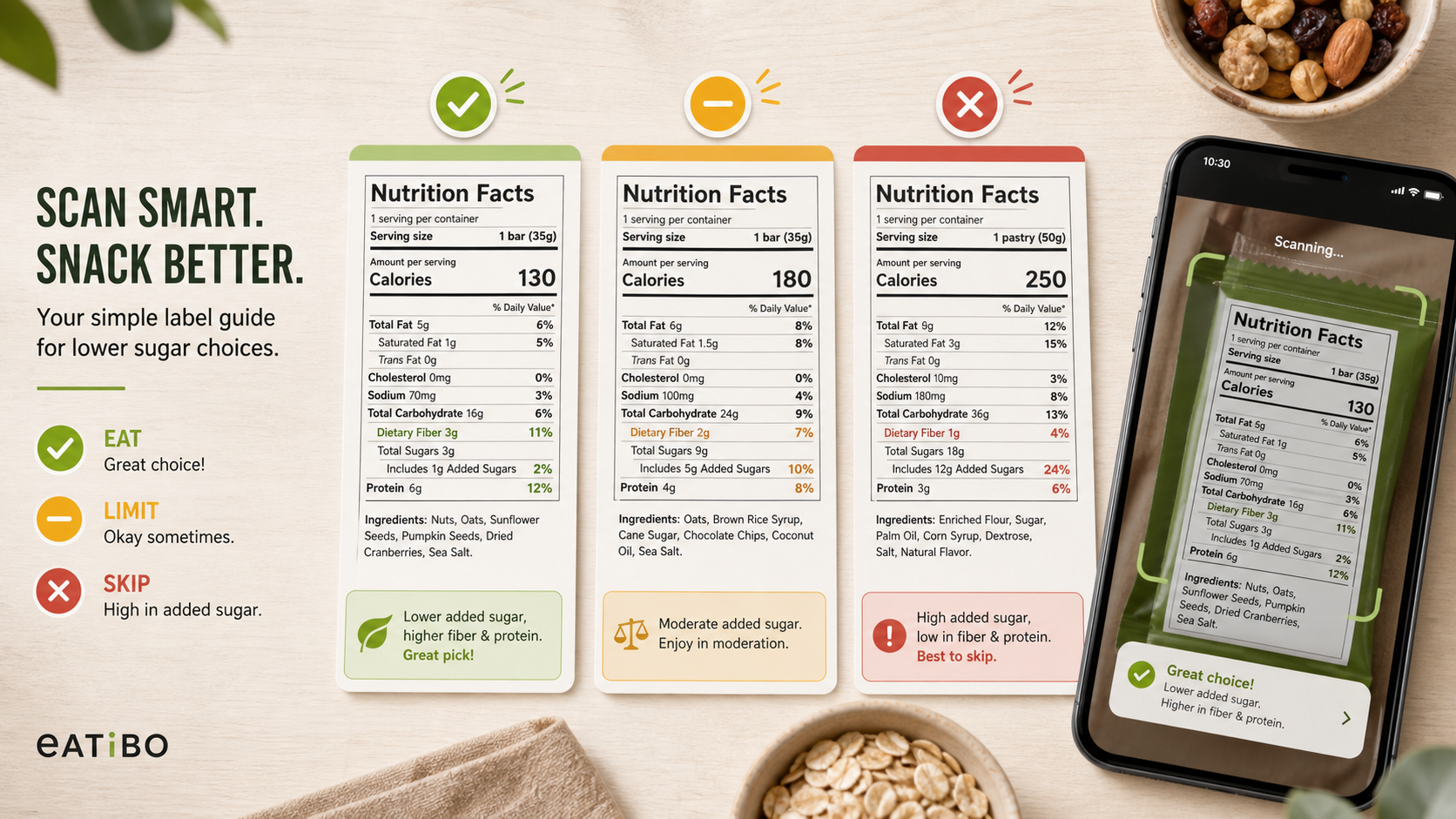
Use Eatibo's Eat / Limit / Skip frame:
- Eat: The portion is realistic, added sugar is low for the snack's job, and fiber, protein, sodium, calories, and ingredients still fit.
- Limit: The snack works sometimes, but it leans on sweeteners, low fiber, high sodium, saturated fat, or a serving size you rarely follow.
- Skip: The label conflicts with an allergy, sensitivity, clinician-directed boundary, or a personal avoid-list.
If additives, sweeteners, or ingredient signals are the deciding factor, Eatibo's Food Additive Risk Alerts can help surface what deserves a second look without turning every unfamiliar ingredient into a scare word. For broader label scanning, Nutrition Label Scanner App: Scan Before You Log gives the full package-review workflow.
Watch the "healthy snack" trap
Low sugar can be a useful signal. It is not a full nutrition review.
A snack can be low in added sugar and still be too small to satisfy you. It can be low sugar and high in sodium. It can use sugar alcohols that do not sit well with your stomach. It can be low sugar because the serving size is tiny. It can also be a treat that you enjoy and log, which is fine if you are honest about the role it plays.
The question is not, "Is this snack allowed?" A more useful question is, "What job is this snack doing?"
| Snack job | Better scan priority | Watch out for |
|---|---|---|
| Workday bridge | Added sugar, protein, fiber, real serving | Bars that taste good but leave you hungry. |
| Lunchbox snack | Added sugar, allergens, portion, ingredient simplicity | Fruit snacks, sweetened pouches, and dessert-style bars. |
| Post-workout backup | Protein, calories, added sugar, bottle or bar size | Shakes that become extra intake instead of replacing something. |
| Evening treat | Added sugar, calories, serving size, repeat frequency | "Low sugar" desserts that still trigger grazing. |
| Grocery staple | Ingredients, sodium, fiber, protein, weekly log pattern | Buying a health halo instead of a useful default. |
Health boundaries
Use extra caution when sugar decisions are tied to a medical condition, medication, pregnancy, a diagnosed eating disorder, kidney disease, digestive disease, food allergy, or a clinician-directed plan. "Low sugar" on a consumer label does not automatically mean a food is safe or appropriate for blood-sugar management.
Eatibo can help organize labels, ingredients, and logged patterns. It is not a medical device, allergy authority, medication tool, glucose monitor, or substitute for a clinician or registered dietitian.
Frequently asked questions
What should I scan first on a low-sugar snack label?
Start with serving size and servings per container. Then read total sugars, added sugars, fiber, protein, calories, sodium, and ingredients. This order keeps a "low sugar" claim from hiding a tiny portion, weak protein, low fiber, or sweeteners you may not want.
Are zero-sugar snacks always better?
No. A zero-sugar snack may still be high in calories, sodium, saturated fat, or sweeteners. Some people tolerate sugar alcohols and non-sugar sweeteners well; others do not. Scan the whole label and use your log to see whether the snack actually helps your routine.
Is fruit too high in sugar for a low-sugar snack?
Whole fruit is not the same as candy or a sweetened packaged snack. It has naturally occurring sugar along with water, fiber, and other nutrients. If you are comparing packaged fruit products, scan added sugar, syrup, juice concentrate, serving size, and whether the product is closer to fruit or dessert.
Can Eatibo tell me how much sugar I should eat?
Eatibo can help you scan labels, log snacks, and notice weekly patterns. It should not set medical sugar targets. If you manage diabetes, hypoglycemia, medications, pregnancy nutrition, kidney disease, eating disorder recovery, or another diagnosed condition, use guidance from a qualified clinician or registered dietitian.
Summary
The best low-sugar snack choice usually comes from a boring scan, not a bold package claim. Check serving size first, then total sugars, added sugars, fiber, protein, calories, sodium, and ingredients. After that, log the snack a few times. If the weekly pattern still works, it is a better default than a snack that only looked good for ten seconds in the aisle.
Last updated: July 2, 2026
Sources
- FDA: Serving Size on the Nutrition Facts Label
- FDA: Added Sugars on the Nutrition Facts Label
- CDC: Spotting Hidden Sugars in Everyday Foods
Related reading
- Nutrition Label Scanner App: Scan Before You Log explains the broader label-scan workflow.
- Water Intake Calculator helps set a water baseline when low-sugar drinks replace plain water.
- High-Protein Snacks: Scan Labels Before You Buy helps compare protein snacks without ignoring sugar and sodium.
- Low-Carb Snacks: How to Scan Labels Smarter separates carb claims from practical snack decisions.
- Food Additives: How to Scan Ingredient Lists Smarter helps when sweeteners, additives, or ingredient order are the deciding factor.