
Low-Carb Snacks: How to Scan Labels Smarter
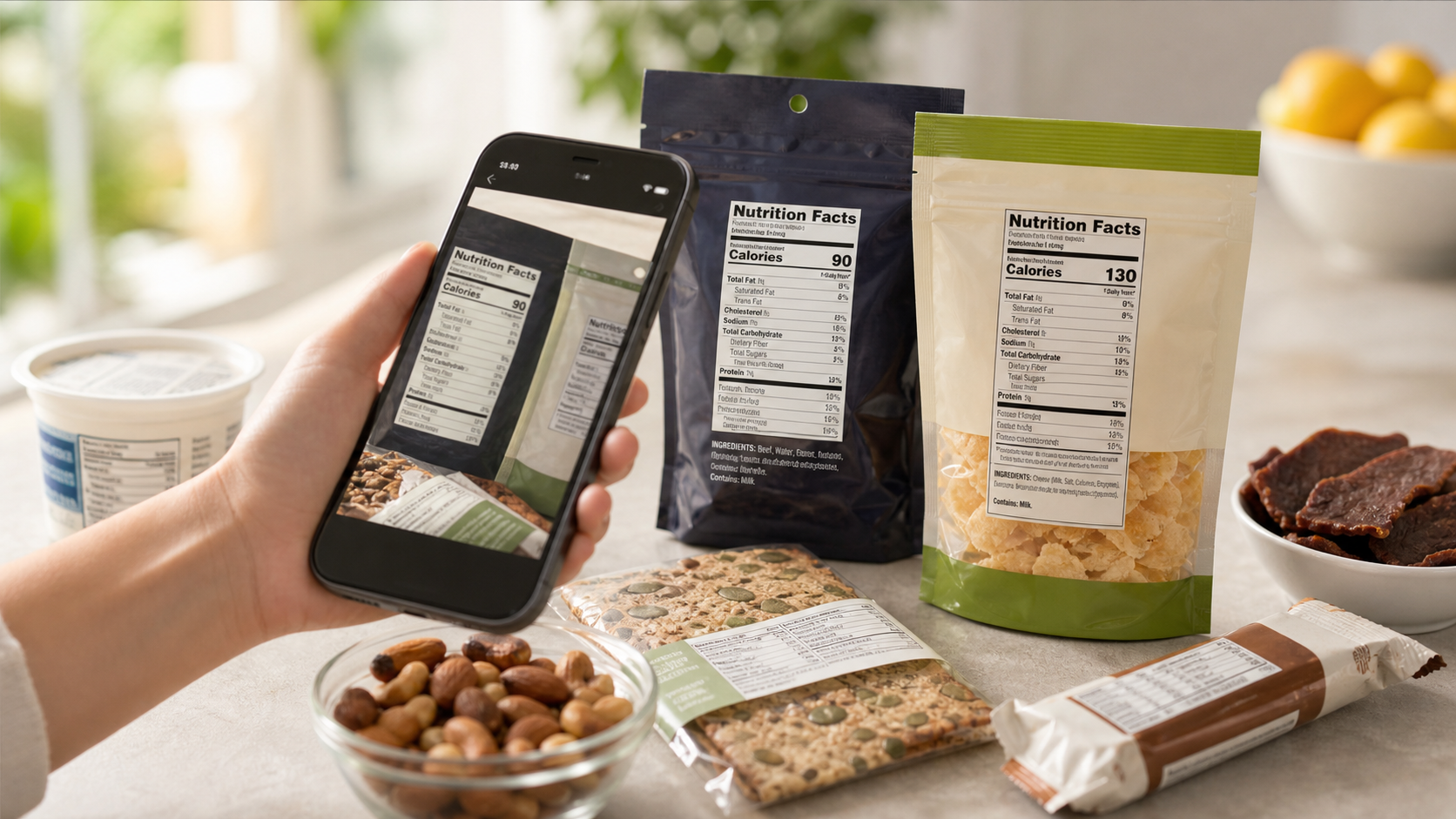
Quick answer: The best low-carb snacks are not just the products with "low carb" printed on the front. A smarter scan checks total carbohydrates, fiber, added sugar, sugar alcohols, protein, ingredients, and the real serving size before you eat. Eatibo can help you compare labels and log the snack pattern, but it should not be used as medical guidance for diabetes, pregnancy, kidney disease, eating disorder recovery, medications, or a therapeutic ketogenic diet.
Low-carb snacking can be useful when you are trying to avoid sugar swings, reduce grazing, or keep a meal plan from drifting. It can also get confusing fast. Nuts, jerky, protein bars, cheese crisps, Greek yogurt, seed crackers, and "keto" packaged snacks can all look low-carb at first glance, but the details on the label tell a more useful story.
The goal is not to chase the lowest carb number possible. The goal is to choose a snack you can explain, tolerate, enjoy, and log accurately. A snack with a few more carbs and better protein or fiber may fit your day better than a snack with an aggressive marketing claim and a tiny serving size.
What makes a low-carb snack worth choosing?
A good low-carb snack usually does three jobs. It keeps carbohydrates in a range that fits your plan, gives enough protein, fat, or fiber to feel useful, and avoids ingredient surprises that conflict with your preferences or sensitivities.
That means the front claim is only the first clue. "Keto," "low net carb," "sugar free," "protein," and "grain free" are marketing shortcuts. They may point you in the right direction, but they do not answer the practical questions: How many total carbs are in the serving? How big is that serving? Is the snack mostly fiber, sugar alcohols, oils, or protein? Does it contain ingredients you personally avoid?
The FDA's Nutrition Facts label is built around serving size, calories, and nutrients such as total carbohydrate, dietary fiber, total sugars, added sugars, protein, fat, and sodium. For low-carb snacks, those rows should be read together. Looking at one number in isolation can make a snack look better than it is.
A five-step label scan for low-carb snacks
Use this sequence when comparing a snack in a store, pantry, vending machine, or delivery order.
| Step | What to check | Why it changes the decision |
|---|---|---|
| Serving size | Grams, pieces, cup size, package servings, and whether you usually eat more than one serving | A tiny serving can make carbs, calories, and sodium look artificially low. |
| Total carbs | Total carbohydrate per serving, not only front-of-pack "net carb" claims | Gives the clearest label baseline before brand math or marketing language. |
| Fiber + sugar alcohols | Dietary fiber, sugar alcohols, and how your body responds to them | Some people tolerate them well; others notice digestive discomfort or appetite rebound. |
| Added sugar | Added sugars, sweet syrups, fruit concentrates, chocolate coatings, and sweetened yogurt bases | A snack can be low-ish carb but still rely on added sugar or sweet taste cues. |
| Protein + ingredients | Protein grams, oils, preservatives, allergens, gluten, dairy, soy, nuts, or seed oils | Shows whether the snack supports fullness and matches your personal rules. |
The order matters. Start with serving size because every other number depends on it. Then check total carbs before deciding how much weight to give a "net carb" claim. After that, use fiber, added sugar, protein, and ingredients to decide whether the snack is a good everyday choice, an occasional choice, or a skip.
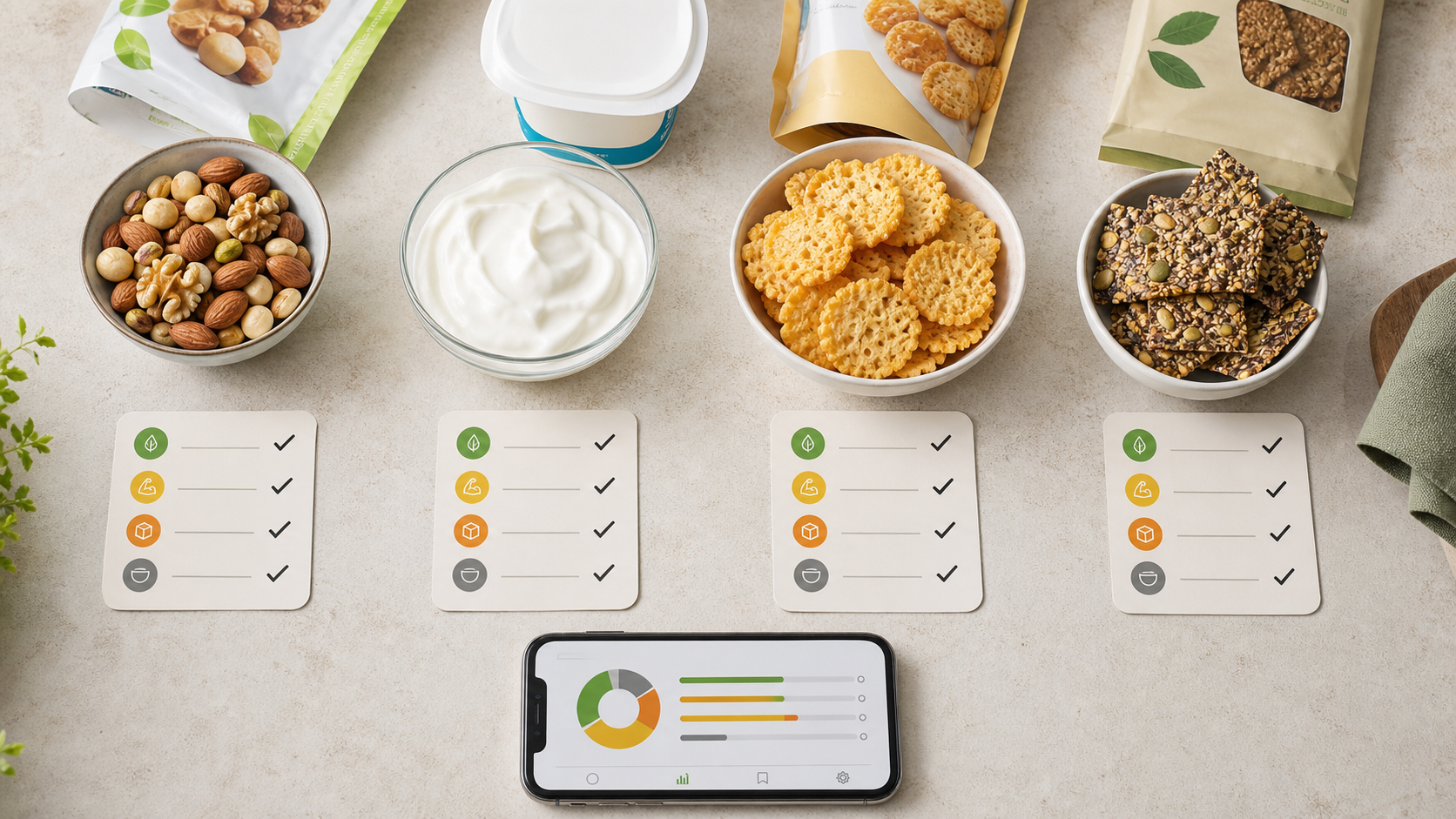
Low-carb snack choices that often scan well
Plain Greek yogurt can be a strong option when the label is simple: unsweetened base, meaningful protein, no heavy sweetener load, and a serving you actually eat. If you choose flavored yogurt, scan added sugar and serving size before assuming it belongs in the same category.
Nuts and seeds can work well because they combine fat, fiber, and some protein. The label still matters. Honey-roasted nuts, trail mixes with dried fruit or chocolate, and flavored seed mixes can move from low-carb snack to candy-adjacent snack quickly. Portion size is the other issue. A handful and a large bowl are not the same entry in your log.
Jerky and meat sticks can be convenient, but scan sugar, sodium, preservatives, and allergens. Some products use sweet marinades or sauces that add carbs. Others are very high in sodium for the portion. A clean-looking package is not the same as a clean ingredient list.
Cheese crisps, cheese sticks, cottage cheese, and eggs can be lower in carbs, but they bring their own tradeoffs: saturated fat, sodium, dairy tolerance, and portion repetition. If dairy is a sensitivity area, pair this article with Lactose-Free Milk: How to Scan Labels Smarter and keep your personal tolerance notes visible.
Protein bars and "keto" snack bars deserve the closest scan. They may be convenient, but many depend on sugar alcohols, fibers, coatings, and flavor systems that affect people differently. If the ingredient list is long and the serving is small, treat the bar as a packaged product to compare, not a health halo.
Common low-carb label traps
The first trap is treating "net carbs" as a universal rule. Net-carb math usually subtracts fiber and sometimes sugar alcohols from total carbohydrates. That can be useful for some people, but it is not the only number on the label. If your goal is blood-sugar control, a medically directed ketogenic diet, or medication management, use professional guidance instead of relying on a consumer app or brand claim.
The second trap is ignoring serving size. A bag of cheese crisps may list one ounce, while the package contains two or three servings. A protein bar may be one serving, but the snack mix beside it may not be. Eatibo's log is more useful when the portion you save matches what you actually ate.
The third trap is choosing low carb while forgetting nutrition quality. A snack can be low in carbs and still low in fiber, low in protein, high in sodium, or built from ingredients that do not match your preferences. The better question is not "Is it low carb?" It is "What role does this snack play in my day?"
The fourth trap is replacing meals with snacks too often. A low-carb snack can bridge a gap between meals. It should not quietly become the main structure of your diet unless that is intentional and supported by your broader nutrition plan.
How Eatibo helps
Eatibo is useful for low-carb snack decisions because it keeps the scan connected to your real routine. You can scan a nutrition label or ingredient list, compare carbs, added sugar, protein, allergens, additives, and serving size, then save the snack into your Nutrition Log.
That turns one aisle decision into a pattern. Maybe the cheese crisps fit your carbs but push sodium high. Maybe the yogurt fits protein but only when you choose the plain version. Maybe the "keto" bar looks good on net carbs but keeps showing up when your fiber is low and sweet cravings are high. A weekly log gives the AI Nutrition Coach better context than a one-time label read.
The Eat / Limit / Skip framing can also keep the decision practical:
- Eat: The snack fits your carb target, has a serving you can log honestly, and supports protein, fiber, or fullness.
- Limit: The snack fits occasionally but leans on sugar alcohols, sodium, saturated fat, or a small serving size.
- Skip: The label is unclear, the portion is unrealistic, or the ingredients conflict with your sensitivities or preferences.
If additives, seed oils, or allergen signals are part of your decision, the Food Additive Risk Alerts feature page explains how Eatibo approaches ingredient warnings without pretending to be a medical safety certificate.
A practical low-carb snack checklist
Before a low-carb snack becomes your default, scan it against the same checklist a few times.
- Does the stated serving match how much you usually eat?
- Are total carbs and added sugar both reasonable for your plan?
- Is the snack relying heavily on sugar alcohols or isolated fibers?
- Does it give enough protein, fiber, or fat to be worth the slot?
- Are sodium, saturated fat, allergens, and additives acceptable for you?
- Is it easy to log consistently in Eatibo?
- Does your weekly pattern still include real meals, vegetables, hydration, and enough variety?
For general healthy eating goals, this is enough to make a better everyday decision. For diabetes, diagnosed metabolic conditions, pregnancy, kidney disease, eating disorder recovery, medication use, or a therapeutic ketogenic diet, use a clinician or registered dietitian for personal targets. Eatibo can organize the label and the log; it does not set medical carbohydrate limits.
Frequently asked questions
What should I scan first on a low-carb snack label?
Start with serving size, then total carbohydrates. After that, check fiber, sugar alcohols, added sugar, protein, sodium, and ingredients. This prevents front-of-pack claims from hiding a tiny serving or a long ingredient tradeoff.
Are keto snacks always better than regular low-carb snacks?
No. Some keto snacks are useful, and some are highly processed products with small serving sizes, lots of sugar alcohols, or ingredients you may not tolerate well. Scan the full label before treating a keto claim as a better choice.
Should I use total carbs or net carbs?
Use total carbs as the label baseline. Net carbs can be a secondary estimate when you understand the fiber and sugar alcohols involved, but it should not replace medical guidance for diabetes, blood-sugar medication, or therapeutic keto plans.
Can Eatibo tell me exactly how many carbs I should eat?
Eatibo can help you scan snacks, log meals, review patterns, and discuss goals with the AI Nutrition Coach. It should not replace individualized advice from a clinician or registered dietitian when carbohydrate targets are medical or high-stakes.
Last updated: May 25, 2026
Sources
- FDA: How to Understand and Use the Nutrition Facts Label
- FDA: Added Sugars on the New Nutrition Facts Label
- FDA: Dietary Fiber on the Nutrition Facts Label
Related reading
- Is Gluten-Free Low Carb? explains why gluten-free and low-carb are separate label decisions.
- Gluten-Free Snacks: How to Scan Labels Smarter gives a sensitivity-aware packaged-snack scan.
- Sip Smart: Your Guide to Enjoying Low-Carb Beers Without the Guilt applies a carb-and-calorie scan to beer labels.