High-Protein Snacks: Scan Labels Before You Buy
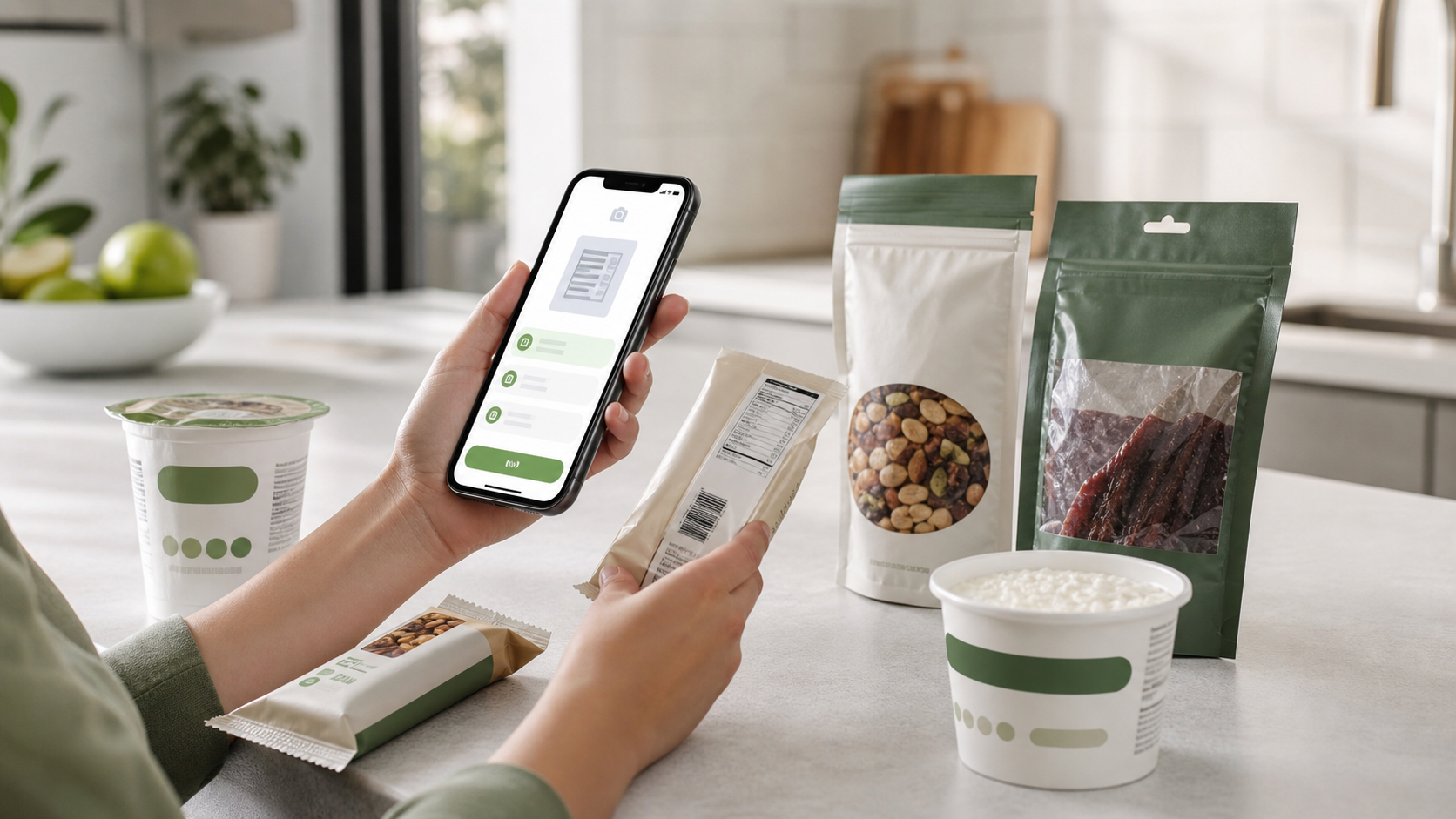
Quick answer: A high-protein snack is worth buying when the serving size is realistic, the protein grams fit the snack's job, and the label does not hide a tradeoff in added sugar, sodium, saturated fat, low fiber, allergens, or a long ingredient list. Eatibo can help you scan the label, compare snacks, and log what you actually eat, but it should not be used as medical nutrition advice for kidney disease, pregnancy, eating disorder recovery, diabetes medication, allergies, or clinician-directed diets.
High-protein snacks are everywhere now: bars, shakes, yogurts, jerky, cottage cheese cups, nut mixes, chips, cereal, cookies, and "protein" versions of foods that used to be simple treats. Some are useful. Some are just snacks with better marketing.
The annoying part is that the front of the package usually shows the easiest number to like: 10g protein, 20g protein, high protein, supports muscle, keeps you full. That number matters, but it is not enough. A snack can have plenty of protein and still be too sugary for your routine, too salty for daily use, too low in fiber, too high in calories for a small snack, or wrong for your allergies and preferences.
Key takeaways
- Start with serving size before protein grams. A tiny serving can make the label look better than your real portion.
- Compare protein with calories, added sugar, fiber, sodium, saturated fat, and ingredients.
- Use a protein bar, shake, yogurt cup, jerky pouch, or nut mix for a specific job, not because the front label sounds healthy.
- Scan ingredients when dairy, gluten, soy, nuts, sesame, seed oils, sweeteners, or additives matter for you.
- Log the snack more than once. The weekly pattern often tells you whether it is helping or just adding another packaged habit.
A useful high-protein snack is not the one with the biggest protein claim. It is the one whose protein, portion, ingredients, and repeat-use pattern fit the day you are actually having.
The five-row scan for high-protein snacks
Use the same scan order whether you are comparing a protein bar, Greek yogurt, jerky, cottage cheese, roasted edamame, nuts, protein chips, or a bottled shake.
| Label row | What to check | Why it changes the decision |
|---|---|---|
| Serving size | Grams, pieces, cups, bottle size, and servings per package | Every protein, calorie, sugar, sodium, and fat number depends on this row. |
| Protein | Protein grams per serving and whether the snack is a bridge, meal side, or recovery snack | A 6g snack and a 25g shake solve different problems. |
| Calories | Calories per serving and whether you usually eat the whole package | A high-protein snack can quietly become a small meal. |
| Added sugar and fiber | Added sugars, sugar alcohols, fiber, whole-food ingredients, and fullness support | Protein plus sugar may act more like dessert; protein plus fiber may be more useful. |
| Sodium, fat, and ingredients | Sodium, saturated fat, oils, allergens, sweeteners, additives, and ingredient order | This is where many packaged protein snacks stop looking like everyday defaults. |
This is why a nutrition scanner helps. You are not trying to memorize every label rule. You are trying to compare the rows that decide whether the snack fits your real routine.
How to compare common high-protein snacks
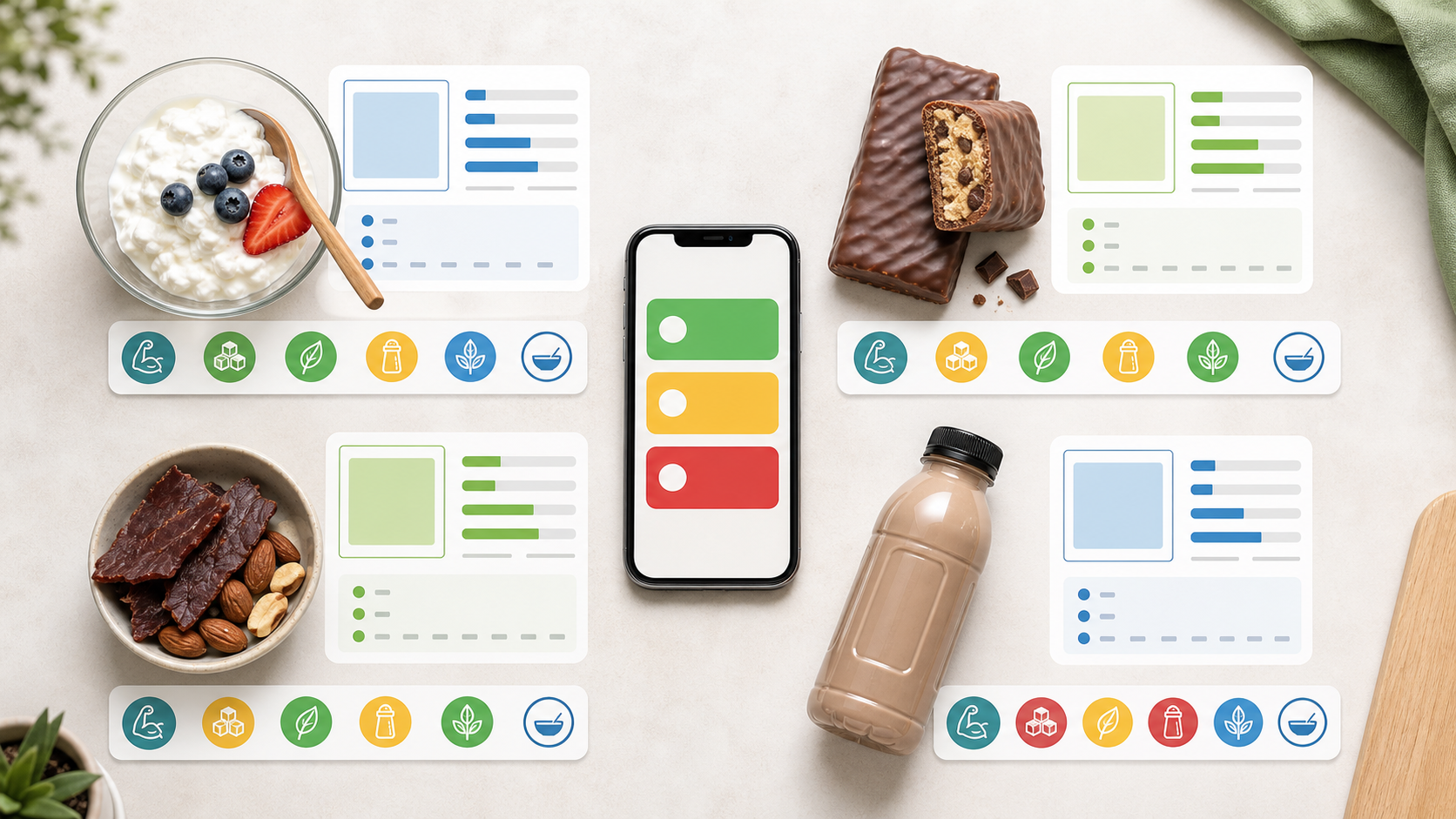
For Greek yogurt or cottage cheese, start with protein, added sugar, saturated fat, and serving size. Plain versions often scan cleaner than dessert-style cups, but toppings can change the decision quickly. If dairy is a sensitivity area, do not stop at the protein row; check the base, lactose claims, additives, and your own tolerance notes.
For protein bars, compare protein against calories and added sugar first. Then look at sugar alcohols, fiber sources, saturated fat, and allergens. A bar can be fine for travel or a rushed workday, but if it becomes your daily breakfast, the ingredient list deserves more attention.
For jerky or meat sticks, scan protein, sodium, added sugar, preservatives, and serving size. The protein may be useful, but sodium can be high for a small pouch. Sweet marinades can also move a jerky product away from the simple snack you thought you were buying.
For nuts and seed mixes, protein is only part of the story. These snacks can be filling, but calories climb fast when the serving size is small and the package is large. Scan sweet coatings, chocolate pieces, dried fruit, added oils, sodium, and whether the portion you log matches the handful you actually eat.
For protein shakes, compare protein, calories, added sugar, saturated fat, sweeteners, and whether the drink replaces a meal or sits on top of one. A shake can be convenient. It can also become extra calories you forget to log because it feels like a health product.
Where Eatibo fits
Eatibo is useful at the exact moment the label starts to feel crowded. Scan the nutrition label or barcode, check the ingredient list, and use the app to keep the snack attached to your Nutrition Log instead of treating it as a one-time guess.
That last part matters. A high-protein snack might look good once. Your weekly log may show a different pattern: the protein bar helps on long commute days, the sweetened yogurt pushes added sugar up, the jerky adds sodium every afternoon, or the shake is replacing a meal too often. Eatibo's AI Nutrition Coach has better context when those choices are logged as real servings, not remembered vaguely.
Use a simple Eat / Limit / Skip frame:
- Eat: The serving is realistic, protein is useful, and the label fits your sugar, sodium, fiber, calorie, and ingredient needs.
- Limit: The snack works occasionally, but it leans on added sugar, sodium, saturated fat, sugar alcohols, or a tiny serving size.
- Skip: The ingredient list conflicts with an allergy, sensitivity, clinician-directed boundary, or personal avoid-list.
If ingredients are the deciding factor, Eatibo's Food Additive Risk Alerts can help surface additive, allergen, seed-oil, and ultra-processed signals without pretending every unfamiliar ingredient is automatically dangerous. If you are still setting your protein target, start with the free Protein Intake Calculator, then use Protein Calculator: Turn a Target Into Meals to turn that range into scanned meals and weekly pattern review.
Do not turn protein into the only score
Protein is important, but it is not the whole snack. MedlinePlus notes that protein needs depend on overall calorie needs and other personal factors. The FDA's Nutrition Facts label is built around serving size, calories, nutrients, and Daily Value context, which is why the whole label matters.
The practical shortcut: ask what job the snack is doing.
- Between meals: look for enough protein or fiber to make the snack useful without turning it into dessert.
- After training: compare protein with calories and sugar, then log the actual serving.
- Travel or work: check sodium, added sugar, and ingredients because convenience foods repeat easily.
- Grocery default: scan the same product a few times and watch the weekly pattern before making it a staple.
This keeps the decision grounded. You do not need the highest-protein snack on the shelf. You need the one that works with the rest of your day.
Health boundaries
Use extra caution when protein decisions are tied to a medical condition or a strict therapeutic plan. If you have kidney disease, liver disease, pregnancy-specific restrictions, eating disorder recovery needs, diabetes medication, food allergies, digestive disease, or a clinician-directed diet, use guidance from a qualified clinician or registered dietitian.
Eatibo can help organize label information, scan ingredients, and log patterns. It is not a medical device, allergy authority, medication tool, or substitute for professional care.
Frequently asked questions
How much protein should a snack have?
It depends on what the snack is for. A light snack may only need a modest amount of protein, while a meal replacement or post-workout option may need more. Instead of chasing one number, compare protein with calories, serving size, added sugar, fiber, and your actual meal pattern.
Are protein bars healthy?
Some are useful, especially for travel or busy days. Others are closer to candy bars with added protein. Scan calories, added sugar, sugar alcohols, fiber, saturated fat, allergens, and the ingredient list before making one a daily default.
Is a high-protein snack good for weight loss?
It can help if it supports fullness and fits your total day. It can hurt if it adds calories you do not notice. Eatibo is most useful when you log the real serving and review the weekly pattern instead of judging the snack from the front label.
Should I scan protein shakes?
Yes. Protein shakes can vary a lot in calories, added sugar, sweeteners, saturated fat, serving size, and ingredients. Scan the bottle or label, then decide whether it is replacing a meal, supporting a workout, or becoming extra intake.
Last updated: July 1, 2026
Sources
- FDA: How to Understand and Use the Nutrition Facts Label
- MedlinePlus: Protein in diet
- FDA: Added Sugars on the New Nutrition Facts Label
Related reading
- Nutrition Label Scanner App: Scan Before You Log gives the broader label-scanning workflow.
- Protein Intake Calculator estimates a daily protein range before you compare snack labels.
- Protein Calculator: Turn a Target Into Meals helps connect protein targets to real meals.
- Low-Carb Snacks: How to Scan Labels Smarter shows how to compare snack carbs, fiber, and ingredients.
- Food Additives: How to Scan Ingredient Lists Smarter helps when the ingredient list is the deciding factor.