
High-Protein, High-Fiber Snacks: Scan for Fullness, Not Hype
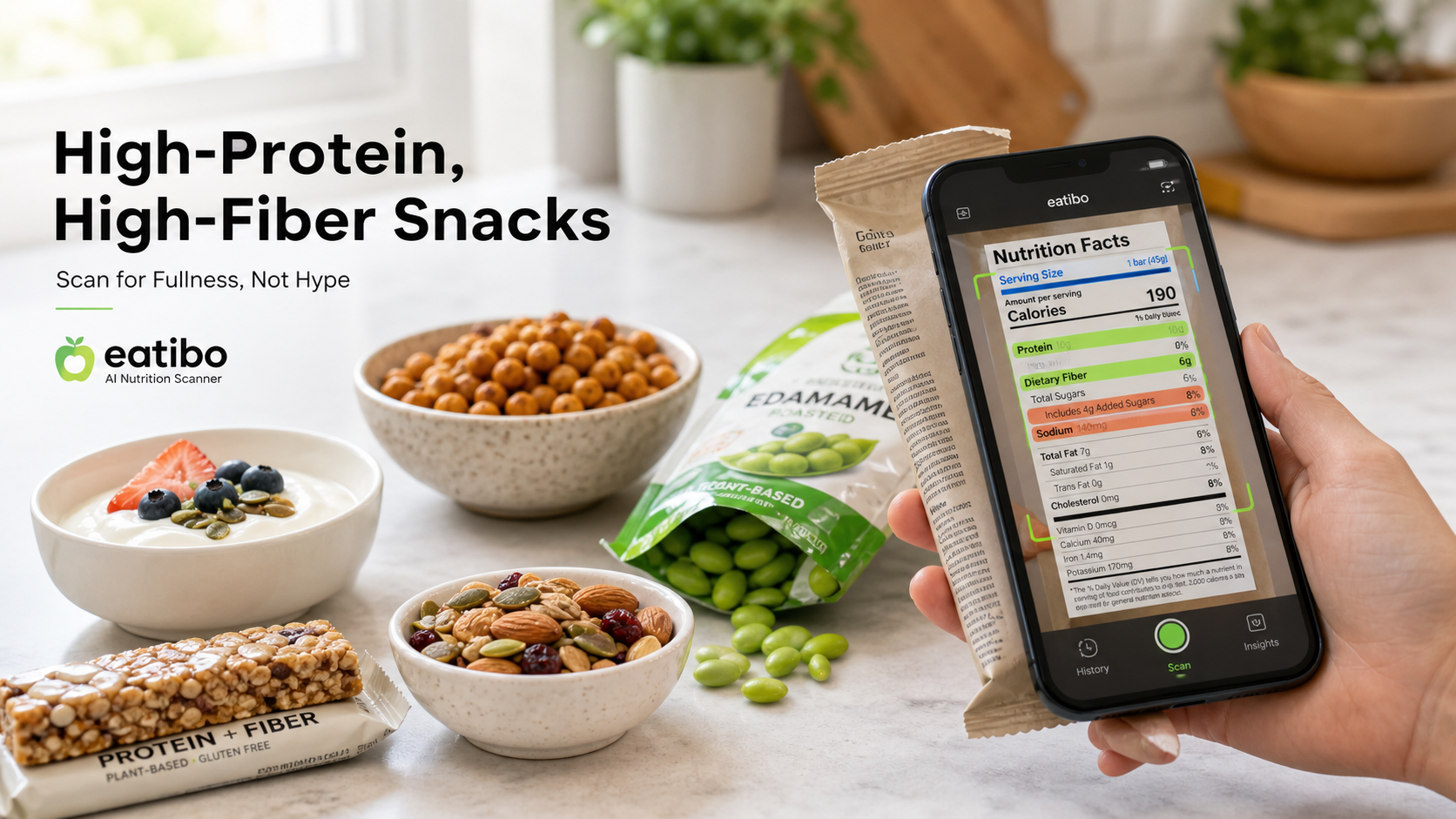
Quick answer: A high-protein, high-fiber snack is worth choosing when the serving size is realistic, protein and fiber both support the snack's job, and the label does not hide the tradeoff in added sugar, sodium, calories, saturated fat, sugar alcohols, allergens, or a long ingredient list. Eatibo can help you scan and log that decision, but it should not be used as medical guidance for kidney disease, digestive disease, diabetes medication, pregnancy, eating disorder recovery, food allergies, or clinician-directed diets.
Protein and fiber look great together on a snack label. They also make a good marketing pair. A bar can shout "15g protein" and "6g fiber" while the serving is tiny, the sodium is high, the fiber comes from isolated powders, or the ingredient list reads like a product-development lab.
The better question is not whether the snack has both numbers. It is whether those numbers make the snack more useful in your actual day.
Key takeaways
- Start with serving size. A protein and fiber claim only matters if the listed serving matches what you actually eat.
- Read protein and fiber together, then check added sugar, sodium, calories, saturated fat, and ingredients.
- Be careful with bars that look strong on macros but weak on ingredient quality or fullness.
- Scan for allergens, dairy, gluten, soy, nuts, sesame, sweeteners, seed oils, and fiber sources when they matter to you.
- Log the snack more than once. A snack that works once may become a sodium, sugar, or calorie pattern when it repeats.
A useful high-protein, high-fiber snack is not the snack with the biggest two numbers. It is the snack whose protein, fiber, serving size, ingredients, and repeat-use pattern make sense together.
The balanced label scan
Use this scan when comparing protein-fiber bars, roasted chickpeas, edamame snacks, Greek yogurt with seeds, cottage cheese with berries, lentil chips, nut mixes, cereal cups, or high-fiber protein shakes.
| Label row | What to check | Why it changes the decision |
|---|---|---|
| Serving size | Package size, grams, pieces, cups, and servings per container | Every protein, fiber, calorie, sugar, and sodium number depends on this row. |
| Protein | Protein grams and source, such as dairy, soy, pea, nuts, seeds, legumes, or meat | Shows whether the snack is a bridge, meal side, or workout backup. |
| Dietary fiber | Fiber grams and whether the snack uses whole foods or isolated fibers | Helps separate satisfying snacks from macro math on a wrapper. |
| Added sugar | Added sugars, sweet coatings, syrups, fruit concentrates, and dessert-style bases | Protein plus fiber can still be a sweet snack with better branding. |
| Sodium and calories | Sodium, calories, saturated fat, and whether you eat the whole package | Some "filling" snacks become salty mini-meals. |
| Ingredients | Allergens, sweeteners, sugar alcohols, oils, additives, and ingredient order | This is where personal rules and tolerance show up. |
Protein plus fiber is useful, but not magic
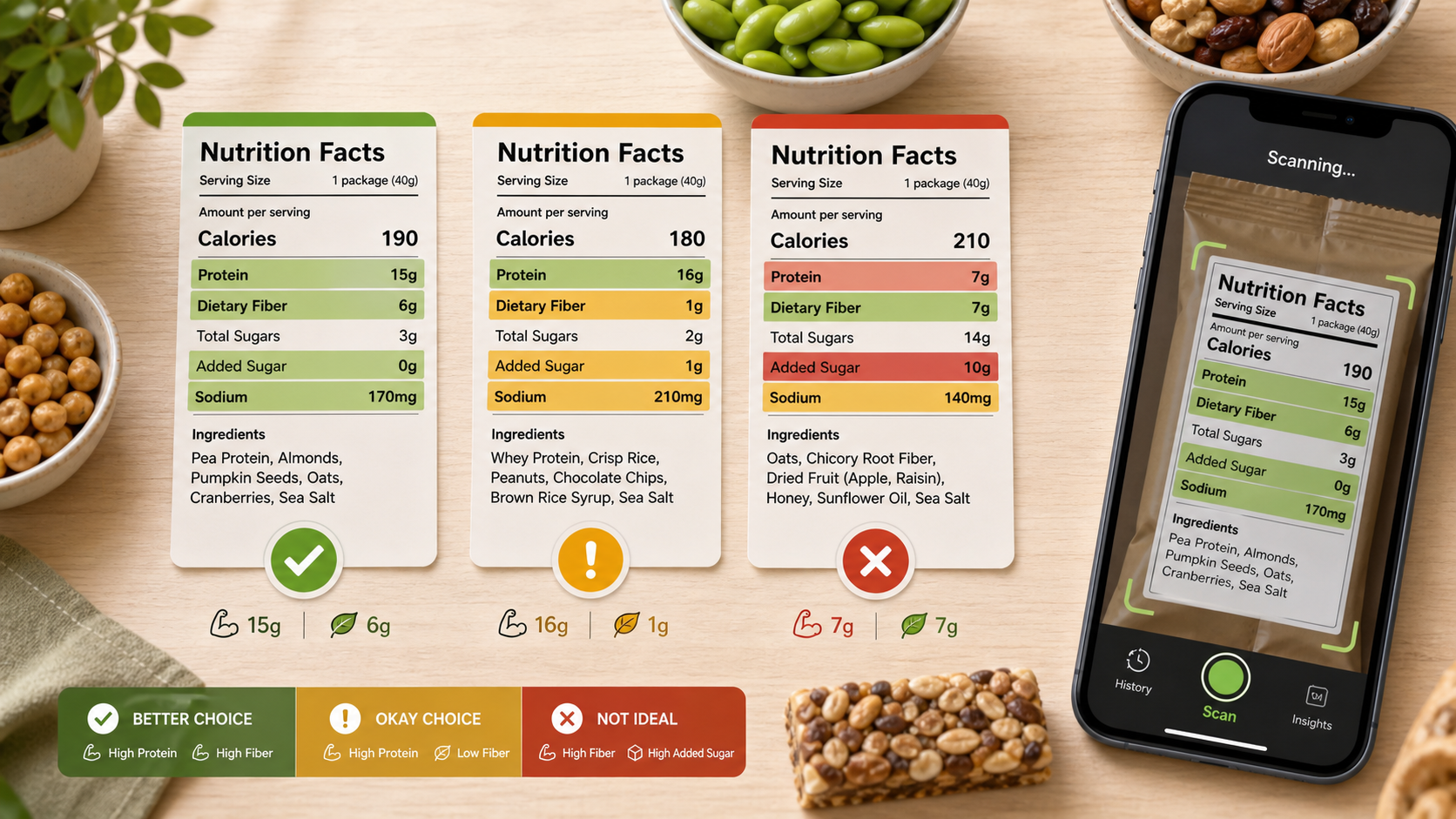
Protein and fiber can make a snack more satisfying, especially when the snack has a realistic portion and a simple role. A plain Greek yogurt with berries and seeds may bridge a morning gap. Roasted chickpeas may work better than a sweet bar for a commute. A nut and seed mix may be useful when the serving is measured instead of poured straight from the bag.
But the combination can also hide weak choices.
A high-protein bar with almost no fiber may not feel like much after twenty minutes. A high-fiber bar with low protein and 10g added sugar may act more like dessert. A snack with both numbers can still be high in sodium, built around sugar alcohols, or too calorie-dense for how casually you eat it.
The FDA's Nutrition Facts label is built around serving size, nutrients, and Daily Value context. Dietary fiber also has its own label rules and context, which is why "fiber" should be read as part of the full label, not as a standalone badge.
How to compare common protein-fiber snacks
For Greek yogurt with berries, seeds, or granola, scan protein, added sugar, fiber, saturated fat, and toppings. Plain yogurt plus your own fruit and seeds usually gives you more control than a dessert-style cup with crunchy mix-ins.
For protein-fiber bars, compare the protein source, fiber source, added sugar, sugar alcohols, saturated fat, sodium, and calories. Bars are convenient, but the ingredient list deserves more attention if the bar is becoming breakfast five days a week.
For roasted chickpeas, edamame, lentil chips, or bean-based snacks, scan fiber, protein, sodium, oils, serving size, and whether the texture makes you eat the whole bag. Plant-based does not automatically mean balanced.
For nuts and seed mixes, watch portion size. The protein and fiber are useful, but calories can climb quickly. Check chocolate pieces, sweetened dried fruit, honey roasting, added oils, and the amount you actually log.
For protein shakes with fiber, check whether the drink replaces a meal, supports a workout, or sits on top of normal eating. A shake can be practical. It can also become extra intake that feels invisible because it is marketed as healthy.
Where Eatibo fits
Eatibo is useful when two good-looking numbers are pulling your attention away from the rest of the label. Scan the nutrition label or barcode, check the ingredient list, and save the real serving into your Nutrition Log.
That turns the decision from "this label looks good" into a pattern you can review. Maybe the protein-fiber bar is perfect for travel days but too sweet as a daily breakfast. Maybe roasted chickpeas work, but only when sodium stays reasonable. Maybe the snack has enough fiber, but your log shows you are replacing meals with packaged snacks too often.
Use a simple Eat / Limit / Skip frame:
- Eat: The serving is realistic, protein and fiber both help, and added sugar, sodium, calories, and ingredients still fit.
- Limit: The snack works sometimes, but the fiber source, sweeteners, sodium, saturated fat, or serving size make it a weaker default.
- Skip: The ingredients conflict with an allergy, sensitivity, clinician-directed boundary, or personal avoid-list.
For the broader label workflow, start with Nutrition Label Scanner App: Scan Before You Log. If sugar is the deciding factor, use Low-Sugar Snacks: Scan Added Sugar Before You Buy. If protein is the main reason you are shopping, estimate the day first with the free Protein Intake Calculator, then use High-Protein Snacks: Scan Labels Before You Buy for the protein-first version of this scan.
Do not let one snack do the whole diet's job
Here is the trap: a snack can be high protein, high fiber, and still not be the best daily anchor.
If you are eating it because lunch keeps getting delayed, the snack may be doing useful work. If you are eating it because the front of the package feels healthy, the weekly log may tell a different story. Maybe the snack is always paired with a sweet drink. Maybe it shows up at night when you are tired. Maybe it is replacing meals that would have given you vegetables, whole grains, or a slower eating moment.
A practical comparison looks like this:
| Snack pattern | Better scan priority | Watch out for |
|---|---|---|
| Workday bridge | Protein, fiber, added sugar, sodium, real portion | Bars that keep you busy but not satisfied. |
| Lunchbox snack | Allergens, fiber source, protein source, ingredient simplicity | Sweet coatings and tiny serving sizes. |
| Post-workout backup | Protein, calories, fiber tolerance, sugar, serving size | Shakes or bars that add intake instead of replacing anything. |
| Evening snack | Fiber, added sugar, calories, repeat frequency | "Healthy" snacks that extend grazing. |
| Grocery default | Whole-food ingredients, sodium, sugar alcohols, weekly log pattern | Buying the label claim instead of the actual habit. |
Health boundaries
Use extra caution when protein or fiber decisions are tied to a diagnosed condition, medication, or strict therapeutic plan. Higher protein may not be appropriate for some kidney or liver conditions. Higher fiber can be uncomfortable or clinically relevant for some digestive conditions, recent surgeries, or clinician-directed diets. Food allergies, celiac disease, diabetes medication, pregnancy, eating disorder recovery, and pediatric nutrition also deserve professional guidance.
Eatibo can help organize labels, ingredients, and logged patterns. It is not a medical device, allergy authority, medication checker, digestive-health diagnostic tool, or substitute for a clinician or registered dietitian.
Frequently asked questions
How much protein and fiber should a snack have?
There is no single snack number that fits everyone. A light snack, workout backup, and mini-meal have different jobs. Start by scanning serving size, then compare protein and fiber with calories, added sugar, sodium, and ingredients. Use your Eatibo log to see whether the snack actually keeps the day steadier.
Are high-protein, high-fiber bars healthy?
Some are useful, especially for travel or rushed days. Others rely on sweeteners, isolated fibers, coatings, or a long ingredient list. A bar is more convincing when the serving is realistic, protein and fiber both help, added sugar is modest, and the snack does not become your default meal replacement.
Should I care where the fiber comes from?
Yes, at least enough to notice it. Whole-food ingredients such as legumes, oats, nuts, seeds, fruit, and vegetables give different context than a snack built mostly around isolated fibers. Isolated fibers are not automatically bad, but tolerance and fullness can vary. Log the real serving and watch the pattern.
Can Eatibo tell me which protein-fiber snack is medically safe?
No. Eatibo can scan labels, flag ingredients, and help you review food patterns. It should not decide medical safety for kidney disease, digestive disease, diabetes medication, pregnancy, eating disorder recovery, food allergies, celiac disease, or any clinician-directed diet.
Summary
High protein plus high fiber is a useful direction, not a guarantee. Scan the serving first, then protein, dietary fiber, added sugar, sodium, calories, and ingredients. If the snack still looks useful after that, log the real portion a few times. A pattern that holds up in your weekly Eatibo log is more valuable than a label that only looks impressive in the aisle.
Last updated: July 1, 2026
Sources
- FDA: How to Understand and Use the Nutrition Facts Label
- FDA: Dietary Fiber on the Nutrition Facts Label
- MedlinePlus: Protein in diet
Related reading
- High-Protein Snacks: Scan Labels Before You Buy explains the protein-first snack scan.
- Protein Intake Calculator gives a daily protein range before you compare protein-fiber snacks.
- Low-Sugar Snacks: Scan Added Sugar Before You Buy helps compare sugar tradeoffs.
- Low-Carb Snacks: How to Scan Labels Smarter separates carb claims from practical snack choices.
- Nutrition Label Scanner App: Scan Before You Log gives the full label-scanning workflow.