
Complete vs Incomplete Protein: Food Examples and Daily Variety
A complete protein contains all nine essential amino acids in adequate amounts. An incomplete protein is missing, or does not provide enough of, one or more essential amino acids. The distinction describes the amino acid pattern, not whether a food has value. An incomplete source can still contribute protein, energy, and other nutrients to your day.
That is the practical difference between complete and incomplete proteins. Protein grams answer "how much?" Completeness answers a different question: "what is the pattern of essential amino acids in this source?" You need both ideas to read a food record without mistaking a gram count for a full assessment of protein quality.
Complete, incomplete, and complementary proteins
The FDA's protein guide separates dietary proteins into three useful groups:
| Category | What it means | Examples from the FDA guide |
|---|---|---|
| Complete protein | Contains all essential amino acids in adequate amounts | Dairy products, eggs, meat, poultry, seafood, and soy |
| Incomplete protein | Is missing or low in one or more essential amino acids | Most beans, grains, nuts, peas, seeds, and vegetables |
| Complementary proteins | Two or more incomplete sources whose amino acid patterns compensate for each other | Rice with beans; peanut butter on whole-wheat bread |
"Incomplete" does not mean "protein-free" or "worthless." A bean dish still contributes protein. The label simply points to a limiting amino acid pattern in that source when considered by itself.
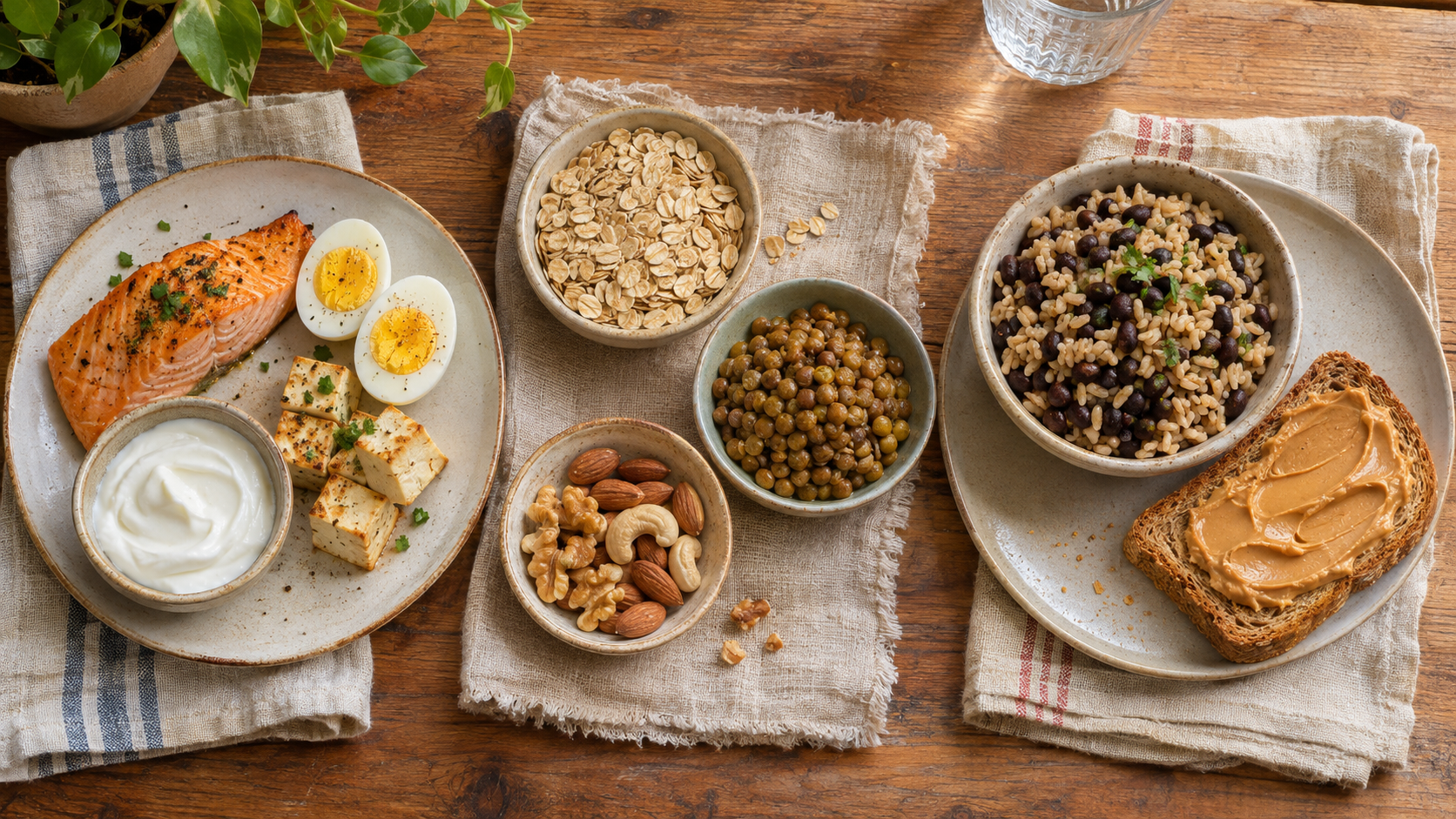
Illustrative food grouping based on the FDA protein guide. The arrangement does not measure amino acid content.
Protein quantity and protein quality are different questions
A Nutrition Facts label can show protein grams per serving. That number helps you compare quantity, but it does not tell you whether the source is complete. The FDA guide explains that dietary proteins contain different combinations of amino acids and classifies them by the essential amino acids they provide.
Use this three-part check when reviewing a food:
- Check the serving size and protein grams on the package or food record.
- Identify the source: for example, egg, soy, dairy, beans, grains, nuts, or seeds.
- Look at the rest of the day. A varied pattern matters more than judging one plant food in isolation.
Do not assign your own amino acid score from a package label. Standard protein grams do not provide enough information for that calculation, and Eatibo does not claim to measure amino acid completeness or certify a food's protein quality.
Complementary proteins do not need a rigid same-meal rule
Grains and legumes are a familiar complementary pair. The FDA gives rice with beans and peanut butter on whole-wheat bread as examples. It also describes complementary sources as foods eaten at the same meal or during the same day.
The day-level view is useful because it leaves room for normal eating patterns. MedlinePlus advises eating different types of plant proteins each day to obtain the amino acids the body needs. You can pair grain and legume foods in one meal if you enjoy them, but you do not have to force every complementary source into the same bite.
The difference between complete and incomplete proteins comes down to essential amino acid coverage, not a judgment that one food counts and another does not. Variety gives incomplete sources context.
An illustrative day of varied protein foods
This example shows a pattern, not a meal plan or a nutrient prescription. It leaves out protein grams because the amount depends on the food, brand, recipe, and portion you actually eat.
| Part of the day | Example foods | What to notice |
|---|---|---|
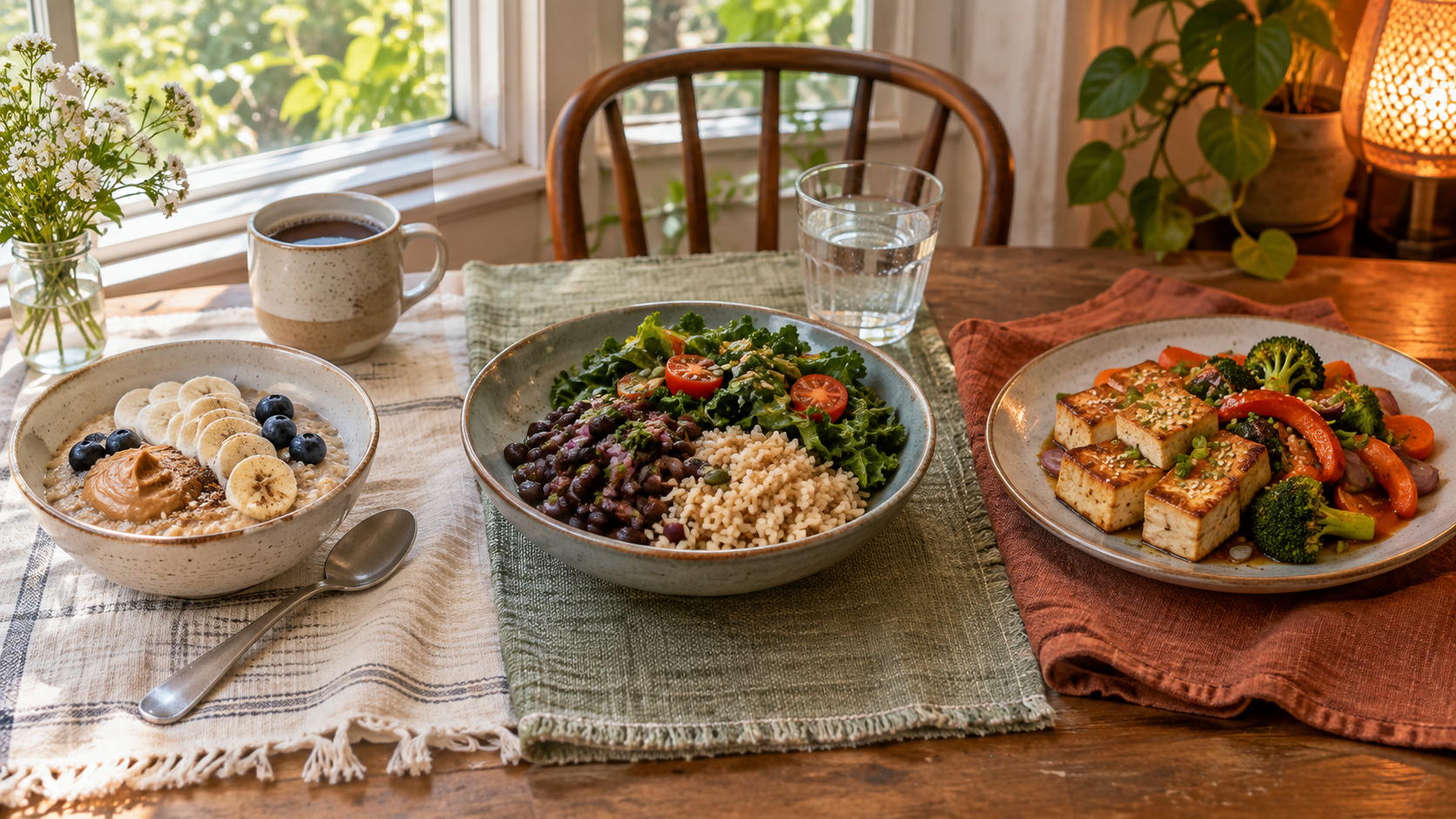
| Breakfast | Oats with peanut butter | A grain and a legume-based food can contribute different amino acid patterns |
| Lunch | Beans with brown rice and vegetables | The grain-plus-legume pairing is a classic complementary example |
| Dinner | Tofu with vegetables | Soy is a complete protein source in the FDA guide |
You could vary this pattern in many ways. Lentil soup with bread, hummus with pita, or beans in a corn tortilla all use the same grain-and-legume idea. These are examples of food relationships, not claims that every recipe has the same protein amount.
An illustrative day of varied foods, not a prescribed meal plan. Actual protein amounts depend on the foods and portions eaten.
If your question is how many grams to plan for, keep that separate from completeness. The Protein Calculator: Turn Targets Into Meals guide focuses on turning a quantity target into meals. Completeness asks what kinds of amino acids the source contributes.
Review one real food record
Use this short workflow with a package, meal photo, or log entry:
- Record the food and the amount you ate. Do not rely on a package's protein number until you have checked its serving size against your portion.
- Note the main protein source or sources. A mixed dish may include several.
- Classify only what the evidence supports. Eggs, dairy, seafood, meat, poultry, and soy fit the FDA's complete examples. Most individual plant sources fit the incomplete category, while grain-and-legume pairings can be complementary.
- Scan the rest of the day for variety. One incomplete source does not make the day nutritionally inadequate.
- Keep the broader meal in view. Protein quality does not replace questions about vegetables, fiber, sodium, added sugar, allergens, or total intake.
For packaged choices, High-Protein Snacks: Scan Labels Before You Buy explains how to compare protein claims with serving size and ingredients. If you also want to weigh protein against fiber, use High-Protein, High-Fiber Snacks: Scan for Fullness.
Eatibo supports food recording from a meal photo, barcode, or ingredient label. Use the Eatibo food-scanning and nutrition-recording workflow to review what you ate, then verify the printed package and your portion before relying on the record. Eatibo does not measure amino acid levels or certify a protein source as complete.
Frequently asked questions
Can plant-based meals provide all essential amino acids?
Yes. A varied plant-based eating pattern can include different protein sources across the day. The FDA describes complementary combinations such as grains with legumes, and MedlinePlus recommends eating different types of plant proteins each day. The amount you need is a separate question that depends on your circumstances.
Do rice and beans have to be eaten at the same meal?
No rigid same-meal rule is needed for this general explanation. The FDA says complementary proteins may be eaten at the same meal or during the same day. MedlinePlus also frames the advice around daily variety.
Is soy a complete protein?
Yes. The FDA lists soy alongside animal foods as a complete protein source.
Does a high-protein label mean the food is a complete protein?
Not by itself. A protein amount and an amino acid pattern answer different questions. Check the food source, serving size, and overall food pattern instead of inferring completeness from grams alone.
Can Eatibo tell me whether a food is complete or incomplete?
This article provides an educational framework, but Eatibo does not claim to measure amino acids or certify protein quality. Use Eatibo to record foods and portions, then consult the cited primary sources or a qualified health professional for questions tied to a medical condition or specialized diet.