Pill Reminder App: Build a Safer Meal-Linked Routine

Quick answer: A pill reminder app is most useful when it supports the instructions you already have: the prescription label, product label, pharmacist guidance, clinician plan, and your real daily routine. Use reminders around meals, water, bedtime, travel, and refills so medications and supplements stay visible. Eatibo can help with everyday reminders, but it does not prescribe, change doses, check drug interactions, replace a pharmacist, or decide what to do after a missed dose.
Medication and supplement routines often fail for ordinary reasons. Breakfast changes. Lunch happens late. A bottle stays in a gym bag. A vitamin is easy to remember on weekdays and invisible on weekends. A reminder app cannot solve every medical question, but it can make the routine harder to lose in a busy day.
The safest setup starts with a boundary: the app is a reminder, not the authority. The official label and healthcare professional instructions decide what to take, when to take it, whether it should be taken with food, and what to do when timing changes. The app's job is to make that plan visible and repeatable.
What a pill reminder app should do
A good pill reminder app should reduce missed routines without creating false confidence. That means it should help you remember the action, confirm whether it happened, and notice patterns across the week.
It should not guess your dose. It should not tell you to double up. It should not decide that a supplement is safe with a prescription. It should not replace a clinician, pharmacist, caregiver, or prescription label. Those boundaries matter because medication errors are not the same kind of problem as forgetting a glass of water or skipping a snack.
For Eatibo, the strongest use case is routine support around daily health behavior. Pill and supplement reminders can sit beside meals, hydration, food logging, and weekly review. That keeps the reminder in the rhythm of the day instead of turning it into another disconnected alarm.
A four-step meal-linked setup
Use this workflow when creating reminders for medication, vitamins, or supplements.
| Step | What to set | Why it matters |
|---|---|---|
| Start with the official instruction | Copy timing, food notes, dose wording, and safety notes from the label or professional guidance | The app should reflect the plan, not invent one. |
| Attach the reminder to a real anchor | Breakfast, lunch, dinner, bedtime, commute, or a recurring work break | Existing routines are easier to remember than random alarms. |
| Add confirmation behavior | Mark done, snooze, or leave unresolved when the action did not happen | A reminder is only useful if it distinguishes completed from ignored. |
| Review refills and patterns | Check missed reminders, travel days, low supply, and weekend drift | The weekly pattern shows whether the routine needs a better anchor. |
Meal-linked reminders work especially well when the label or clinician says to take something with food. If the instruction says to take it without food, or at a specific time away from meals, follow that instruction instead. The meal is a habit cue only when it matches the actual plan.
What to record in the reminder
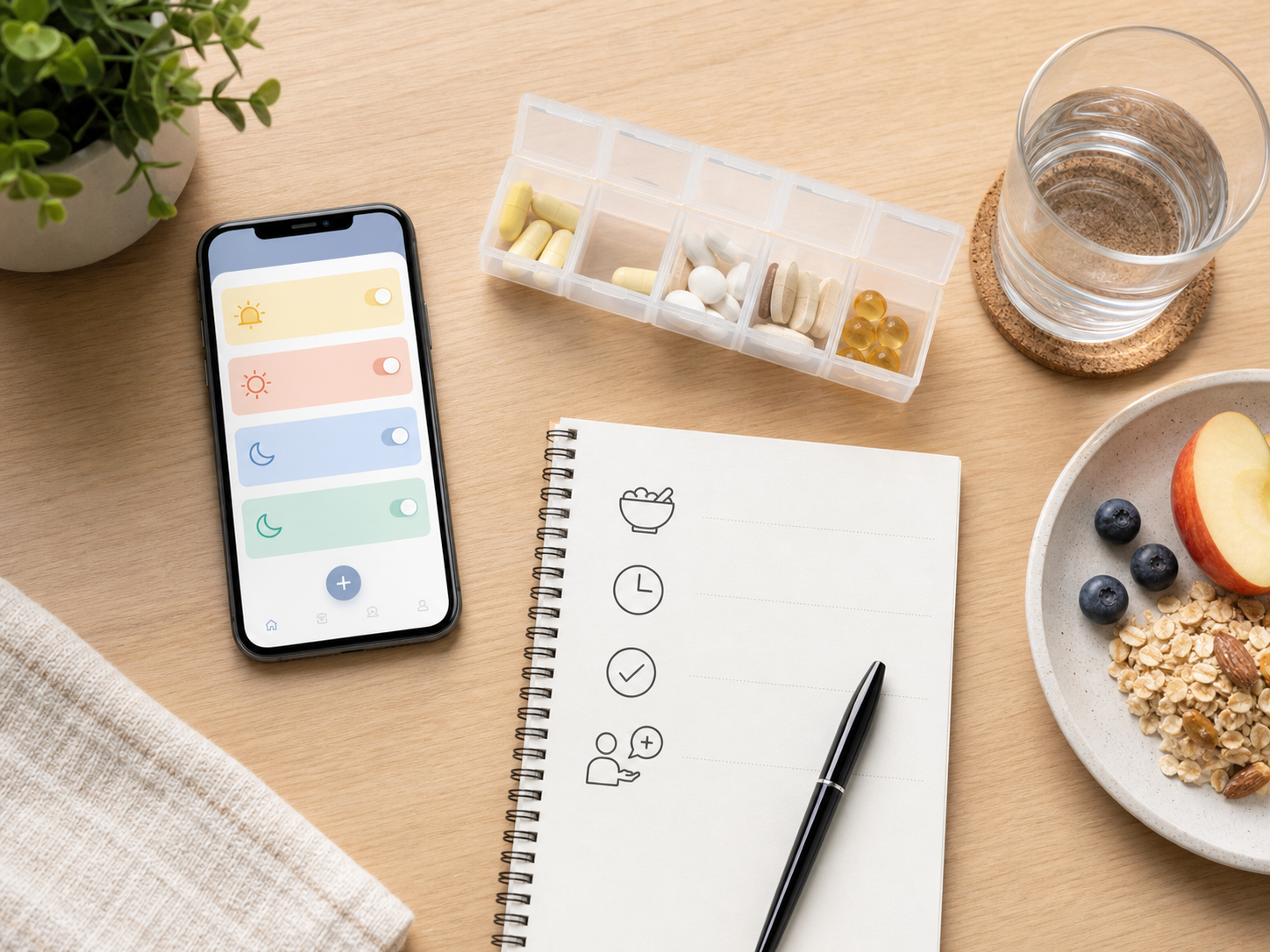
Keep the reminder practical and private. You need enough detail to act correctly, but not so much noise that every alert becomes hard to read.
Useful reminder details often include:
- Name: Medication, vitamin, or supplement name as written on the label.
- Timing: Morning, meal, bedtime, or exact time if your plan requires it.
- Food instruction: With food, without food, or no food instruction.
- Water cue: A simple prompt to have water ready when appropriate.
- Refill cue: A reminder before the supply runs out.
- Safety note: "Ask pharmacist," "follow label," or "do not change without clinician guidance" when relevant.
Avoid using a consumer app as the only place where instructions live. If a prescription label, package insert, clinician message, or pharmacist instruction changes, update the reminder only after the official plan changes.
How Eatibo helps
Eatibo's Pill Reminder is built for everyday medication and supplement routines that sit next to meals, hydration, and nutrition logging. That matters because many reminders happen around food: morning vitamins with breakfast, a supplement after lunch, or medication that your clinician says should be taken with a meal.
Eatibo can help in four practical ways:
- Keep reminders visible beside food and hydration habits.
- Let you mark a routine as done or snoozed when the day changes.
- Help you notice weekly consistency, missed reminders, and routine drift.
- Keep the boundary clear: reminders support the plan; they do not create the plan.
If water is part of the routine, pair this with Water Reminder App: Build a Meal-Linked Hydration Habit. If supplement labels or packaged powders are part of the decision, Food Additives: How to Scan Ingredient Lists Smarter can help you read ingredients without overclaiming medical safety.
Medication reminders vs supplement reminders
Medication reminders deserve stricter handling. Prescription and over-the-counter medicines can have specific timing, food, dose, storage, and interaction concerns. When there is any uncertainty, use the prescription label and ask a pharmacist or clinician.
Supplement reminders can feel lower-risk, but they still deserve boundaries. Vitamins, minerals, herbal products, powders, and capsules may have label instructions, upper limits, ingredient concerns, or interaction questions. If you take medications, are pregnant, have a diagnosed condition, prepare for surgery, or manage symptoms, ask a qualified professional before treating a supplement as routine.
The reminder setup can look similar for both, but the decision authority is different. Eatibo can remind you. It should not decide whether a product belongs in your routine.
Common reminder mistakes
The first mistake is using too many alerts. If every bottle gets multiple alarms, the phone becomes easy to ignore. Start with the most important routines and attach them to strong anchors.
The second mistake is treating snooze as success. Snooze is useful when you are in a meeting or traveling, but it should not hide repeated misses. If a reminder is snoozed most days, the timing is probably wrong.
The third mistake is ignoring weekends and travel. A routine that works at home can fail in a hotel, on a commute, or during a late breakfast. Create a travel check: bring the original label when needed, protect privacy, and keep enough supply without mixing loose pills in unlabeled containers.
The fourth mistake is guessing after a missed dose. A reminder app can show that something was missed. It should not tell you whether to skip, double, delay, or restart. Follow the label or ask a pharmacist or clinician.
The fifth mistake is forgetting refills. A perfect reminder does not help if the bottle is empty. Add a low-supply cue before the routine breaks.
A safer weekly review
Once a week, review the pattern instead of judging one missed alert.
- Which reminders were completed on time?
- Which ones were snoozed or ignored?
- Did meal-linked reminders work better than clock-only alerts?
- Did weekends, travel, late meals, or schedule changes cause misses?
- Are refill reminders early enough?
- Are any instructions unclear enough that you should ask a pharmacist?
- Are supplements still aligned with product labels and professional advice?
This turns a reminder app into a habit loop: instruction, cue, action, confirmation, review, and adjustment. The review should improve the routine, not change the medical plan.
When to ask a professional
Ask a pharmacist, clinician, or qualified healthcare professional when a medication instruction is unclear, a dose is missed, a new symptom appears, a supplement might interact with medication, pregnancy or surgery is involved, a child or older adult needs help, or a caregiver is managing the routine.
Also ask before combining multiple products with similar ingredients. For example, several supplements may contain overlapping vitamins or minerals. A reminder app can make routines visible, but it cannot judge whether the combination is appropriate.
If the reminder involves controlled substances, complex treatment schedules, injections, tapering, anticoagulants, insulin, seizure medication, chemotherapy, transplant medication, or any high-risk plan, use clinician-directed systems and professional guidance. Eatibo is not a clinical medication-management platform.
Frequently asked questions
What is a pill reminder app?
A pill reminder app helps you remember medications, vitamins, or supplements by sending prompts and letting you mark whether the routine happened. Eatibo connects that reminder with meals, water, and daily nutrition habits.
Is Eatibo a medication-management app?
No. Eatibo is a personal reminder and wellness routine tool. It does not prescribe, stop, change, dose, or check interactions for medication.
Can I use Eatibo for supplements?
Yes, for reminder routines. Follow the product label and professional advice, especially if you take medications, have a diagnosed condition, are pregnant, or are preparing for a procedure.
What should I do if I miss a dose?
Do not rely on Eatibo to decide. Follow the prescription label or ask a pharmacist or clinician. Missed-dose instructions can differ by medication.
Should I connect medication reminders to meals?
Only when it matches the official instruction. If the label or clinician says to take something with food, a meal-linked reminder can help. If the instruction says away from food, use a different anchor.
Last updated: May 29, 2026
Sources
Related reading
- Pill Reminder explains Eatibo's medication and supplement reminder boundaries.
- Water Reminder App: Build a Meal-Linked Hydration Habit shows how reminders work better when tied to real daily anchors.
- Your AI Nutrition Coach: Decoding What You Eat for a Healthier You explains how daily context supports healthier routines.
- Food Additives: How to Scan Ingredient Lists Smarter helps read supplement and packaged-food ingredient lists without making unsupported safety claims.