Dairy-Free Yogurt: How to Scan Labels Smarter
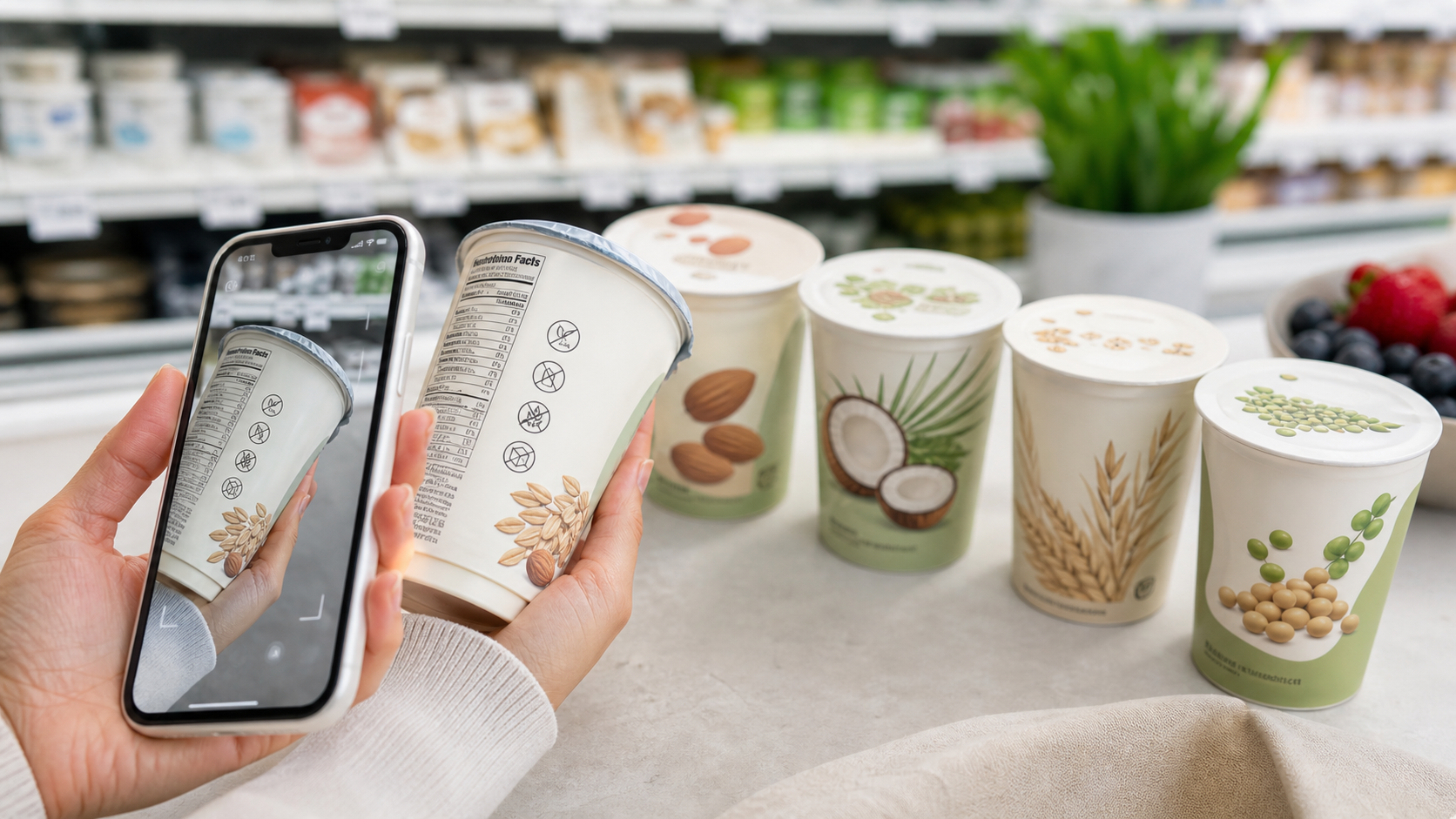
Quick answer: The best dairy-free yogurt is not just the cup with the cleanest front label. Scan the ingredient list first to confirm the base and allergens, then compare protein, added sugar, saturated fat, thickeners, cultures, fortification, and the serving you actually eat. A dairy-free yogurt can be a useful breakfast or snack, but many cups are closer to sweet desserts unless the label fits your goal and your weekly pattern.
Dairy-free yogurt solves one problem quickly: it avoids dairy ingredients by design. That matters for vegan diets, milk avoidance, and people who do not want regular yogurt. But the dairy-free shelf is not one simple category. Almond, coconut, oat, soy, cashew, pea, and blended yogurts can look similar while behaving very differently in your day.
Some are high in protein. Some are mostly starch, sugar, and oil. Some are fortified with calcium and vitamin D. Some are thin dessert cups with fruit syrup at the bottom. Some are unsweetened and useful as a meal base. The right choice depends on why you are buying it: dairy avoidance, lactose concerns, lower sugar, higher protein, cleaner ingredients, or easier logging.
Dairy-free yogurt is not the same as lactose-free yogurt
Dairy-free yogurt is usually made without milk, cream, whey, casein, or other dairy ingredients. Lactose-free yogurt is different. It may still be dairy yogurt with lactose reduced or broken down, so it can still contain milk proteins. That distinction is important if your boundary is allergy, vegan eating, or full dairy avoidance.
For lactose intolerance, the main issue is digesting lactose. For a milk allergy, the issue is an immune reaction to milk proteins. If you have diagnosed allergy, severe symptoms, or a medically restricted diet, do not treat an app scan as final safety clearance. Use the product label, manufacturer details, and professional guidance.
Dairy-free also does not mean allergen-free. Almond, cashew, and other nut-based yogurts can matter for tree nut allergies. Soy yogurt contains soy. Oat products may matter for people avoiding gluten cross-contact, depending on sourcing and certification. Coconut is often treated differently from tree nuts in labeling guidance, but it can still be a personal sensitivity for some people. The safer habit is to scan the full ingredient list and "contains" statement before judging the nutrition panel.
A five-step label scan for dairy-free yogurt
Use this order before a cup becomes your daily breakfast, snack, smoothie base, or dessert.
| Step | What to scan | Why it changes the decision |
|---|---|---|
| Base and allergens | Almond, coconut, oat, soy, cashew, pea, "contains" statement, advisory language | Confirms whether the yogurt fits your dairy-free, nut-free, soy-free, vegan, or gluten-aware boundary. |
| Protein | Grams of protein per serving and source of protein | Shows whether the cup supports a meal or is mostly a sweet snack. |
| Added sugar | Added sugars, syrups, fruit prep, cane sugar, concentrates, and sweetened flavors | Separates an everyday yogurt from a dessert-style cup. |
| Fat and additives | Saturated fat, oils, gums, starches, flavors, and stabilizers | Helps you spot creaminess created by coconut fat, oil, or thickener blends. |
| Serving and log | Container size, calories per serving, toppings, granola, and real portion eaten | Prevents a small cup plus toppings from being logged as less than it is. |
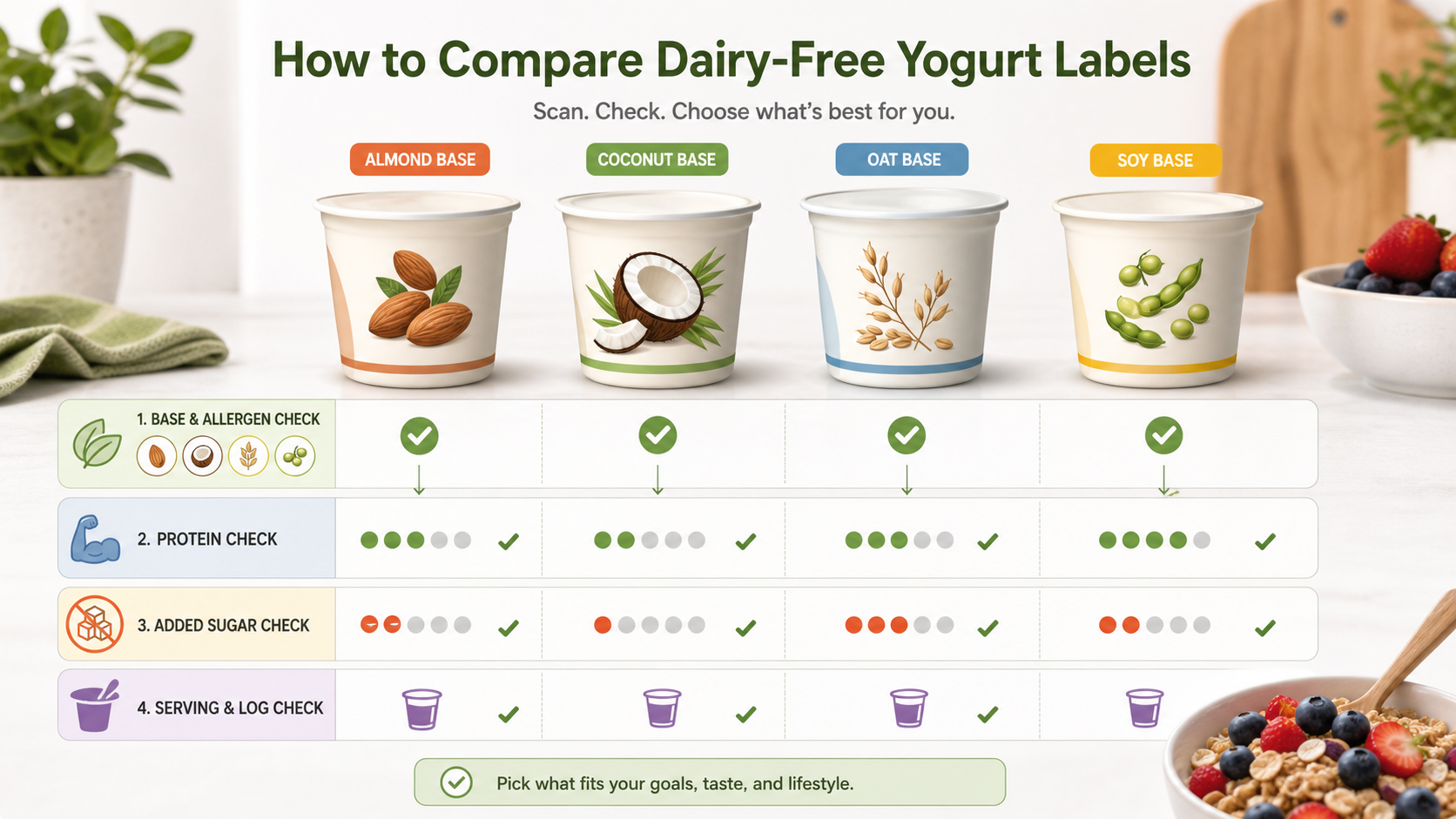
This sequence keeps the decision practical. If the allergen boundary fails, stop there. If it passes, then judge the nutrition quality. A soy or pea-based yogurt with meaningful protein may work better for breakfast. A coconut-based yogurt may be creamy and satisfying but lower in protein and higher in saturated fat. An oat-based yogurt may taste mild but can be higher in carbohydrates. None of these are automatically bad. They just do different jobs.
What usually makes a dairy-free yogurt worth choosing?
A strong everyday dairy-free yogurt usually has a short ingredient list, modest added sugar, enough protein for the job, and a serving size you will actually follow. Plain and unsweetened versions are often easier to use as a base because you can add berries, nuts, chia seeds, cinnamon, or a measured drizzle of sweetener yourself.
Protein is the first big divider. Many dairy yogurts bring meaningful protein naturally. Dairy-free yogurts do not always do that. Soy, pea, and some blended products often get closer to a meal-supporting protein level. Almond, coconut, oat, and cashew versions can be useful for taste and texture, but some are low-protein unless the manufacturer adds protein.
Added sugar is the second divider. A fruit-on-the-bottom cup can look wholesome while carrying a dessert-like sugar load. The FDA's Nutrition Facts label separates total sugars from added sugars, which makes comparison easier. Total sugar may include sugars naturally present in ingredients. Added sugar is the line that tells you how much sweetener was added during processing.
Texture ingredients are the third divider. Dairy-free yogurt often needs gums, starches, oils, or stabilizers to mimic dairy yogurt. These ingredients are not automatically a reason to skip, but they matter for people who prefer shorter labels or who notice digestive discomfort with certain thickeners. If two cups taste similar, the simpler label may be the better default.
Common traps in the dairy-free yogurt aisle
The first trap is assuming plant-based means lighter. Coconut-based yogurts can be rich and calorie-dense. Some oat and nut-based cups add oils to improve texture. If weight management or calorie awareness matters, scan the serving size and calories before the marketing claim.
The second trap is using a low-protein yogurt as a breakfast anchor. A cup with little protein can still be enjoyable, but it may not keep you full for long. If breakfast is the job, compare protein and add a protein side if needed.
The third trap is topping drift. Granola, honey, chocolate chips, nut butter, dried fruit, and sweetened cereal can turn a modest cup into a much larger meal. That is not wrong, but it should be logged honestly. Scan or estimate the toppings separately when the amount changes the day.
The fourth trap is allergy shortcutting. "Dairy-free" does not protect someone with a nut, soy, sesame, or gluten-related concern. FDA allergen labeling requires major allergens such as milk, tree nuts, peanuts, wheat, soybeans, eggs, fish, crustacean shellfish, and sesame to be declared when they are used, but users still need to read the label and advisory language carefully.
The fifth trap is treating live cultures as a complete health promise. Cultures can be useful, but a culture claim does not erase high added sugar, low protein, or an allergen mismatch. Scan the full cup, not one benefit.
How Eatibo helps with this decision
Dairy-free yogurt is a good Eatibo use case because the front label rarely tells the whole story. You can scan the nutrition label and ingredient list, then compare the parts that change the choice: dairy boundary, allergens, protein, added sugar, saturated fat, additives, fortification, and realistic serving size.
Eatibo's Eat / Limit / Skip framing is most useful when the label is technically acceptable but still has tradeoffs. A sweetened coconut yogurt might be a "Limit" for a low-sugar breakfast but fine as an occasional dessert. A soy yogurt might be an "Eat" for higher protein unless soy is one of your avoided ingredients. An oat yogurt might fit a vegan preference but need extra protein added to the meal.
The log matters after the scan. If you eat dairy-free yogurt twice a week, the tradeoff may be small. If it is your daily breakfast, the weekly trend can reveal whether you are getting enough protein, whether added sugar is creeping up, or whether your toppings are doing more work than the yogurt itself.
For ingredient-focused shopping, the feature page for Food Additive Risk Alerts explains how Eatibo flags additives, allergens, seed oils, and ultra-processed signals without replacing medical advice.
A practical shopping checklist
Start with your reason for choosing dairy-free yogurt. Are you avoiding dairy entirely, reducing lactose, eating vegan, avoiding nuts, increasing protein, lowering added sugar, or just looking for a better snack? The label only makes sense after the boundary is clear.
Then compare two or three cups side by side:
- Choose plain or unsweetened for daily use when you can add your own fruit.
- Check protein before using the cup as breakfast or post-workout food.
- Scan added sugar before trusting vanilla, fruit, or dessert flavors.
- Look for calcium and vitamin D if it regularly replaces dairy yogurt.
- Read allergen and advisory language before judging calories or macros.
- Log toppings separately when granola, nut butter, syrup, or dried fruit changes the serving.
- Keep one practical default and one treat option instead of making every cup do every job.
This gives you a yogurt rotation that is easier to repeat. One higher-protein option can anchor breakfast. One unsweetened option can work in smoothies or sauces. One sweetened option can stay as a treat. The goal is not to make dairy-free yogurt perfect. The goal is to make the label match the habit.
Source notes
The FDA explains that Nutrition Facts labels list serving information and added sugars so users can compare realistic portions. FDA food allergy guidance also explains how major food allergens must be declared on labels. For lactose-specific symptoms and diagnosis, the NIDDK notes that lactose intolerance is a digestive condition and should be diagnosed with medical history, diet review, and testing when appropriate.
Frequently asked questions
Is dairy-free yogurt healthier than regular yogurt?
Not automatically. Dairy-free yogurt can be a good choice if it fits your dietary boundary, but it still needs a label check for protein, added sugar, saturated fat, additives, fortification, allergens, and serving size.
What should I scan first on a dairy-free yogurt label?
Start with the ingredient list and allergen statement. Confirm the base, then check protein, added sugar, saturated fat, culture or fortification claims, and the real portion you plan to eat.
Which dairy-free yogurt has the most protein?
Soy, pea, and some blended dairy-free yogurts often have more protein than almond, oat, coconut, or cashew versions, but brands vary widely. Scan the Nutrition Facts label instead of assuming by base.
Can Eatibo tell me if a dairy-free yogurt is safe for allergies?
Eatibo can help scan labels, flag ingredients, and keep a food log, but it should not replace medical guidance, emergency allergy planning, certified labeling needs, or advice from a clinician or dietitian.
Last updated: May 24, 2026
Related reading
- Lactose-Free Milk: How to Scan Labels Smarter explains the difference between lactose-free and dairy-free choices.
- Navigating the Dairy Aisle shows how to look past front-label claims in dairy and dairy-alternative products.
- Oikos Triple Zero Calories and Nutrition explains how protein, sugar, and dairy tolerance shape yogurt-style decisions.
- Deconstructing Food for Better Health gives a broader framework for scanning labels, ingredients, and serving sizes.