
Do Vapes Have Calories? Unpacking the Truth Beyond the Puff
Quick answer: Vaping is not a meaningful calorie source for most people, but that does not make it a nutrition shortcut. The useful question is whether nicotine or the habit is affecting appetite, cravings, hydration, sleep, or attempts to quit. Food logging can show patterns around meals; medical or cessation advice needs a qualified professional.
Key takeaways
- Vaping is not a meaningful food-calorie issue for most people.
- Nicotine, cravings, appetite, hydration, and quitting support matter more than calorie math.
- Eatibo can help you watch meal patterns around the habit, but it cannot judge nicotine safety.
- Pregnancy, heart or lung symptoms, youth use, and medication concerns need professional guidance.
Definition: In this guide, a safer habit decision means separating food logging from nicotine safety, then using qualified medical or cessation support where needed.
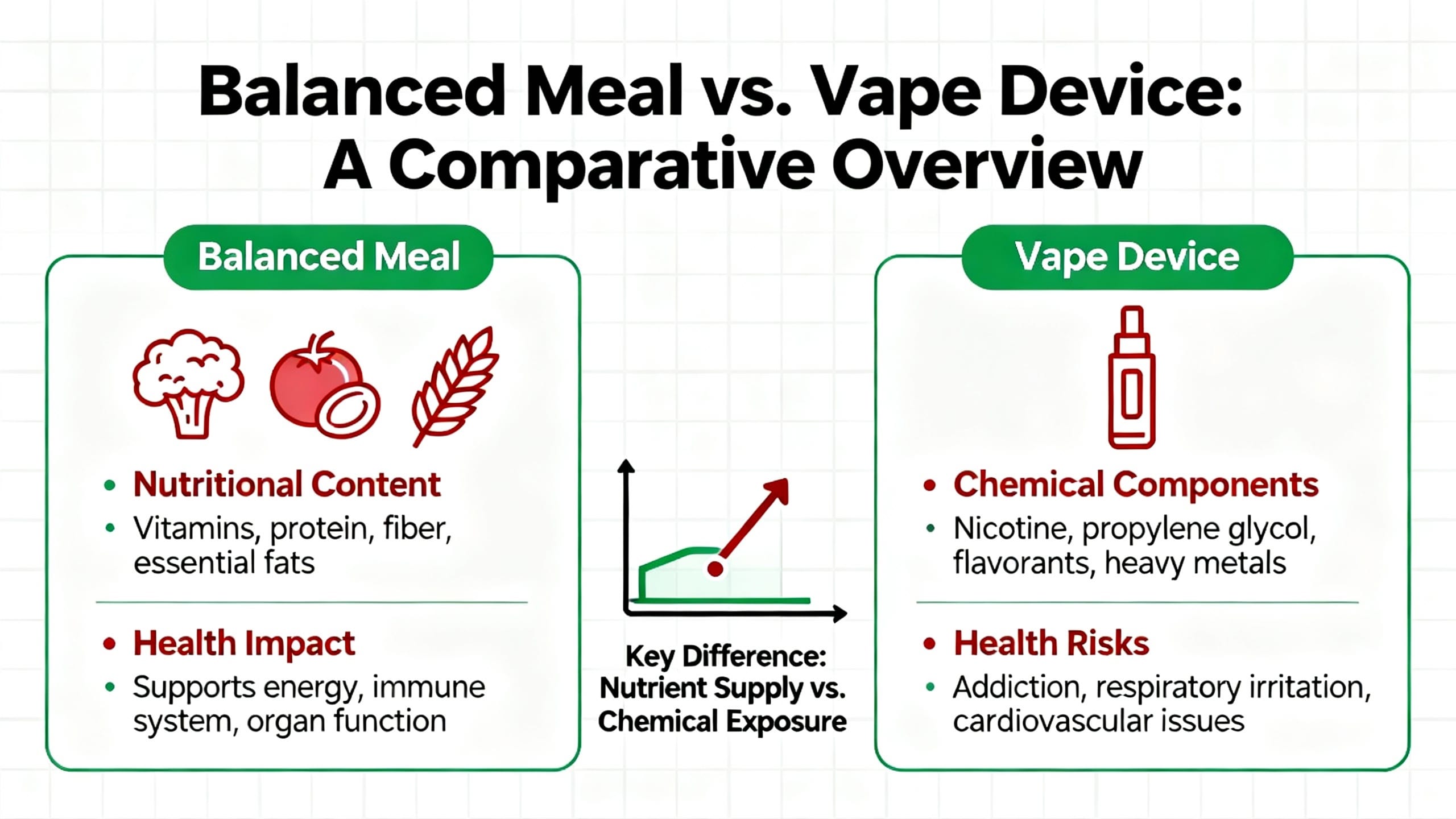
Vape liquids typically include propylene glycol, vegetable glycerin, flavorings, and nicotine. While PG and VG have caloric value, the amount absorbed through vaping is tiny compared with daily food intake.
What matters more than calories
| Factor | Why it matters |
|---|---|
| Nicotine effects | Can affect appetite and cravings. |
| Dehydration | PG and VG can dry the mouth and throat. |
| Flavor additives | Long-term inhalation effects vary. |
| Habit replacement | Vaping can replace meals or snacks. |
Nutrition focus if you vape
- Prioritize real meals, not appetite suppression.
- Track hydration, especially if you vape often.
- Keep a consistent food log so trends stay visible.
Decision framework
| What you notice | Why it matters | Practical next step |
|---|---|---|
| You are asking only about calories | Calories are not the main risk signal for vaping | Shift the question to nicotine, cravings, appetite, sleep, and quitting support |
| Vaping changes when or how much you eat | Appetite changes can distort a food log | Track meals and cravings separately for a week |
| You are pregnant, young, symptomatic, or trying to quit | General nutrition advice is not enough | Use professional medical or cessation support |
| You use vaping to avoid snacks | That can hide a larger habit loop | Review whether meals, hydration, and sleep are being displaced |
Concrete examples
- If you worry vaping breaks a fast, separate that from the bigger health question. The calorie impact is not the main risk.
- If nicotine changes your appetite, sleep, or cravings, track those patterns separately from meal calories.
- If you want to quit, use cessation support rather than trying to solve the issue with food tracking alone.
Limits and safety notes
This guide is for everyday food awareness. It is not a diagnosis tool, nicotine safety tool, cessation program, medication checker, or substitute for a clinician. For nicotine use, pregnancy, heart or lung symptoms, quitting support, or medication questions, use medical guidance.
Where Eatibo fits
Eatibo cannot judge whether vaping is safe. It can help you see whether the habit is changing meals, hydration, cravings, or skipped snacks. That pattern can be useful context when you talk with a clinician or use quitting support.
Keep the calorie question from hiding the real issue
If vaping affects your eating, the useful log is not just calories. Note whether it changes breakfast, late-night snacking, hydration, sleep, caffeine use, or cravings. Some people notice skipped meals; others notice more sweet drinks or snacks when cravings rebound. That pattern is worth seeing, but it still does not make a food app a nicotine safety tool. If you are trying to quit, pregnant, underage, have chest symptoms, or use medication that could be affected, use a clinician or evidence-based cessation support. Eatibo can organize the food side of the pattern so the conversation is clearer, but the nicotine decision belongs with qualified health guidance.
A practical note: if you are tracking food while trying to change nicotine use, do not treat appetite shifts as failure. Log what happened, especially skipped meals, sweet drinks, caffeine, and late snacks. Then bring that pattern to the right support. The food record can make the conversation more concrete, but it should not become pressure to compensate with stricter dieting.
If the pattern is hard to read, track timing instead of judgment: when you vaped, when you ate, what you drank, and whether cravings changed. Timing often explains more than a calorie estimate.
Sources and references
Frequently asked questions
Does vaping have calories?
Most vaping products do not add meaningful food calories, but that does not make them health-neutral. Nicotine and aerosol exposure are the bigger issues, especially for young people, pregnancy, heart or lung symptoms, and people trying to quit.
Can Eatibo tell me vaping is safe?
No. Eatibo can help you watch meal and craving patterns, but it is not a nicotine safety tool or cessation program. Use medical guidance or evidence-based quitting support for vaping decisions.
What should I track if vaping affects my eating?
Track meals, skipped meals, hydration, sleep, cravings, and appetite changes separately. That gives you a clearer pattern to discuss with a professional than a calorie-only log.
Related reading
- Savoring Smarter: Your Guide to Low-Calorie Wine
- 10 Best Foods for Prostate Health: Your Plate's Secret Weapon
- Beyond the Plate: How a Clean Aesthetic Can Inspire Your Health Journey
Last updated: June 1, 2026